

A Patient Specific Direction (PSD) is required whenever a prescriber delegates the administration of a prescription-only medicine to another practitioner for a named patient. The prescriber must first assess that patient face to face, then issue a signed direction carrying the patient identifiers, medicine name, form and strength, dose, route and date. This guide is for licensed practitioners and qualified aesthetic professionals.
TL;DR:
- One audit found pharmacists intervened on up to 66% of directions because details were inadequate; use mandatory fields and avoid ambiguous doses.
- Delegating administration does not transfer accountability; verify and document colleague competence for the specific procedure, while the clinician obtains informed consent.
- Clinic records should identify who assessed the patient, who administered treatment, and the product and batch, while documenting delegate briefing and follow up.
- Remote prescribing of cosmetic injectables is not routinely permitted; any emergency departure from normal process requires a documented clinical reason and actions.
- In England, providing botulinum toxin or filler injections for cosmetic purposes to anyone under 18 is an offence, so check age before treatment.
Table of Contents
- When is a PSD required for aesthetic treatments?
- What must a valid PSD include?
- What are your responsibilities when you delegate?
- How do you run a compliant PSD workflow in clinic?
- What do dispensing pharmacists check, and where do PSDs go wrong?
- Which UK laws and guidance sit behind the PSD?
- Why a template and a named contact beat good intentions
- How can a verified supplier support audit-ready clinics?
- FAQ
- Sources
When is a PSD required for aesthetic treatments?
The JCCP guidance is clear: a PSD is the legal route whenever a prescriber delegates administration of a prescription-only medicine for a named patient. It must be specific to that patient, and remote prescribing of injectables for cosmetic purposes is not permitted. In practice, three situations come up most often:
- Delegation: if you ask a colleague to administer an injectable on your behalf, the PSD is what makes that supply and administration lawful.
- Stock held by a doctor or dentist: administering from stock does not remove the need for a direction. JCCP and CPSA guidance notes that medical and dental practitioners holding stock must still complete a PSD, and accountability sits heavily with the prescriber.
- Urgent decisions: if an emergency arises, follow applicable professional guidance and document the decision and actions taken.
The wider picture is set out in MHRA guidance on injectable medicines for cosmetic procedures, which describes who can prescribe and administer injectables. Our own piece on ending remote cosmetic prescribing covers the face-to-face requirement in more workflow detail.
What must a valid PSD include?
Under the Human Medicines Regulations 2012, a prescription must be signed in ink by an appropriate practitioner and contain the required particulars, otherwise a lawful supply of a prescription-only medicine cannot be made. Work through this list for every direction:
- Patient name and other identifiers, such as address or date of birth.
- Medicine name, form and strength, written exactly.
- Dose, stated per treatment area for multi-site procedures.
- Route of administration.
- Indication, where appropriate.
- Date, in an unambiguous format such as 12 March 2026.
- The prescriber’s signature, in ink.
Avoid abbreviations, and never leave a dose open to interpretation. The JCCP statement notes that audits find many PSDs incomplete, and that up to 66% of directions in one audit needed pharmacist intervention because the detail was inadequate. A standard clinic template with mandatory fields is the simplest safeguard.
Pro Tip: Print your PSD template with every field boxed, and have a second team member check it before it leaves the clinic.
What are your responsibilities when you delegate?
Delegation moves the task, not the accountability. The JCCP states that prescribers retain full responsibility when delegating and must satisfy themselves that the delegate is competent and has been given appropriate directions. The GMC adds that clinicians must carry out a physical examination and seek informed consent themselves, rather than delegating the consent conversation.
- Competence: confirm the delegate is trained and experienced for the specific procedure, and record how you checked.
- Consent: the clinician who performs or supervises the intervention takes consent, covering risks, benefits and realistic outcomes.
- Psychosocial assessment: screen for vulnerabilities, including signs of body dysmorphic disorder, and consider the patient’s psychological needs in line with GMC professional standards.
- GP involvement: where concerns arise, consider contacting the patient’s GP, and record your decision either way.
- Age: it is an offence in England to provide botulinum toxin or filler injections to under-18s for cosmetic purposes, as the General Pharmaceutical Council explains.
Pro Tip: Keep a short competence log for every delegate, listing procedures signed off and the date of the last review.
How do you run a compliant PSD workflow in clinic?
A defensible workflow is a sequence you can show an inspector, step by step.
- Carry out the face-to-face assessment, including physical examination and psychosocial screening.
- Document your findings, the treatment plan and the consent discussion in the patient’s notes, following your professional requirements.
- Complete the PSD with every required particular and sign it.
- Follow the agreed process for sharing the PSD with the dispensing pharmacy and recording the delegate’s details against the patient.
- Brief the delegate, confirm their understanding of the dose and sites, and record that you did so.
- Arrange follow-up and note any adverse events or review outcomes.
Your notes should let a reviewer reconstruct the decision without asking you anything: who assessed the patient, when, what was agreed, who administered, and which product and batch were used. If an emergency requires a departure from the usual process, follow applicable professional guidance and document the clinical reason and actions taken.
Governance matters as much as individual records. The JCCP and CPSA guidance emphasises training, appraisal and audit, so include PSD audit and peer review in your governance process. Our guide to opening an aesthetics clinic covers wider recordkeeping expectations.
What do dispensing pharmacists check, and where do PSDs go wrong?
Pharmacists will want to see prescriber registration, a complete direction and evidence that a face-to-face consultation took place before they supply a prescription-only medicine. Typical problems are avoidable:
- Missing patient identifiers or an unclear patient name.
- Doses that are ambiguous, or not broken down by treatment area.
- Unsigned or undated directions.
- Medicine strength or form omitted.
Inspection and audit findings reported by the JCCP show these gaps are common. The fixes are practical: a standardised template, mandatory fields in any electronic system, and a named clinic contact whom the pharmacy can call with queries. Our checklist on what to look for in an injectable supplier covers pharmacy liaison further.
Which UK laws and guidance sit behind the PSD?
Cite these in your policies so your reasoning is traceable:
- Human Medicines Regulations 2012: set the prescription particulars and signature requirements for lawful supply.
- JCCP: its prescribing statement defines the PSD, lists minimum particulars and rules out routine remote prescribing for injectable cosmetic medicines.
- GMC: requires physical examination and personally taken consent before prescribing injectables.
- MHRA: its injectables guidance describes who may prescribe and administer, and the safe supply expected.
- Royal College of Nursing: its aesthetic practice advice stresses competence, scope of practice and separate indemnity for aesthetic work.
Unsafe practice can lead to regulatory and professional consequences. Documented governance, followed consistently, is your best protection. Devolved rules are also moving: Scotland has passed a bill tightening regulation of non-surgical cosmetic procedures, so check requirements for your nation of practice.
Why a template and a named contact beat good intentions
My view is that most PSD failures are process failures, not knowledge failures. Practitioners know a direction needs a dose and a signature; the errors creep in when forms are free text and nobody owns the pharmacy relationship. A fixed template with required fields, a named contact at the pharmacy and regular audit with peer review can help reduce clarification calls and support a clear audit trail. Treat CPD and audit as routine maintenance, not a reaction to an inspection.
— Rizwan
How can a verified supplier support audit-ready clinics?
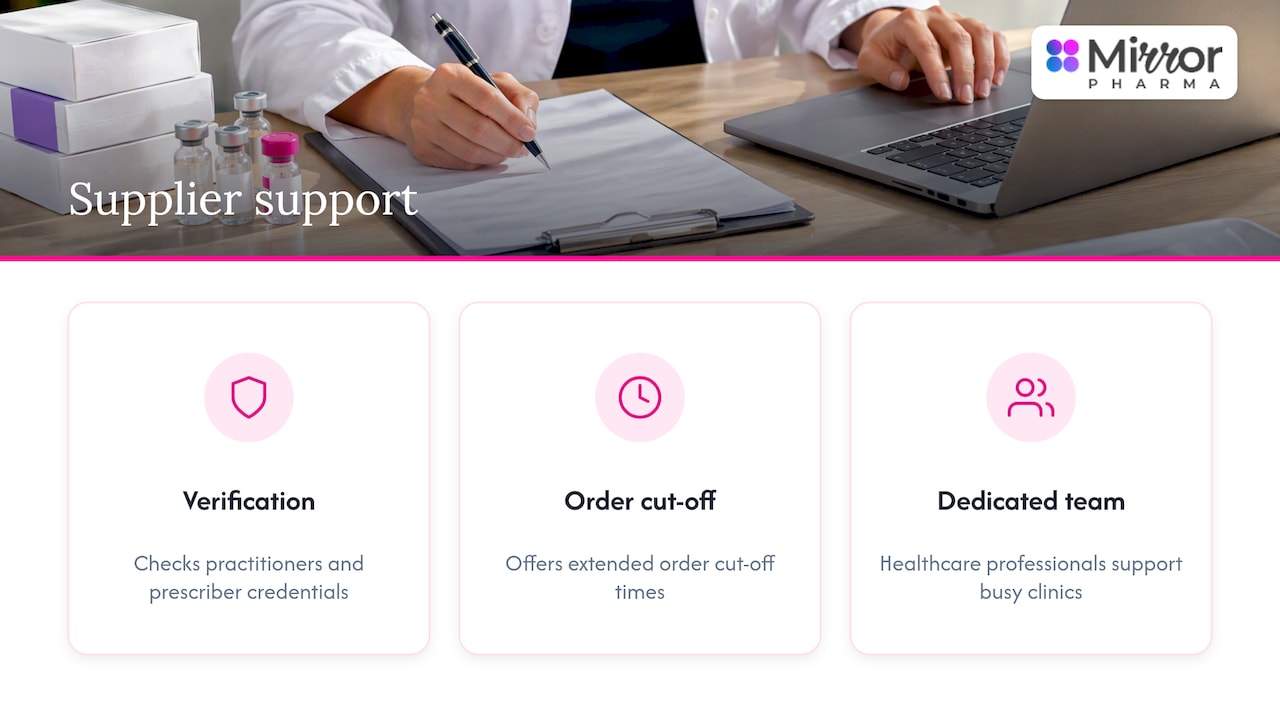
We verify practitioners and check prescriber credentials, which helps keep your supply chain aligned with the governance described above. Our extended order cut-off times and dedicated team of healthcare professionals help busy clinics reduce administrative overhead. If you are a qualified aesthetic professional, see our toxins and dermal fillers category pages, or register your clinic today to start ordering through a process built for compliance.
This article is general information, not a substitute for advice from a qualified doctor. Consult a qualified healthcare professional about your own circumstances before acting on anything here.
FAQ
Do I need a licence to do aesthetics in the UK?
There is currently no single statutory licence for non-surgical aesthetics in England, but prescription-only medicines can only be supplied and administered through lawful routes. Practitioners should hold relevant professional registration, training and indemnity, and follow JCCP and regulator guidance.
What are the legal requirements for botulinum toxin in the UK?
Botulinum toxin is a prescription-only medicine, so it needs a lawful prescription from an appropriate prescriber after a face-to-face assessment. If someone else administers it, a signed PSD for the named patient is required, as set out in the JCCP statement.
Can I prescribe injectables remotely?
No, not routinely. The JCCP and RCN both state that remote prescribing of injectables for cosmetic purposes is not permitted, and the GMC expects a physical examination first. Only genuine emergencies may justify an exception, and these must be documented.
What are the UK aesthetics regulations expected to look like in 2026?
Rules continue to tighten, and requirements differ by nation. Scotland has passed legislation on non-surgical cosmetic procedures, with premises and age-protection provisions expected from September 2027. Check your regulator’s current guidance before relying on any summary.
Sources
- JCCP Guidance Statement – Responsible Prescribing for Cosmetic Procedures.
- Gmc-uk
- The Human Medicines Regulations 2012
- Gov