
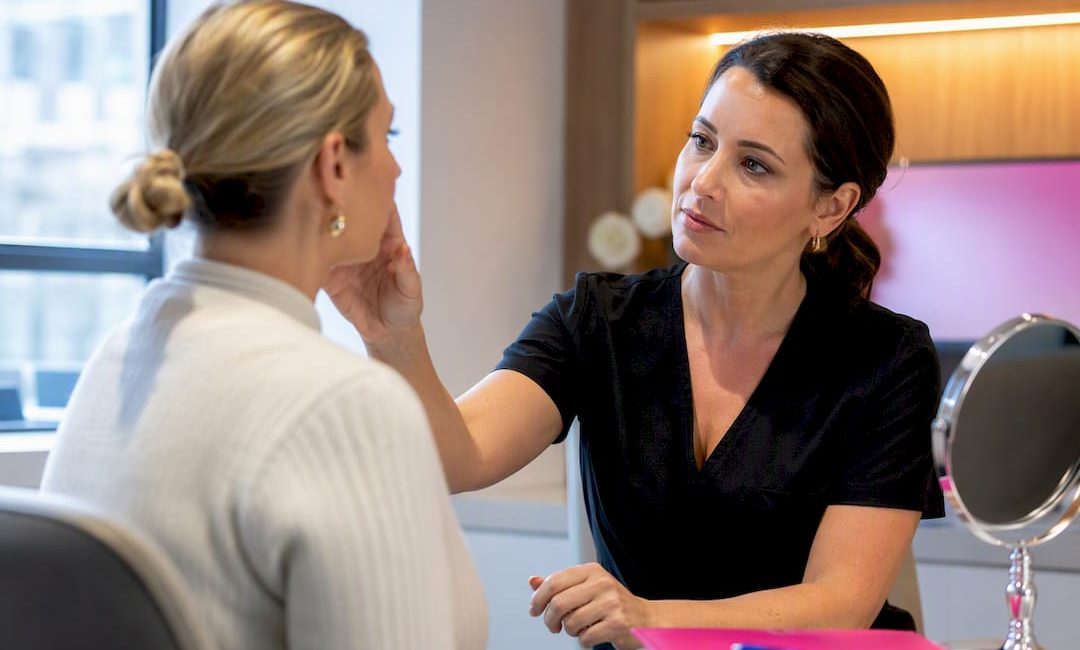
Remote prescribing for elective non-surgical cosmetic prescription-only medicines is not permitted under current UK regulatory guidance: the NMC requires a face-to-face consultation before any such prescription, a position echoed by the GMC and the JCCP. For licensed practitioners, this means stopping any remote initiation or follow-up of cosmetic prescriptions immediately and reviewing your documentation now, for licensed practitioners and prescribers working across aesthetic medicine.
TL;DR:
- Remote prescribing for cosmetic medicines is strictly prohibited, requiring a face-to-face clinical assessment before initial and follow-up prescriptions.
- Cosmetic injectables and emergency medicines cannot be prescribed remotely, as physical examination of anatomy and skin is essential for safety.
- Delegating administration does not transfer responsibility; prescribers must ensure delegates are trained, competent, and properly supervised.
- Maintaining detailed, audit-ready records of patient identity, clinical findings, and consent is crucial to comply with regulations and avoid enforcement actions.
- Remote tools like questionnaires and photos support preparation but cannot replace in-person assessments, which are legally mandated before prescribing.
Table of Contents
- What the main regulators say and why
- Which medicines and situations remote prescribing cannot cover
- Delegation, PSDs and who stays accountable
- Practical compliance checklist for clinics and prescribers
- Where remote tools still fit in a compliant workflow
- What clinics should prioritise now
- How Mirror Pharma supports verified practitioners
- Sources
- FAQ
What the main regulators say and why
The regulatory bodies overseeing aesthetic practice in the UK have converged on the same conclusion from different directions, and it is worth understanding each one’s reasoning rather than treating this as a single blanket rule.
The Nursing and Midwifery Council’s guidance states that from 1 June 2025, independent nurse and midwife prescribers must carry out a face-to-face consultation and clinical assessment before prescribing any product used for elective non-surgical cosmetic procedures. Telephone, e-mail, online video and third-party communication are explicitly ruled out for both initial and follow-up prescriptions in this context.
The General Medical Council’s position sits alongside this. Its professional standards for cosmetic interventions require a comprehensive clinical assessment covering physical, emotional and psychosocial needs before any cosmetic intervention, and the GMC provides a remote consultations flowchart to help doctors judge when remote methods might be appropriate for other prescribing contexts.
The Joint Council for Cosmetic Practitioners and the Cosmetic Practice Standards Authority have gone further in public statements, describing remote prescribing for cosmetic procedures as unacceptable and insisting prescribers must be personally familiar with the patient through an initial in-person consultation. The Royal Pharmaceutical Society supports consistent safeguards around remote prescribing more broadly, reinforcing the same direction of travel.
- The NMC ties its rule to a specific effective date and names cosmetic POMs directly.
- The GMC frames the requirement around holistic assessment rather than a fixed date.
- The JCCP and CPSA argue the case on public protection grounds.
- The RPS addresses competence and safeguards across the prescribing profession generally.
Which medicines and situations remote prescribing cannot cover
Not every prescribing decision carries the same risk, but aesthetic medicine sits firmly in the category where physical examination cannot be substituted.
Injectable cosmetic POMs, such as those used for wrinkle reduction or volume, fall outside what remote prescribing can safely support because assessment depends on examining skin, musculature and anatomy directly. Emergency medicines needed to manage complications from these procedures carry the same restriction, since a prescriber cannot examine a vascular occlusion or an allergic reaction over a screen. High-risk medicines and drugs liable to misuse also sit outside remote prescribing unless a service has built in additional, robust safeguards, a bar few aesthetic clinics are set up to meet.
- Cosmetic injectables and related emergency medicines require in-person assessment for both initial and follow-up prescriptions.
- High-risk medicines and those with misuse potential need extra safeguards that most cosmetic clinics do not have in place.
- Every elective cosmetic procedure needs a face-to-face clinical assessment before the first prescription and at each meaningful follow-up.
One enforcement case led to a nurse prescriber being struck off after remote prescribing and delegation failures were identified during a Fitness to Practise investigation, illustrating how seriously this is treated once a complaint is raised.
Delegation, PSDs and who stays accountable
Delegating administration to another team member does not transfer responsibility. The prescriber remains accountable for the decision to prescribe, and for confirming that whoever administers the treatment is trained, competent and properly supervised.
- Confirm the delegate holds up-to-date training and competency evidence before they administer anything you have prescribed.
- Use a patient-specific direction only where it is clinically appropriate, and make sure it names the patient, the medicine, the dose, the route and the clinical indication in full.
- Personally observe a new delegate’s first few treatments rather than relying solely on their training certificate.
- Check that indemnity cover extends to the delegated activity, not just to the prescriber’s own procedures.
- Keep the PSD, training records and supervision notes together in the patient file, since these are what an investigation will ask for first.
Practical compliance checklist for clinics and prescribers
Turning regulatory language into daily practice comes down to a handful of habits, repeated consistently.
- Verify the patient’s identity in person and record how you did it, alongside the physical findings from your examination.
- Screen for psychosocial factors and body-image concerns, and document the conversation, not just the outcome.
- Record your clinical rationale, the alternatives you discussed and the aftercare instructions you gave, every time.
- Keep training logs, indemnity certificates and PSD copies filed against each delegated procedure.
- Review your consent process to confirm it reflects a face-to-face discussion rather than a form completed online beforehand.
Pro Tip: Build a single audit-ready template that captures identity check, clinical findings, consent discussion and aftercare in one place, so nothing has to be reconstructed from memory later.
Weak recordkeeping is consistently the detail that turns a routine complaint into a Fitness to Practise finding, so treat documentation as a clinical task, not paperwork.
Where remote tools still fit in a compliant workflow
Remote tools have a role, but only as a support to the mandatory in-person assessment, never as a substitute for it. Pre-visit questionnaires and standardised photography can help you triage and prepare, and literature on telemedicine in reconstructive and plastic surgery settings suggests remote inputs can improve efficiency when they feed directly into a subsequent physical examination rather than replacing it.
- Use remote questionnaires to gather history and set expectations before the in-person appointment, not to make the prescribing decision.
- Standardise photography with consistent poses, lighting and a visible scale, and log who uploaded each image and when.
- Where possible, link records with the patient’s GP to flag relevant medical history before you assess them face to face.
The high level principles for remote consultations and prescribing set out safeguards for exactly this kind of blended model, including identity checks and recognising when a patient may be vulnerable.
Pro Tip: Give every remote questionnaire and photo upload a timestamped field for clinician sign-off, so your record shows plainly that the in-person assessment happened and the remote material was only supporting evidence.
What clinics should prioritise now
The tightening around remote prescribing is not a bureaucratic inconvenience: it is a chance to close gaps that were already risky before the rules made them explicit. Clinics that treated a video call as equivalent to hands-on assessment were taking on liability they may not have fully appreciated.
The sensible response is operational, not defensive. Update your prescribing policy this quarter, retrain staff on what a compliant consultation looks like, refresh your audit templates and check every indemnity policy actually covers the delegated work happening in your clinic. Talk to peers about how they are logging cases, because shared practice around documentation tends to surface blind spots faster than working it out alone.
— Rizwan
How Mirror Pharma supports verified practitioners
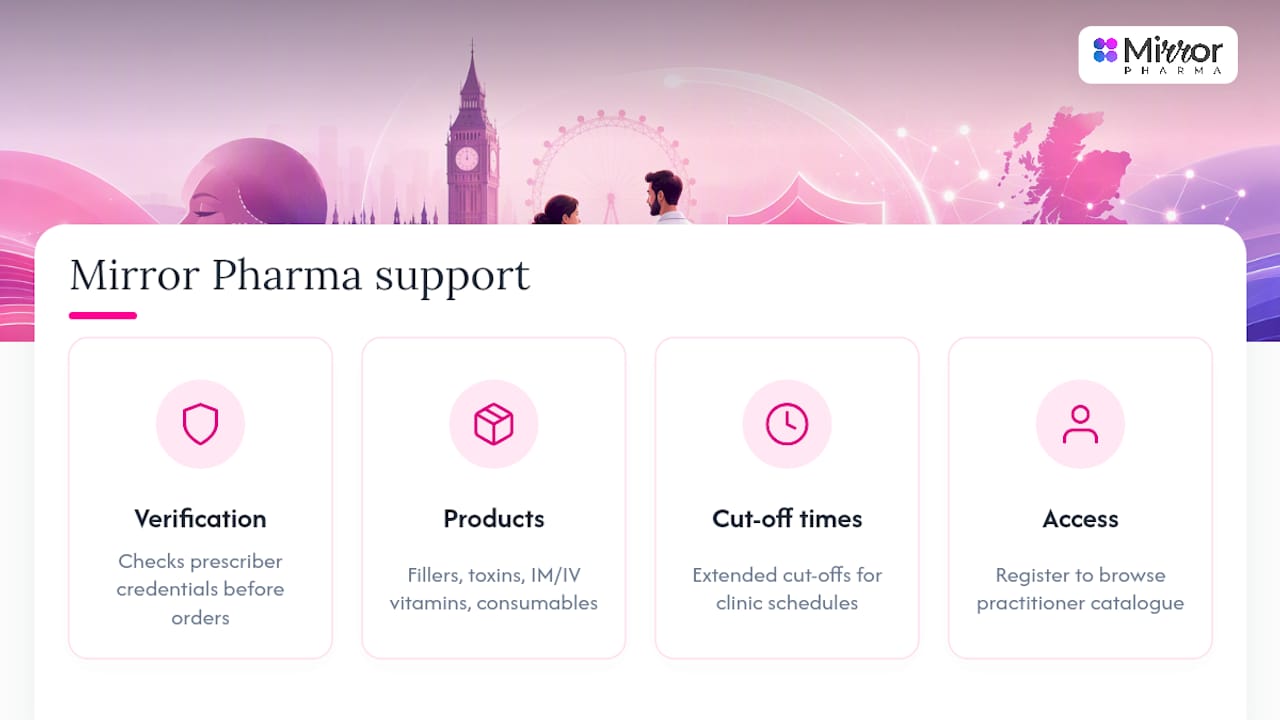
Getting your compliance right is only half the job: sourcing your products from a supplier that takes verification as seriously as you do close the loop. Mirror Pharma is an online pharmacy supplying practitioner-only prescription and non-prescription products, including dermal fillers, toxins, IM/IV vitamins and injection consumables, and it verifies prescriber credentials before any account can order.
That verification step matters for the same reason face-to-face assessment matters: it keeps prescription-only products in the hands of people qualified to use them. Extended order cut-off times help practitioners keep stock reliable around clinic schedules. If you are a licensed practitioner looking to review your suppliers alongside your prescribing policy, you can register for a verified account and browse the practitioner-only catalogue once your credentials are confirmed.
This article is general information, not a substitute for advice from a qualified doctor. Consult a qualified healthcare professional about your own circumstances before acting on anything here.
Sources
- Useful information for prescribers (NMC)
- GMC: cosmetic interventions / professional standards
- Remote prescribing is unacceptable for cosmetic procedures (JCCP)
FAQ
Is remote prescribing ever allowed for cosmetic treatments?
No. For elective non-surgical cosmetic procedures, the NMC requires a face-to-face consultation before both initial and follow-up prescriptions, and the GMC and JCCP hold equivalent positions. Remote methods such as video calls, phone or e-mail are not considered suitable substitutes.
What happened on 1 June 2026?
The NMC’s updated position took effect on that date, formally requiring independent nurse and midwife prescribers to carry out an in-person clinical assessment before prescribing any product for elective cosmetic use. It removed any ambiguity that previously existed around remote initiation.
Can a prescriber delegate administration after a remote consultation?
Delegation does not resolve the underlying problem, because the initial prescribing decision itself must follow a face-to-face assessment under NMC and GMC guidance. Once prescribed appropriately, delegation still requires the prescriber to confirm the delegate’s training and competence.
What happens if a practitioner is found to have prescribed remotely for cosmetic use?
Enforcement action can include a Fitness to Practise investigation, and at least one striking-off case has resulted from remote prescribing and delegation failures in this area. Documentation quality is often decisive in how these cases are decided.
Are remote pre-visit questionnaires or photos allowed at all?
Yes, as an adjunct rather than a replacement for the in-person assessment. Safeguards set out in the high level principles support using remote tools for triage and preparation, provided the face-to-face examination still takes place before prescribing.