

The right price for a filler treatment covers your true per-case cost (product, consumables, clinician time and overheads) plus a target margin, then gets published against a clearly defined unit such as “per ml” or a named area with a stated volume assumption. This is guidance for licensed practitioners only, not a promotion of any prescription medicine to the public. The sections below walk through the maths, the models and the compliance rules that make a price list defensible.
TL;DR:
- Include product, consumables, clinician time, overhead, insurance, prescribing or administrative fees, waste, and booking costs; a worked 1 ml case totaled £208.
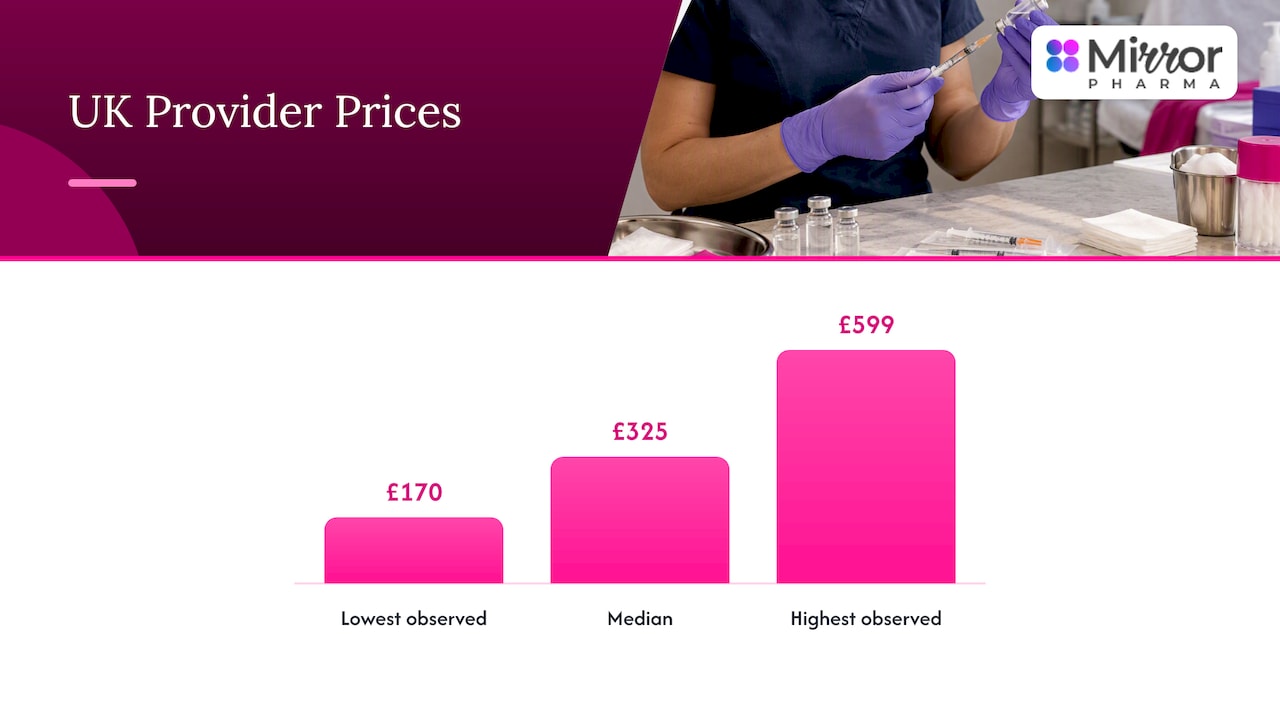
- A UK market sample ranged from £170 to £599 per ml, with a £325 median; 2026 lip prices average roughly £200 to £300.
- For per ml prices, state the typical volume; for area packages, set a shared volume assumption, and leave final volume to consultation.
- Public ads should avoid prescription medicine names, verify age, reject pressure discounts, and state assumed volume because consultation determines final cost.
- Review prices quarterly and whenever supplier, insurance, or licensing costs change; track product cost per ml, treatment margin, booking rate, and average patient spend.
Table of Contents
- Cost components and the break-even calculation
- Pricing models: per-ml, area rates, tiers and bundles
- Worked pricing examples and a sample cost table
- Communicating price ethically within advertising and licensing rules
- Price governance: review cadence, KPIs and triggers
- Practitioner perspective: balancing safety and sustainable pricing
- A reliable supplier partner for licensed practitioner pricing
- FAQ
- Sources
Cost components and the break-even calculation
Before setting a price, list every cost a single appointment actually carries. Skipping any of these is how clinics end up discovering, months later, that a “popular” treatment barely breaks even.
- Product cost per ml or per syringe, taken from your supplier invoice, not a list price.
- Consumables: needles, cannulas, sharps bins, gloves, antiseptic and dressings.
- Clinician time: your hourly rate multiplied by the appointment length, including consultation and aftercare review.
- Room and equipment overhead: a fair share of rent, utilities and equipment depreciation for that slot.
- Insurance and prescribing or admin fees apportioned per appointment.
- Clinical waste disposal and a small allowance for booking or marketing costs.
Once those are itemised, the formula is straightforward: total cost = product cost + consumables + (clinician hourly rate × appointment hours) + overhead share. Price = total cost ÷ billable unit, plus your target margin. Say a 1ml treatment uses £140 of product, £8 of consumables, 30 minutes of a clinician’s time at a £90 hourly rate (£45), and a £15 overhead share. That gives a total cost of £208.
Published UK filler prices show just how widely clinics land once they apply their own version of that sum: a sample observation found one-ml provider prices ranging from £170 to £599, with a median of £325. That spread reflects real differences in overhead, product choice and clinician seniority, not a single “correct” market rate.
Pricing models: per-ml, area rates, tiers and bundles
Most clinics settle on one of four structures, and each suits a different kind of practice.
- Per-ml pricing is the clearest for patients but only works if you state the typical volume used for a given area, so a quoted “per ml” figure never gets misread as the full treatment cost.
- Area-based pricing (for example, a named lip or cheek package) needs an internal standard, agreed in advance, for how many millilitres that package assumes, so every clinician quotes consistently.
- Practitioner-tier pricing (junior versus senior rates) reflects experience and demand rather than promising a different result, and should be worded that way in any price list.
- Bundles, top-ups and short courses can support patient planning, but the terms need to preserve clinical flexibility: never commit to a fixed volume before a consultation has confirmed it is appropriate.
Sector guidance for 2026 puts typical UK lip-filler pricing at around £130 to £440 per ml, averaging roughly £200 to £300, with a London premium of around 20 to 30%. The same guidance notes that dissolving a treatment typically carries its own fee, so complication-management costs deserve explicit inclusion in pricing models to ensure clarity and provision for aftercare. Our guide to hyaluronic acid filler safety covers the clinical side of that planning.
Pro Tip: Avoid “deal” language such as time-limited discounts on injectable treatments: it can pressure patients into decisions before they have had proper reflection time, and it erodes the margin that funds safe aftercare.
Worked pricing examples and a sample cost table
Turning the formula into a filled table makes it easier to sense-check your own numbers before they go on a price list.
- For the 0.5ml lip top-up, the total cost of £116 plus a 40% margin gives a suggested price of £162, which sits comfortably within the published lip-filler range noted above.
- For the 1ml cheek case, the same method produces £208 total cost and a £291 suggested price, again consistent with the wider market spread observed in the published price sample.
Wide published ranges exist largely because clinics price against different units: per ml, per syringe or per named area. Standardising your own internal volume assumptions before publishing any area price avoids the confusion that drives much of that variation, and it gives patients a price they can actually compare to your consultation outcome.
Communicating price ethically within advertising and licensing rules
Price lists need to say what they mean and nothing more. ASA and CAP guidance is explicit that non-surgical cosmetic advertising must be socially responsible, must not target under-18s, and must avoid promoting prescription-only medicines to the public.
- Advertise the consultation and the treatment category, never a named prescription-only medicine, and keep POM references off public-facing pages such as your homepage.
- State clearly that a published figure assumes a specific volume, for example “price shown assumes 1ml; final price depends on consultation”.
- Require proof of age before booking any injectable treatment and keep a dated record of any refusal.
- Treat last-minute “gap-fill” discounts with caution: regulatory reviews have flagged that this kind of time-pressured offer can compromise informed consent.
Government guidance is also tightening the regulatory backdrop: local-authority licensing powers under the Health and Care Act 2022 are being used to raise safety, training and insurance expectations for cosmetic procedures, which feeds directly into the overhead side of your cost calculation. Against that backdrop, the median published UK price of £325 per ml gives a useful market anchor, provided your own costs justify sitting above or below it.
Price governance: review cadence, KPIs and triggers
A price list is not a one-off decision. Build a routine around it.
- Review prices on a quarterly cadence as a baseline, so product and overhead costs do not quietly outpace your margin.
- Trigger an immediate review when a supplier raises prices, when insurance premiums change, or when a licensing update such as the Health and Care Act 2022 measures adds a new compliance cost.
- Track product cost per ml, average margin per treatment, appointment fill rate and average spend per patient as the core metrics that tell you when a price has drifted out of line.
- When a price changes, update every published list at once, brief staff before patients see the new figures, and keep a dated version history for audit purposes.
Practitioner perspective: balancing safety and sustainable pricing
Early in building a price list, it is tempting to chase bookings with the lowest figure on the local market. That approach rarely survives contact with the true cost of a complication, a dissolving fee or a rushed appointment slot. Fair pricing funds proper consultation time, safe scheduling and genuine aftercare, which is as much a patient-safety decision as a commercial one. Keeping transparent, dated records of your pricing and investing in ongoing clinician training tend to matter more to long-term viability than winning on price alone.
— Rizwan
A reliable supplier partner for licensed practitioner pricing
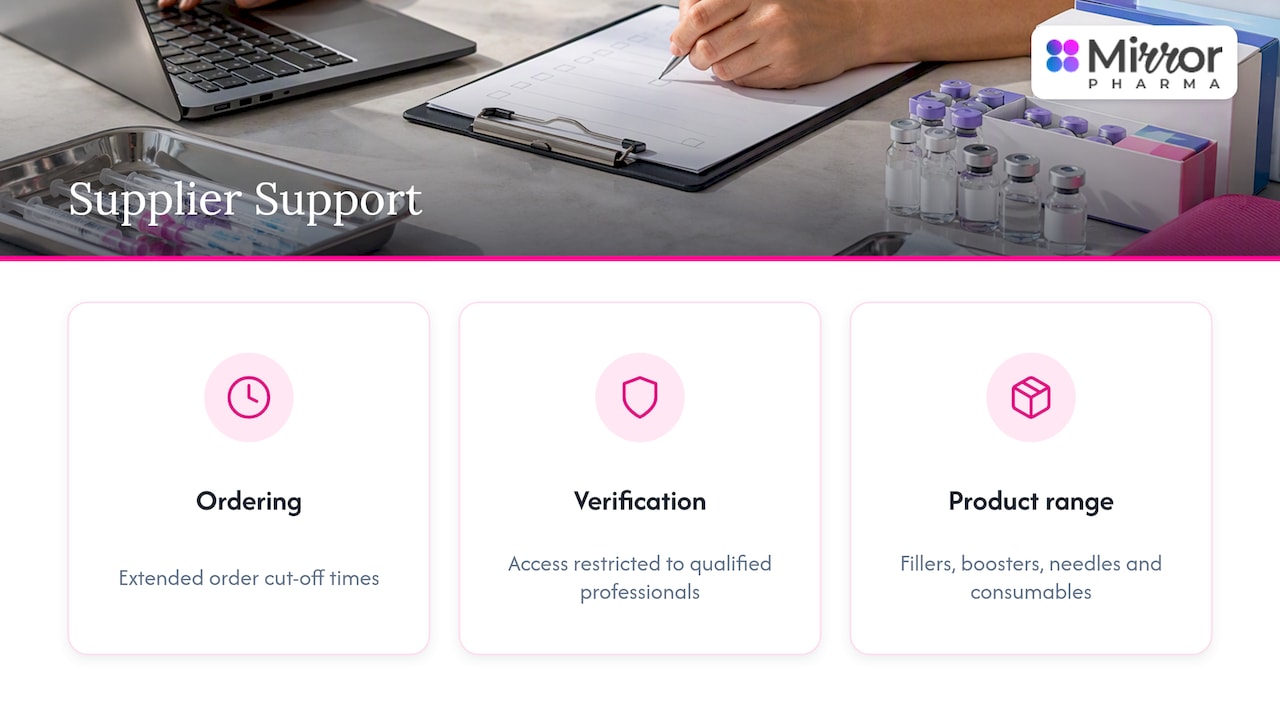
Getting the cost side of this equation right starts with predictable procurement, which is where we come in. We run extended order cut-off times so clinics can secure stock without last-minute price shocks or wasted appointment slots, and every order goes through verification to keep access restricted to qualified professionals. Our range covers dermal fillers, skin boosters and the needles and consumables that belong in every cost calculation above. If you are refreshing your price list this quarter, browse our dermal filler category to check current product costs against your own figures.
This article is general information, not a substitute for advice from a qualified doctor. Consult a qualified healthcare professional about your own circumstances before acting on anything here.
FAQ
How much is it to get lip fillers in the UK?
Typical 2026 UK lip-filler pricing runs around £130 to £440 per ml, averaging roughly £200 to £300, with higher prices common in London. The exact figure a clinic charges depends on product cost, clinician grade and local overheads, which is why published prices vary so widely.
Why are fillers expensive?
The price reflects more than the product itself: it covers clinician time, consumables, insurance, clinical waste disposal and a share of clinic overheads, alongside the product cost per ml. Published UK figures for one-ml treatments have ranged from £170 to £599, with a median of £325, largely because clinics include these costs differently.
How to reduce swelling after lip fillers?
Aftercare advice is a clinical matter for the treating practitioner to give based on the individual case, typically covering cold compresses, avoiding strenuous exercise and following any specific guidance provided at the appointment. Patients should contact their treating clinic directly with aftercare questions rather than relying on general online guidance.
How much is too much filler?
There is no single volume threshold that applies to everyone, since safe and appropriate volume depends on facial anatomy, the treatment area and a qualified practitioner’s clinical assessment. This is a case-by-case decision made during consultation, not a figure that can be generalised from pricing guidance.
Sources
- Advertising guidance: beauty and cosmetics treatments using fillers | ASA
- Gov
- UK dermal filler published price observations | NationalAesthetics
- Lip fillers UK 2026: cost, longevity & safety | Rated Clinics