
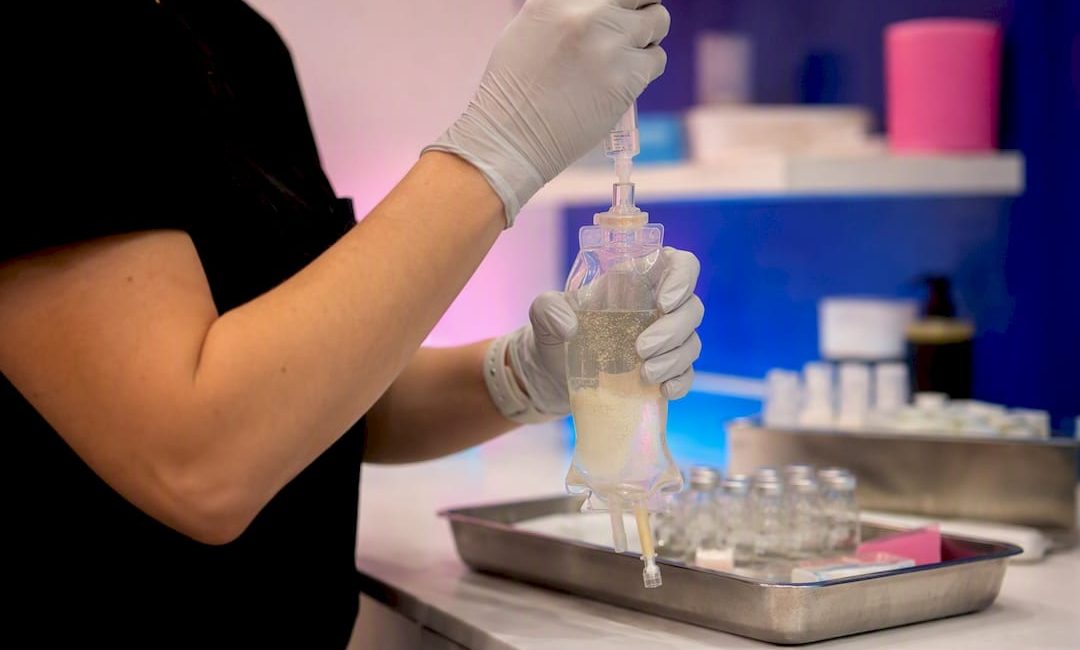
For licensed practitioners, three protocol families dominate practice: Myers’-style multinutrient infusions, modified high-dose vitamin C, and parenteral multivitamin injections. All three are usable in a well-governed clinic, but only once an assessment-first standard operating procedure is in place, one that mandates G6PD testing before high-dose vitamin C, confirms renal function, reconciles medication history, and produces documented informed consent before the cannula goes in.
TL;DR:
- Proper screening, including G6PD testing and renal function checks, is mandatory before high-dose vitamin C infusions to prevent severe complications.
- IV vitamin formulations must be prepared under strict sterile conditions, with careful dilution to avoid osmolarity issues and vein irritation.
- Infusion technique should start with a slow initial rate, monitored carefully to detect early reactions such as flushing or hypotension, then gradually escalate if tolerated.
- Dosing schedules need to be specific to the clinical indication, with regular reassessment and lab checks to guide ongoing treatment or transition to oral supplementation.
- Only licensed healthcare professionals with proper SOPs and documentation should administer IV therapies, using verified supplies from a qualified supplier to ensure safety and compliance.
Table of Contents
- What are the core IV vitamin therapy protocols and formulations?
- Which pre-infusion screening steps are mandatory?
- How should you prepare and compound IV vitamin admixtures?
- What is the correct technique for administering an IV vitamin infusion?
- What dosing schedules suit different clinical indications?
- What adverse effects and interactions should you watch for?
- What should your documentation and SOP checklist include?
- Which Mirror Pharma products support these protocols?
- What the evidence actually supports, and where clinics get it wrong
- Get protocol-ready supplies from a verified professional supplier
- Sources
- FAQ
What are the core IV vitamin therapy protocols and formulations?
The foundational formulation used across most clinics is the Myers’ cocktail: magnesium, B-complex vitamins, B12, vitamin C, and often calcium, delivered in a saline carrier. Each component earns its place for a specific reason, not by tradition alone. Magnesium supports neuromuscular and enzymatic function and is frequently the ingredient responsible for the warm, flushing sensation patients report during infusion. B-complex vitamins feed mitochondrial energy pathways, which is why this formulation gets requested for fatigue-related complaints. B12 supports neurological function and red cell production, and vitamin C contributes antioxidant activity at standard doses, shifting toward pro-oxidant effects at pharmacological doses, a distinction that matters enormously when you move into high-dose territory.
Standard foundational formulations generally combine these minerals and vitamins in a saline carrier, and dosing has to be individualised against clinical assessment, not dispensed from a fixed menu. That assessment always includes renal function, because several of these micronutrients are renally cleared and accumulate if kidney function is impaired.
Modified Myers protocols and high-dose vitamin C sit in a different risk category entirely. Clinics choose higher ascorbic acid doses, often well beyond the vitamin C content of a standard cocktail, when targeting oxidative stress support, post-viral recovery, or oncology adjunct use. The preparation differs too: high-dose ascorbate needs careful dilution to reach an isotonic final admixture, and it cannot be handled the same way as a standard multinutrient bag. Ascorbic acid injection must be diluted prior to use and administered as a slow infusion, per the product monograph, and clinical reviews confirm high-dose IV vitamin C achieves plasma concentrations far above anything oral dosing can reach, which is precisely why the screening requirements tighten as the dose climbs.
Parenteral multivitamin injections occupy a third lane. These exist primarily to prevent deficiency in patients on parenteral nutrition, but they also show up in general infusion therapy as a broad-spectrum micronutrient top-up. Multiple vitamins injection products must be diluted before administration, and the product information specifies exact handling. Two supply formats matter operationally:
- Single-dose vials: intended for one patient, one session, discarded after use, which reduces contamination risk but increases per-session cost.
- Pharmacy bulk packages (PBPs): allow compounding of multiple doses under controlled conditions, useful for higher-volume clinics but only appropriate where ISO Class 5 compounding standards can genuinely be met.
Choosing between these formulations is less about brand preference and more about matching the ingredient profile, dose range, and preparation burden to the clinical indication in front of you.
Which pre-infusion screening steps are mandatory?
Patient selection is where most infusion incidents actually originate, not in the infusion itself. A structured screening workflow, done consistently rather than on a case-by-case whim, is what separates a defensible clinic from one relying on luck.
- G6PD status: test before any high-dose vitamin C protocol. Glucose-6-phosphate dehydrogenase deficiency raises the risk of haemolysis when ascorbate doses climb, and clinical reviews treat G6PD screening as mandatory rather than optional for higher-dose infusions.
- Renal function: check eGFR and creatinine. Several micronutrients in these formulations are renally excreted, and impaired clearance changes both the safe dose and the infusion rate you should use.
- Cardiac history and fluid status: ask specifically about heart failure or fluid restriction. Volume-sensitive patients tolerate infusion volumes poorly, regardless of how benign the ingredients look on paper.
- Medication reconciliation: review the full current medication list, with particular attention to chemotherapy regimens, anticoagulants, and diuretics, since interactions are more common than the wellness-clinic framing of IV therapy tends to suggest.
- Baseline bloods and re-testing cadence: take baseline renal function and, where relevant, G6PD status before the first session. For patients on a repeated course, re-check renal function periodically rather than assuming a single baseline covers months of treatment.
Pro Tip: Build the screening checklist into your booking software as a hard gate, not a paper form filed after the fact. Clinics that let screening lag behind scheduling are the ones that end up infusing a patient before the G6PD result has actually come back.
Deferring or declining treatment is sometimes the correct clinical decision, and your SOP should say so explicitly, rather than leaving that call to whoever happens to be on shift.
How should you prepare and compound IV vitamin admixtures?
Sterile compounding is where formulation science meets patient safety, and it deserves the same rigour you’d apply to any other injectable preparation, not a lighter touch just because the ingredients are vitamins rather than a novel drug.

Pharmacy bulk packages and single-dose vials both need to be handled under ISO Class 5 conditions when compounding multi-ingredient admixtures, particularly when combining ascorbic acid, B vitamins, and minerals in one bag. This isn’t a bureaucratic formality: particulate contamination and microbial ingress risks rise sharply outside a controlled environment, and the consequences of getting this wrong land directly on the patient.
Dilution calculations deserve particular care with high-dose ascorbic acid. The product monograph specifies dilution volumes designed to reach an isotonic final admixture, and skipping that step or eyeballing the dilution risks a hypertonic solution that causes vein irritation, phlebitis, or worse on infusion. The same monograph covers multiple vitamin injection products, which carry their own stability and light-sensitivity instructions that compounding staff need to follow precisely, not approximate.
Osmolarity is the number that decides whether a preparation is safe to run peripherally or whether it needs a different approach entirely. High-concentration ascorbate preparations sit at the sharper end of this risk, which is why the monograph’s dilution guidance exists in the first place, rather than being left to clinical judgement alone.
Before any admixture leaves the compounding area, run through a short compatibility check:
- Inspect visually for precipitate, cloudiness, or colour change after mixing.
- Confirm calcium-containing components are not combined with formulations at risk of calcium-phosphate precipitation.
- Check expiry and in-use stability windows for both single-dose and bulk-derived preparations.
- Verify the final osmolarity target has actually been met, not assumed.
Get this stage wrong and no amount of careful administration technique downstream will compensate for it.
What is the correct technique for administering an IV vitamin infusion?
Administration technique is where theory meets the patient’s arm, and it’s the stage most likely to expose a gap between a well-written SOP and what actually happens in a busy clinic.
- Select and verify venous access: a 20 to 22 gauge cannula is generally adequate for peripheral IV vitamin infusions, sited in a vein with good flow, away from joints where possible. Confirm patency with a saline flush before connecting the infusion bag, every time, not just on the first visit.
- Run a start-slow step-up: begin the infusion at a deliberately low rate for the first five minutes and watch the patient’s response before increasing. This single step catches the two most common early reactions: a magnesium-related flushing or “rush” sensation, and early hypotension.
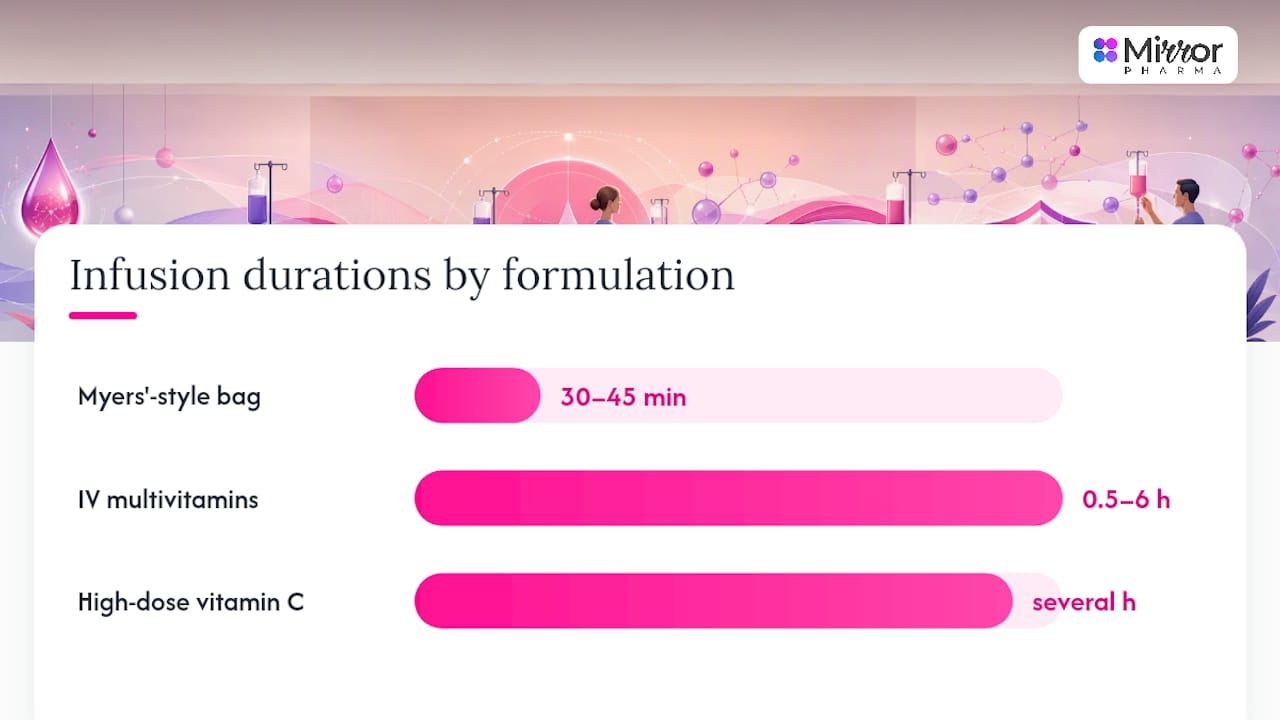
- Escalate gradually if tolerated: once the initial minutes pass without adverse signs, increase to the planned infusion rate. Guidance on IV multivitamins recommends longer infusion durations of 0.5 to 6 hours rather than IV push when these are given separately from parenteral nutrition.
- Monitor throughout: check blood pressure, patient-reported symptoms, and the infusion site at regular intervals, more frequently for high-dose vitamin C or first-time patients.
- Observe post-infusion: keep the patient for a short observation period after the line is removed, particularly for higher-dose protocols, before discharging them.
Pro Tip: Treat the first five minutes of every new protocol as a mini tolerance test, even for a returning patient starting a different formulation. The magnesium rush and early hypotension both tend to announce themselves fast, and a slow start gives you the room to stop before either becomes a problem.
Infusion durations vary meaningfully by formulation. A standard Myers’-style bag typically runs over 30 to 45 minutes; high-dose vitamin C protocols often extend to several hours, partly to manage osmotic load and partly because longer infusions reduce urinary losses of water-soluble vitamins that get cleared faster under rapid administration.
What dosing schedules suit different clinical indications?
Dosing needs to track the indication, not a one-size-fits-all house protocol, and this is where a lot of clinics quietly under-think their practice.
- Immune support: standard Myers’-style dosing, typically weekly or fortnightly during a short course, rather than open-ended indefinite scheduling.
- Chronic fatigue: often a slightly extended course, with B-complex and B12 as the primary drivers, reassessed clinically after several sessions rather than continued by default.
- Migraine: magnesium-forward formulations, used more reactively than on a fixed schedule, guided by symptom pattern.
- Oncology adjuncts: high-dose vitamin C protocols here require close coordination with the patient’s treating oncology team, since certain chemotherapy agents interact with high-dose ascorbate, and dosing decisions should never be made in isolation from that team.
- Athletic recovery: lower-dose, shorter courses focused on hydration and micronutrient replacement rather than pharmacological dosing.
Escalation decisions should be anchored to something measurable, not patient preference alone. Repeat renal function checks before increasing frequency, and treat any new symptom during a course as a reason to pause rather than push through. Where a patient wants ongoing support beyond an initial IV course, bridging to oral maintenance supplementation, a multivitamin and mineral complex capsule, for instance, is often clinically reasonable and reduces unnecessary repeat cannulation.
What adverse effects and interactions should you watch for?
Most reactions during IV vitamin therapy are mild and self-limiting, but the protocol only earns its safety record when staff know exactly how to respond the moment something deviates from expected.
Immediate management follows a simple hierarchy: slow the infusion first, stop it if symptoms persist or worsen, and provide supportive care, positioning, fluids, monitoring, while assessing severity. Escalate to emergency services immediately for any sign of anaphylaxis, chest pain, or significant haemodynamic instability. Don’t wait to see if it resolves on its own.
Three risks deserve specific mention because they carry disproportionate severity relative to how often IV vitamin therapy gets treated as low-risk:
- Haemolysis in patients with undiagnosed or unscreened G6PD deficiency, the core reason screening is non-negotiable before high-dose vitamin C.
- Oxalate nephropathy risk with prolonged or repeated high-dose vitamin C courses, particularly in patients with pre-existing renal impairment.
- Fluid overload in patients with congestive heart failure, where even a modest infusion volume can tip a compensated patient into decompensation.
Clinical guidance is direct on this point: IV vitamin therapy is a medical treatment requiring evidence-informed, site-specific protocols, not a consumer drip menu dispensed without assessment.
Laboratory interference is a quieter but real concern. Ascorbic acid can distort point-of-care glucose readings, which matters if a patient is diabetic and self-monitoring around their infusion visit. Coordinate with oncology teams before combining high-dose vitamin C with active chemotherapy, given the documented interaction risk with specific agents.
What should your documentation and SOP checklist include?
Governance is what makes protocols repeatable and defensible, rather than dependent on whoever happens to be working that day.
- Consent record: document the formulation, dose, known risks discussed, and patient agreement, refreshed for any protocol change, not just at the first visit.
- Session record fields: batch numbers, dilution details, infusion rate and duration, vital signs at intervals, and any reaction noted.
- Staff training log: evidence that everyone administering infusions has completed cannulation and anaphylaxis management training, refreshed on a defined cycle.
- Emergency readiness: adrenaline and emergency drugs on site, checked and in-date, alongside a clear escalation pathway to emergency services.
- Compounding oversight: a named responsible person for compounding standards and supply-chain verification of every vial and ampoule used.
- Audit trail: adverse event log, screening compliance rate, and stock reconciliation reviewed on a regular cycle, not just when something goes wrong.
| Checklist area | Minimum standard |
|---|---|
| Consent | Documented per session, protocol-specific |
| Screening compliance | G6PD and renal function on file before high-dose vitamin C |
| Emergency equipment | In-date, checked, staff trained in use |
| Compounding oversight | Named responsible person, ISO Class 5 where required |
| Adverse event log | Reviewed on a fixed audit cycle |
A clinic that can produce this documentation on request, without scrambling, is one that has actually operationalised its protocol rather than just written it down.
Which Mirror Pharma products support these protocols?
Mirror Pharma stocks several products that map directly onto the formulations covered above, giving verified professionals a straightforward route from protocol design to actual supply.
- Colecalciferol (vitamin D) 300,000iu/ml supports protocols where vitamin D deficiency correction sits alongside a broader infusion plan.
- Glutathione Tationil 600mg/4ml, supplied as powder and solvent for injection, fits modified protocols where antioxidant support is part of the plan.
- Calcium gluconate 10%/10ml ampoules supply the calcium component used in some Myers’-style formulations.
- Forceval multivitamin capsules work as the oral bridge between IV courses, supporting the maintenance strategy covered earlier.
Beyond stock, Mirror Pharma verifies every account against professional credentials before enabling purchase, which keeps the supply chain restricted to qualified practitioners rather than the general public. Extended order cut-off times mean a clinic that identifies a stock gap late in the day still has a realistic route to same-cycle delivery, which matters when a course is already underway and a patient is booked in. This isn’t a substitute for your own clinical governance, but it does remove one variable, product availability, from a process that already has enough moving parts.
What the evidence actually supports, and where clinics get it wrong
The conventional wellness-industry framing of IV vitamin therapy, a menu of drips selected by mood rather than medical need, doesn’t survive contact with the actual evidence base. Every product monograph cited here treats these formulations as medicines requiring dilution precision, monitored administration, and documented rationale. That’s a different world from a drip bar offering a “hangover cure” on demand.
What’s overrated in this field is the emphasis on ingredient novelty, glutathione add-ons, exotic mineral blends, when the real safety gap sits earlier: screening compliance and dilution accuracy. A clinic running a beautifully designed formulation on unscreened patients is taking on more risk than one running a basic Myers’ cocktail with rigorous G6PD and renal checks.
If you prioritise one thing this year, make it the screening gate. Dosing bands and formulation choices can be refined over time. A missed G6PD screen before a high-dose vitamin C infusion cannot be undone once the bag is running.
— Rizwan
Get protocol-ready supplies from a verified professional supplier
Mirror Pharma exists for exactly the gap between a well-written protocol and a stocked treatment room. Where general suppliers make you chase wholesalers for single-dose vials or bulk multivitamin formats, Mirror Pharma keeps both in stock against one verified account, with the extended order cut-off times that matter when a course is already scheduled and you’re one ampoule short. For licensed practitioners running Myers’-style, modified high-dose vitamin C, or parenteral multivitamin protocols, that means less time spent sourcing and more time spent on the clinical work that actually needs your attention.
Every product ships to verified healthcare professionals only, in line with the compliance standards this article has walked through. If your clinic is ready to formalise its infusion protocols, browse Mirror Pharma’s practitioner catalogue to check current availability of vitamin D, glutathione, calcium gluconate, and multivitamin formats, and set up a verified professional account to place your next order.
This article is general information, not a substitute for advice from a qualified doctor. Consult a qualified healthcare professional about your own circumstances before acting on anything here.
Sources
Building a defensible SOP means going back to primary sources rather than relying on secondhand summaries.
- Merck Manuals — Intravenous vitamin therapy (Myers’ cocktail)
- DailyMed — Ascorbic acid injection (product monograph)
- NutritionCare — Intravenous multivitamin shortage recommendations (2024)
- NCBI/PMC clinical review on intravenous vitamin therapies
FAQ
What qualifications do I need to do IV therapy?
You need to be a licensed healthcare professional, typically a doctor, nurse prescriber, or other regulated practitioner, trained in venous cannulation and anaphylaxis management, and operating under a clinic SOP with documented consent and screening processes.
What is an IV protocol?
An IV protocol is a documented, evidence-informed plan covering formulation choice, dosing, screening prerequisites, preparation and dilution steps, administration technique, and monitoring, designed so treatment is consistent and safe regardless of which trained staff member delivers it.
Are IV drips with vitamins good for you?
Used appropriately, on screened, suitable patients, IV vitamin formulations can support specific clinical goals such as correcting deficiency or supporting recovery, but they carry real risks, including haemolysis in unscreened G6PD deficiency and fluid overload in cardiac patients, which is why mandatory screening matters more than the formulation itself.
What not to do after a vitamin infusion?
Patients should avoid strenuous exercise immediately after infusion, stay hydrated, and report any delayed symptoms such as flushing, dizziness, or injection-site changes promptly rather than waiting for their next scheduled visit; practitioners should keep the patient for a short observation period before discharge, particularly after high-dose vitamin C.