
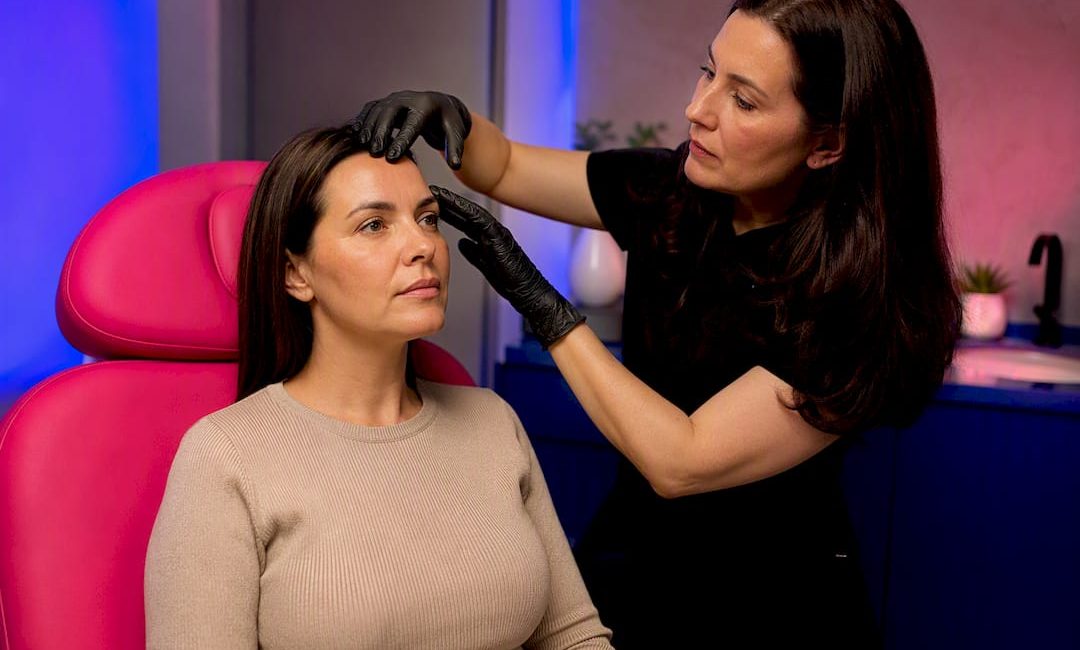
Botulinum toxin is a bacterial neurotoxin, prescribed in minute, controlled doses to reduce muscle overactivity and treat selected cosmetic concerns. It works by blocking nerve signals to muscles, producing temporary, reversible relaxation rather than a permanent fix. Because it is a prescription-only medicine, every treatment decision, dose and injection point must sit with a qualified prescriber and trained injector working from a proper clinical assessment.
TL;DR:
- Different botulinum toxin products are not interchangeable unit-for-unit, so formulation choice must be based on clinical assessment and verified suppliers.
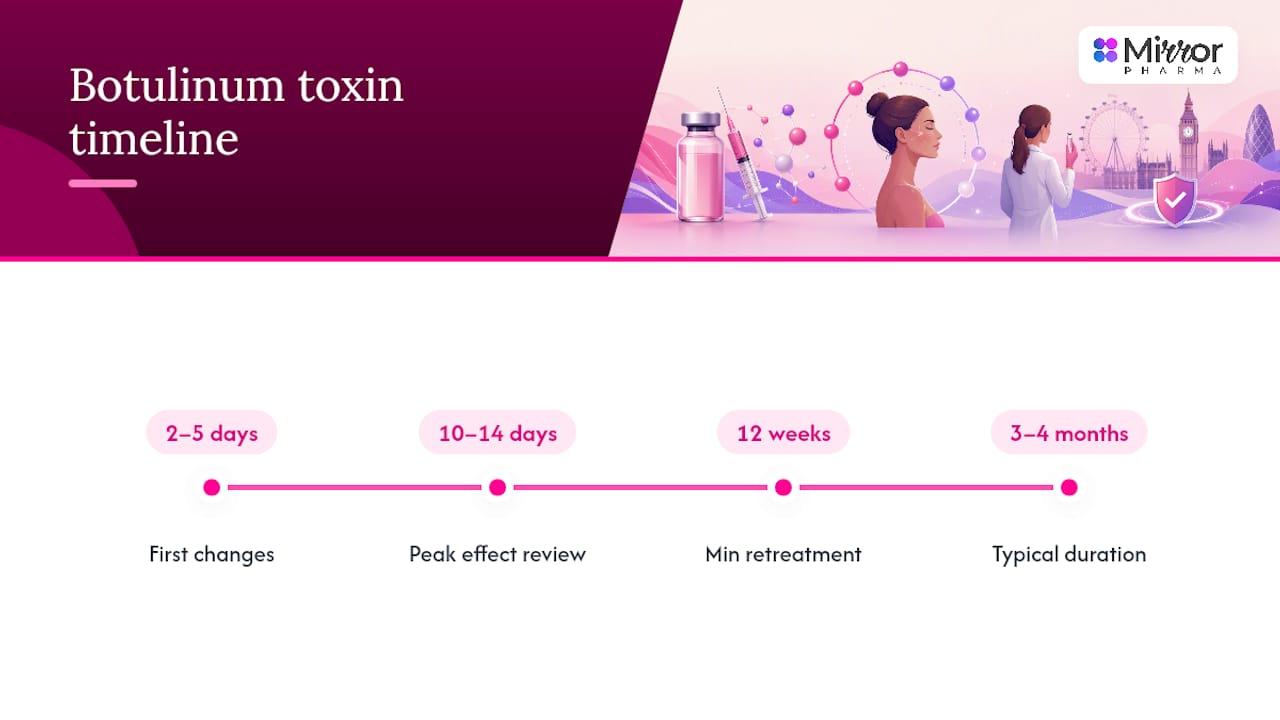
- The toxin’s effect begins within two to five days, peaks around two weeks, and typically lasts three to four months, with retreatments recommended every 12 weeks.
- Side effects are usually mild and temporary, but patients should be instructed to seek urgent care if systemic symptoms like difficulty swallowing or breathing occur.
- Prescriptions require a thorough face-to-face assessment by qualified prescribers, documenting formulation, batch number, and dose to ensure safe and effective treatment.
- Long-term therapeutic use carries a small risk of antibody development, so appropriate dosing intervals and monitoring are essential for sustained effectiveness.
Table of Contents
- What is botulinum toxin and which types matter clinically?
- How does botulinum toxin work at the neuromuscular junction?
- What are the licensed medical uses of botulinum toxin?
- Where is botulinum toxin used in aesthetic treatment?
- How long does botulinum toxin take to work and last?
- What side effects and contraindications should you know?
- How is botulinum toxin regulated and prescribed safely?
- Who stands behind this guidance?
- What actually separates safe practice from risky practice?
- Supply you can trust for treatments you can stand behind
- Where can you read more on botulinum toxin safety and use?
- Sources
- FAQ
What is botulinum toxin and which types matter clinically?
Botulinum toxin is a neurotoxic protein produced by Clostridium botulinum and related clostridial species. In nature, it is one of the most potent biological toxins known, which sounds alarming until you understand the dosing logic behind clinical use: therapeutic and cosmetic preparations use vanishingly small, purified quantities, measured in units rather than milligrams, targeted at a specific muscle rather than released systemically.
Seven serotypes exist, labelled A through G, each produced by slightly different bacterial strains and each acting on a different point in the nerve signalling chain. Only two have found a durable place in medicine.
- Type A is the serotype used in almost every licensed therapeutic and cosmetic product on the market, prized for its potency and predictable duration of action.
- Type B is used far less often, generally reserved for patients who have developed resistance to type A after repeated high-dose therapeutic treatment.
- Types C to G remain largely confined to laboratory and toxicology research, with no established cosmetic or mainstream therapeutic role.
This is where a common point of confusion needs sorting out. Patients often use a well-known brand name as if it were the generic term for the entire treatment category, when it is actually one specific formulation of type A toxin among several available to prescribers. This distinction matters for consent and expectation setting: different botulinum toxin products are not interchangeable unit-for-unit, because formulation, complexing protein content and diffusion characteristics vary between manufacturers. A dose calculated for one product cannot simply be copied across to another. Correcting this misconception at the point of consultation is one of the more overlooked ways practitioners improve consent quality and reduce post-treatment confusion.
For licensed practitioners sourcing stock, this is precisely why formulation choice is a clinical decision, not a commercial one, and why verified suppliers matter as much as verified prescribers.
How does botulinum toxin work at the neuromuscular junction?
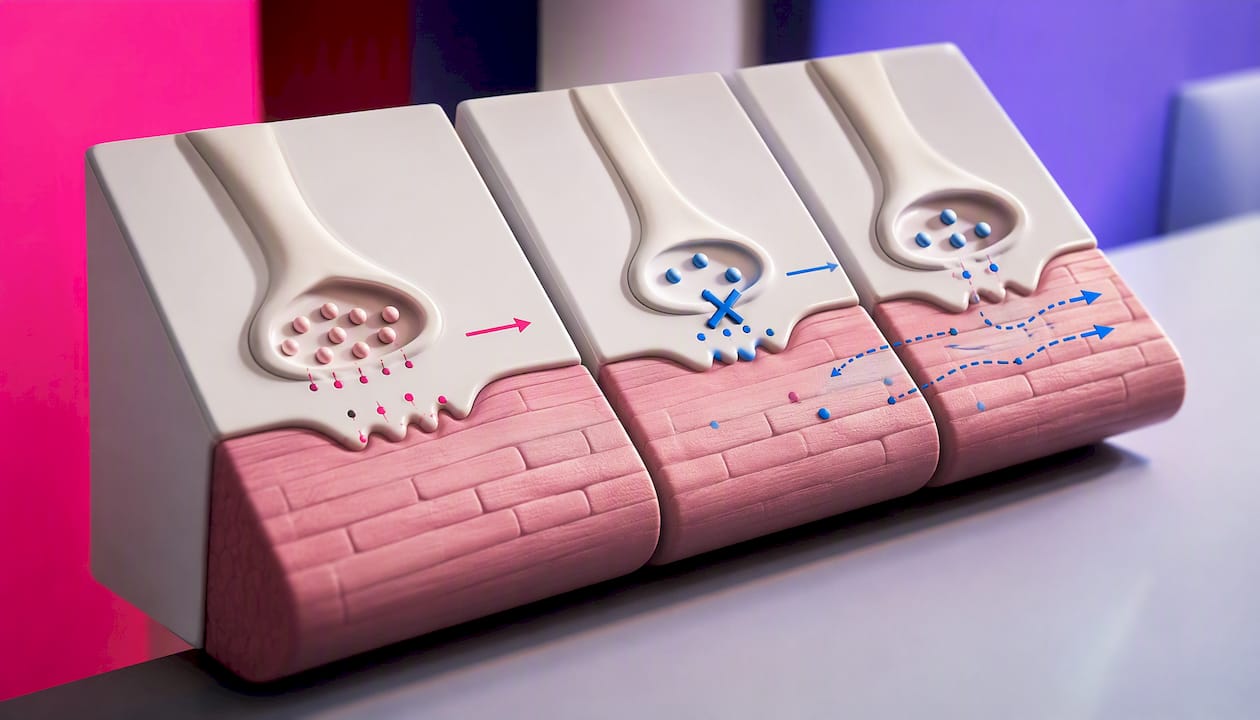
Botulinum toxin works by interrupting the chemical signal between nerve and muscle, and the process happens in a fairly precise sequence rather than as a single blanket effect.
- Binding. The toxin’s heavy chain binds to specific receptors on the surface of motor nerve terminals at the neuromuscular junction.
- Internalisation. The nerve cell absorbs the toxin through receptor-mediated endocytosis, drawing it inside the terminal.
- Cleavage. Once inside, the toxin’s light chain acts as a protease and cleaves SNARE proteins, principally SNAP-25 for type A toxin, which are essential for the docking and release of neurotransmitter vesicles.
- Blockade. With SNAP-25 cleaved, the nerve terminal can no longer release acetylcholine into the neuromuscular junction, so the signal to contract never reaches the muscle fibre.
- Denervation and recovery. The muscle sits in a temporary, chemically induced state of relaxation until the nerve terminal regenerates new sprouts and restores signalling.
Botulinum toxin prevents the release of acetylcholine at the nerve terminal, and this single mechanism explains both why the treatment works so reliably for overactive muscles and why, in the rare event of excessive spread, it can also cause unwanted weakness elsewhere. It is the same molecular action behind therapeutic benefit and behind the descending paralysis seen in botulism poisoning; only the dose, location and control differ.
Pro Tip: When explaining the mechanism to a patient, the phrase “the nerve stops talking to the muscle” tends to land better than “acetylcholine inhibition” and still gets the clinical point across accurately.
The temporary nature of the effect comes down to nerve biology rather than the toxin degrading. Motor nerve terminals are not destroyed; they eventually sprout new signalling connections and re-establish transmission, which is why the effect fades gradually rather than switching off abruptly. This regenerative process typically takes a few months, which is the biological basis for the retreatment intervals discussed later in this article.
Understanding this cellular chain also clarifies why dosing must be muscle-specific and precisely placed. Diffusion beyond the intended muscle group, whether from an overly generous volume or injection too close to a neighbouring structure, extends this exact same blockade mechanism into muscles you never intended to treat.
What are the licensed medical uses of botulinum toxin?
Botulinum toxin type A holds licensed indications across neurology, urology and rehabilitation medicine, alongside a wider set of off-label uses that clinicians encounter regularly in specialist practice.
The strongest evidence base sits behind these licensed therapeutic indications:
- Chronic migraine, where NICE technology appraisals support use in adults experiencing headache on 15 or more days a month, at least eight of which are migrainous.
- Cervical dystonia, reducing the abnormal, sustained muscle contractions that cause the head and neck to twist or tilt involuntarily.
- Limb spasticity, commonly following stroke, brain injury or in conditions such as cerebral palsy, where it relaxes overactive muscle tone.
- Overactive bladder and neurogenic detrusor overactivity, injected into the bladder wall to reduce urgency and incontinence episodes in patients who have not responded to standard medication.
- Axillary hyperhidrosis, where excessive underarm sweating fails to respond adequately to topical antiperspirants.
- Blepharospasm and hemifacial spasm, involuntary eyelid or facial muscle contractions that respond well to targeted injection.
Beyond this licensed set, botulinum toxin is used across a range of unlicensed indications where clinical evidence is promising but formal licensing has not caught up, including chronic pelvic pain, sialorrhoea (excessive drooling, often in Parkinson’s disease or motor neurone disease), and some forms of chronic pain associated with muscle spasm. Off-label use is not inherently improper, but it demands a clearer conversation with the patient about the evidence base and a stronger clinical justification recorded in the notes.
It is worth being honest about what botulinum toxin does and does not achieve in rehabilitation settings. NHS trust guidance on spasticity treatment is explicit that the toxin reduces stiffness and creates a window in which physiotherapy and rehabilitation can work more effectively rather than reversing the underlying neurological damage itself. Framing it as an enabling tool, not a stand-alone cure, sets a far more accurate expectation at first consultation than presenting it as a fix.
Therapeutic and cosmetic use also diverge sharply in dosing philosophy. Therapeutic indications, particularly spasticity and chronic migraine, often call for considerably higher total doses, delivered across multiple muscle groups and planned within a multidisciplinary team involving neurologists, physiotherapists or urologists. Cosmetic injecting, by contrast, favours lower, more precise dosing targeted at specific superficial muscles, with scheduled review appointments to assess and refine the result rather than a single large intervention. Confusing the two dosing logics, treating a cosmetic patient with a therapeutic mindset or vice versa, is one of the more consequential errors an inexperienced injector can make.
Where is botulinum toxin used in aesthetic treatment?
Cosmetic botulinum toxin works best on dynamic wrinkles, the lines caused by repeated muscle movement, rather than static creases already etched into resting skin. Setting that expectation clearly at consultation avoids the single most common source of patient disappointment in aesthetic practice.
- Glabellar lines (the “elevens” between the eyebrows), caused by the corrugator and procerus muscles, remain the most commonly treated zone and typically show a marked softening within days of treatment.
- Forehead lines, treated via the frontalis muscle, require careful dose calibration to avoid brow heaviness or an unnatural, frozen appearance across the upper face.
- Crow’s feet, the lines radiating from the outer eye caused by the orbicularis oculi, respond well but sit close to structures where over-dilution or excess volume can cause unwanted spread.
- Masseter reduction, an off-label but increasingly common use for jawline slimming and for bruxism-related jaw tension, works by weakening the chewing muscle rather than the skin itself.
- Axillary hyperhidrosis, treated with a grid of superficial injections across the underarm, addressing excessive sweating through the same acetylcholine-blocking mechanism used therapeutically.
Realistic outcome expectations matter more in this category than almost anywhere else in aesthetic medicine. Botulinum toxin softens the appearance of expression lines caused by muscle movement; it does not address volume loss, skin laxity or sun-damaged texture, all of which sit in dermal filler or skin quality territory instead. No aesthetic outcome from any injectable treatment is guaranteed or permanent, and results vary between individuals depending on muscle mass, skin quality and metabolism.
Pro Tip: For static lines that persist even with the face at rest, manage expectations before treatment rather than after. A patient told upfront that “toxin softens movement lines, not the crease already there” is a far happier patient at review than one who discovers it themselves.
Injection technique carries real weight here. Dilution volume affects how far the toxin diffuses from the injection point, and higher dilution generally means a wider spread across a treatment area but less precision at the edges. Working near the orbital rim, the brow, or the lateral canthus demands particular care, since diffusion into neighbouring muscles such as the levator palpebrae can produce a temporary drooping eyelid, one of the more recognisable and avoidable complications in facial injecting. Practitioners assess facial anatomy, muscle mass and asymmetry individually. There is no universal dose that applies safely across every patient.
How long does botulinum toxin take to work and last?
Botulinum toxin does not act immediately. Most patients notice the first changes within two to five days, with the effect building steadily rather than appearing all at once.
Onset typically begins within 2 to 5 days, with peak effect at around 10 to 14 days, which is the point at which a practitioner would usually assess the result and consider whether a top-up is clinically justified. Cosmetic results commonly last around three to four months before muscle activity gradually returns to baseline, though this window varies with metabolism, muscle strength, dose and the specific area treated. Larger, stronger muscles can sometimes hold the effect longer than smaller, more mobile facial muscles.
The minimum recommended retreatment interval sits at around 12 weeks, and this figure is not arbitrary. Repeated dosing at shorter intervals raises the risk of the immune system developing neutralising antibodies against the toxin, which can blunt or eliminate its effect over time, a particular concern in high-dose therapeutic regimens rather than typical cosmetic dosing. Choosing formulations with lower complexing protein content is one consideration in long-term therapeutic programmes aimed at reducing this immunogenicity risk, though it is a more pressing issue for patients receiving frequent high-unit treatment for spasticity or chronic migraine than for someone having occasional cosmetic top-ups.
Practitioners should monitor duration at each visit rather than assuming a fixed timeline for every patient. Smoking, high stress muscle use, and certain medications can all shorten perceived duration, and documenting these patterns over successive visits helps build a more accurate individual treatment plan.
What side effects and contraindications should you know?
Local side effects are common, generally mild, and predictable enough that most patients tolerate them without concern.
- Bruising and swelling at the injection site, usually settling within a few days.
- Headache, typically transient and resolving without treatment.
- Temporary asymmetry while the toxin takes full effect, which often improves as onset completes.
- Brow or eyelid heaviness (ptosis), from diffusion into neighbouring muscles, usually temporary but occasionally lasting several weeks.
- Injection site tenderness or a mild flu-like feeling, reported by a minority of patients in the first day or two.
Patients should be counselled before treatment on the signs of toxin spread beyond the injection site and told explicitly when to seek urgent medical attention. Difficulty swallowing, breathing problems, or unexpected muscle weakness distant from the treated area are not typical side effects and warrant immediate assessment rather than a “wait and see” approach.
That guidance, drawn from NHS advice on choosing who performs a cosmetic procedure, reflects a genuinely rare but serious risk category. Systemic spread symptoms, dysphagia, ptosis affecting breathing coordination in vulnerable patients, or generalised weakness resembling botulism, are uncommon at cosmetic and standard therapeutic doses but not impossible, particularly in patients with an underlying neuromuscular vulnerability. Commissioning guidance from local integrated care boards explicitly flags this rare spread risk and recommends that only appropriately experienced clinicians treat higher-risk patient groups.
Absolute and relative contraindications a thorough consultation should screen for:
- Pregnancy and breastfeeding, where safety data is insufficient and treatment is generally avoided as a precaution.
- Known hypersensitivity to any component of the specific formulation being used.
- Active infection at the proposed injection site, which should be treated and resolved before injecting.
- Neuromuscular junction disorders such as myasthenia gravis or Lambert-Eaton syndrome, where toxin effects can be exaggerated and dangerous.
- Concurrent use of aminoglycoside antibiotics or other agents that interfere with neuromuscular transmission, which can potentiate the toxin’s blocking effect.
- Bleeding disorders or anticoagulant therapy, a relative rather than absolute contraindication, but one that warrants a frank discussion about bruising risk.
- Active systemic illness or infection, where treatment is generally deferred until the patient has recovered, applying the same caution given to any elective medical procedure.
Any patient reporting fever, active illness, or a compromised immune state at the time of a scheduled appointment should have treatment deferred rather than proceeded with, the same logic applied to elective surgery of any kind.
How is botulinum toxin regulated and prescribed safely?
Botulinum toxin is a prescription-only medicine in the UK, meaning it can never be supplied or administered on demand without a prior clinical assessment by an appropriately qualified prescriber. This single fact underpins almost every other safe-practice requirement in this field.
NHS guidance is explicit that patients should know who is prescribing their treatment and who is administering it, because these are not always the same person, and remote or “prescribing at a distance” arrangements without a proper face-to-face assessment fall well short of acceptable practice. The prescriber carries responsibility for confirming the patient is a suitable candidate, and that responsibility cannot be delegated to an injector working from a template order.
A sound consultation and documentation process should run through the following steps:
- Take a full medical history, screening specifically for the contraindications outlined above, including pregnancy status, neuromuscular conditions and current medication.
- Review current medications, checking for aminoglycosides, anticoagulants or other drugs affecting neuromuscular transmission or bleeding risk.
- Assess the treatment area in person, evaluating muscle mass, asymmetry and the realistic outcome achievable for that specific patient.
- Obtain informed, written consent, covering expected benefits, common side effects, rare but serious risks, and the fact that results are temporary and not guaranteed.
- Agree and document a treatment plan, including dose, dilution, formulation used and injection sites.
- Schedule a review appointment, typically at the two-week mark, to assess result, symmetry and any adverse effects, and to plan any necessary touch-up.
Pro Tip: Record the exact formulation, batch number and total units used at every visit. If a patient switches clinics or a formulation is later withdrawn or recalled, that record is the difference between a five-minute query and a genuine clinical problem.
This content is intended for licensed practitioners, qualified prescribers and medically informed readers rather than as a guide for self-administration or a substitute for a professional consultation.
Who stands behind this guidance?
This article was written by Rizwan for Mirror Pharma’s clinical education content, drawing on peer-reviewed mechanism reviews, NHS patient information and integrated care board commissioning guidance to keep the detail accurate and current for a professional readership.
Mirror Pharma supplies prescription aesthetic medicines, including botulinum toxin formulations, dermal fillers and clinic consumables, to verified healthcare professionals and aesthetic practitioners across the UK. Every account undergoes a verification process confirming prescribing credentials before any prescription-only product can be ordered.
This content is written for licensed practitioners, qualified prescribers and training academies. It is educational in nature and is not intended to promote any prescription medicine to the general public, nor to serve as a substitute for individualised clinical judgement or a face-to-face consultation.
What actually separates safe practice from risky practice?
Botulinum toxin is one of the more forgiving drugs in aesthetic medicine when it is used correctly, and one of the least forgiving when it isn’t. The margin for error is not in the drug itself but in the assessment that precedes it: a rushed consultation, a skipped history, or an injector working without a genuine prescriber relationship is where things go wrong, not the toxin’s own pharmacology.
The gap between what patients expect and what a realistic treatment delivers is where most complaints originate, more often than any technical complication. Three habits close that gap reliably.
- Treat the consultation as the actual procedure, and the injection as the easy part. A thorough history and honest conversation about dynamic versus static lines prevents most disappointment before it happens.
- Build the review appointment into the plan from day one, not as an afterthought. Assessing at two weeks, when peak effect has settled, is where genuine clinical judgement gets exercised.
- Have an escalation plan and say it out loud to the patient. Knowing exactly who to call and what symptoms warrant urgent attention costs nothing to explain and matters enormously on the rare occasion it’s needed.
— Rizwan
Supply you can trust for treatments you can stand behind
Mirror Pharma supplies prescription aesthetic medicines, including botulinum toxin formulations, dermal fillers and clinical consumables, directly to verified healthcare professionals across the UK. Unlike sourcing through unverified resellers or juggling multiple unregulated suppliers, Mirror Pharma runs every account through a credential check before any prescription-only product reaches an order screen, and its extended order cut-off times mean stock arrives in time to meet clinic bookings rather than delaying them.
For practitioners weighing formulation choice against the diffusion and dosing considerations discussed above, browsing the full product range shows the breadth of options available once your practice status is verified. Start the verification process on the Mirror Pharma landing page to access ordering. This resource is for licensed practitioners, qualified prescribers and training academies only, not for general consumer purchase.
Where can you read more on botulinum toxin safety and use?
For readers wanting to go directly to the primary guidance behind this article:
- Mechanism and clinical use of botulinum neurotoxin — a peer-reviewed review covering SNARE protein cleavage, formulation differences and immunogenicity.
- Botulinum toxin treatment: patient information — NHS trust guidance on onset, peak effect and duration timelines.
- Clinical uses and indications — a clinical reference distinguishing licensed indications from off-label therapeutic use.
- Choosing who will do your cosmetic procedure — NHS advice on prescriber and injector responsibilities.
- Botulinum toxin type A commissioning guidance — integrated care board guidance on clinical governance and spread risk.
- Botulinum toxin injections for muscle spasticity in adults — NHS trust leaflet framing toxin therapy within rehabilitation care.
This article is general information, not a substitute for advice from a qualified doctor. Consult a qualified healthcare professional about your own circumstances before acting on anything here.
Sources
- Mechanism and clinical use of botulinum neurotoxin — PMC
- Botulinum toxin treatment — UCLH patient information
- Clinical uses and indications — NCBI Bookshelf
- Choosing who will do your cosmetic procedure — NHS
- Local guidance on botulinum toxin type A — BLMK ICB (2023)
FAQ
Is botulinum toxin the same as a named anti-wrinkle brand?
No. Botulinum toxin is the broad drug category; a named brand is one specific licensed formulation of type A toxin within that category, and different brands are not interchangeable unit-for-unit.
What does botulinum toxin do to the body?
It blocks the release of acetylcholine at the neuromuscular junction, preventing nerve signals from reaching the targeted muscle and causing temporary, localised muscle relaxation.
What food carries a risk of botulinum toxin?
Improperly canned or preserved foods, particularly home-canned low-acid vegetables, can harbour Clostridium botulinum spores that produce toxin, causing foodborne botulism, a systemic illness entirely distinct from the tiny, localised doses used in clinical treatment.
What happens with long-term repeated use of botulinum toxin?
Effects remain temporary with each treatment, and muscles return to their prior activity once the nerve terminal regenerates; repeated high-dose therapeutic use over years carries a small risk of antibody formation, which is why minimum retreatment intervals of around 12 weeks are recommended.
Who is allowed to prescribe botulinum toxin in the UK?
Only appropriately qualified prescribers, such as doctors, dentists, nurse prescribers or pharmacist prescribers who have completed relevant training, may prescribe botulinum toxin, and a genuine face-to-face clinical assessment must precede any prescription.