
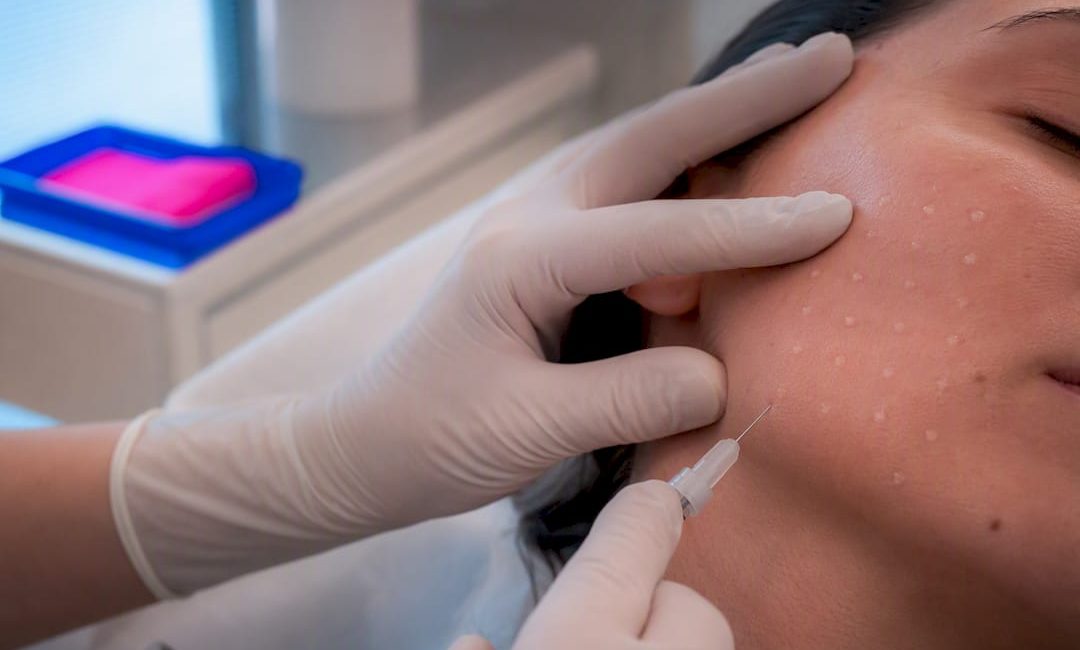
Skin booster injections are minimally invasive treatments that improve skin hydration, texture and resilience from within, rather than adding facial volume or changing shape. Early hydration effects tend to show within days, with collagen-driven improvements building over several weeks, and results commonly last several months depending on the product. Safety and outcome quality depend heavily on the specific product used and the skill of the practitioner performing the treatment.
TL;DR:
- Hyaluronic acid skin boosters deliver immediate hydration benefits, noticeable within days, and are most suitable for patients with dull or dehydrated skin.
- More regenerative options like Polynucleotides and biostimulatory agents develop effects over weeks and can improve skin texture and collagen production gradually.
- Proper injection technique, including consistent grid placement and appropriate depth, is critical for even results and to prevent lumps or patchy areas.
- Most effects last between 6 and 12 months, but duration varies based on product, technique, and individual factors, with slower biostimulatory agents often providing longer-lasting results.
- Using CE-marked products from reputable suppliers, with transparent protocols and thorough practitioner training, is essential for safety and effective outcomes.
Table of Contents
- What skin boosters are and how they work
- Types of skin boosters and when each is suitable
- What happens during a skin booster treatment session?
- Benefits, realistic outcomes and how long results last
- Risks, side effects and safety precautions
- Aftercare and how to protect your results
- How to choose a practitioner: a consultation checklist
- Why product provenance and clinical support matter for practitioners
- Possible interactions with other skin treatments or medications
- The case for caution with new booster products
- Practitioner resources and ordering CE-marked skin boosters
- Sources
- FAQ
What skin boosters are and how they work
Skin boosters are injectable treatments placed in the superficial dermis, designed to improve hydration, texture and skin resilience rather than reshape the face. That single distinction separates them from almost everything else in the aesthetic injector’s toolkit, and it’s worth understanding before anything else.
The mechanism depends on the product, but the shared aim is restoring what ageing and environmental damage strip away: water content, structural proteins and healthy microcirculation. A narrative review of injectable skin boosters describes how these treatments work across several biological pathways rather than a single one.
Core mechanisms include:
- Hyaluronic acid molecules bind water within the dermis, plumping the skin from inside rather than filling a specific area
- Some formulations stimulate fibroblast activity, encouraging the skin to produce its own collagen and elastin over time
- Microinjection itself triggers a mild regenerative response, sometimes called the “needling effect”, which supports tissue repair
- Improved microcirculation in the treated area can support a healthier, more even skin tone
Hyaluronic acid boosters placed superficially increase hydration from within and often deliver a visible glow within days, with some formulations also indirectly supporting elastin and collagen production over subsequent weeks.
The comparison that trips up most first-time patients is between boosters, dermal fillers and anti-wrinkle treatments. A clinical guide to skin booster versus filler use sets out the distinction clearly: dermal fillers sit in a deeper plane and are designed to add volume, restore contour or lift specific areas such as cheeks or the tear trough. Anti-wrinkle treatment, meanwhile, works on an entirely different system altogether, relaxing targeted facial muscles to soften dynamic lines rather than affecting skin quality at all.
Skin boosters occupy their own lane: superficial placement, hydration and quality as the goal, and no intention of changing facial shape. A product such as dermal filler formulated for skin revitalisation sits close to this boundary, blending some biostimulatory qualities with a filler base, which is exactly why product selection matters so much.
The honest caveat here is that the evidence base, while genuinely promising, remains heterogeneous. Studies vary in product type, dosing, injection depth and follow-up length, and standardised treatment protocols across the industry are still limited. That doesn’t undermine the category, but it does mean outcomes vary more between practitioners and products than patients are often told.
Types of skin boosters and when each is suitable
Not all skin boosters do the same job, and matching the right category to the right skin concern is where clinical judgement actually earns its keep.
Hyaluronic acid boosters are the most widely used starting point, particularly for patients whose main complaint is dehydration, dullness or early fine lines. They tend to produce the fastest visible change, often within a matter of days, because the hydration effect is immediate rather than dependent on the body building new tissue. Practical clinic guidance consistently positions HA boosters as the first-line option for dehydrated skin, with most improvement accumulating over the following weeks as hydration and tissue support build.
Polynucleotides (PN/PDRN) take a more regenerative approach. Derived to support tissue repair, these are increasingly used for skin texture, pore size and even atrophic acne scarring. Reported improvements are encouraging, though the same narrative review notes that larger, controlled trials are still needed before firm claims can be made. PN/PDRN protocols often run across three sessions spaced two to four weeks apart, reflecting their slower, cumulative mode of action.
Biostimulatory agents, including poly-L-lactic acid and calcium hydroxyapatite-based approaches, work on a longer delay. Rather than hydrating immediately, they stimulate collagen production gradually, which means visible change takes longer to appear but often lasts considerably longer once it does.
Autologous and newer regenerative options, such as platelet-rich plasma and exosome-based products, sit at the more experimental end of the spectrum. PRP uses the patient’s own blood components and has a longer track record, while exosomes are newer to the aesthetic market and carry more variable evidence and regulatory oversight. Practitioners should treat sourcing and regulatory status as a genuine due diligence step here, not a formality.
Hybrid products that combine hydration with mild biostimulation are increasingly common, offering a middle ground for patients who want both the early glow of an HA booster and some longer-term structural benefit. The trade-off is usually a slightly less predictable timeline, since two mechanisms are working at different speeds within the same treatment. A comparative guide to two widely used skin booster options illustrates how differently formulated products can be suited to quite different patient profiles.
What happens during a skin booster treatment session?
A well-run skin booster appointment follows a fairly consistent structure, though the technical detail is where quality diverges sharply between practitioners.
Typical steps in a treatment session:
- Medical history screening and assessment, covering allergies, pregnancy status, current medications, skin conditions and any recent aesthetic treatments in the same area
- Skin cleansing and, where appropriate, application of a topical anaesthetic to reduce discomfort
- Marking of the treatment area, often using a grid pattern to guide even product distribution
- Microinjection of the product into the superficial papillary dermis, using small, evenly spaced deposits across the marked grid
- Post-treatment skin assessment and immediate aftercare guidance before the patient leaves
Session length is usually short, often somewhere between 20 and 40 minutes depending on the area treated and the product used. Course schedules vary by category: HA boosters are commonly given as a short course of 2 to 4 sessions spaced a few weeks apart, while PN/PDRN protocols often follow a three-session pattern spaced two to four weeks apart.
Pro Tip: Ask your practitioner what dilution and needle gauge they’re using for your specific product. Some HA boosters are designed to be used undiluted, and altering that without a clear clinical rationale can change both the safety profile and the aesthetic result.
The technical detail that separates a good result from a lumpy, uneven one is injection depth and spacing. The same clinical review is blunt about this: uniform microinjections across a consistent grid within the superficial dermis are critical for even hydration, and improper depth or spacing produces patchy or lumpy results. Needle versus cannula choice, injection angle and product dilution all affect the outcome, which is precisely why technique, not just product selection, deserves as much attention as the booster itself.
Immediate effects after treatment are generally mild: small bumps at injection sites that settle within hours, along with the possibility of pinpoint redness. These are considered a normal part of recovery rather than a sign anything has gone wrong.
Benefits, realistic outcomes and how long results last
The realistic picture is this: skin boosters improve hydration, fine lines, texture and crepiness reliably, but they will not lift sagging skin or replace lost facial volume.
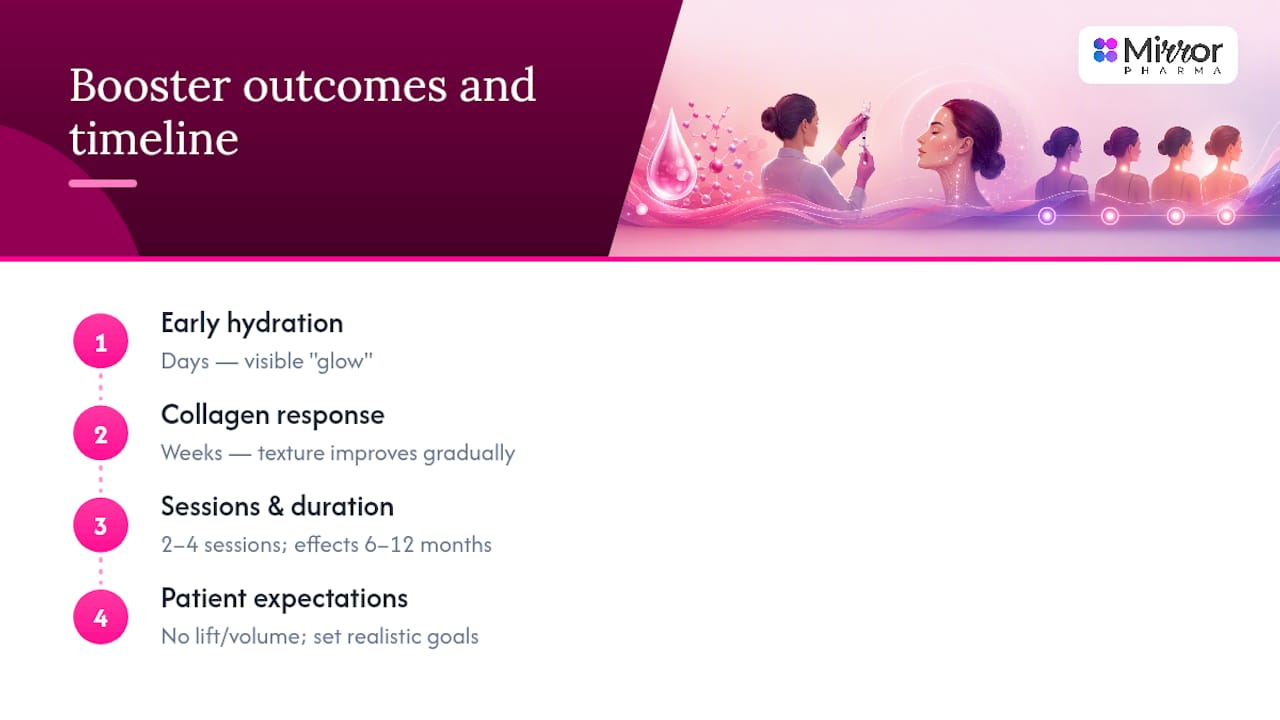
That distinction matters because expectations shape satisfaction more than the treatment itself does. Patients who arrive wanting plumper cheeks or a lifted jawline will be disappointed by a booster; patients who want their skin to look less dry, less dull and generally healthier are usually the ones who report being pleased with the result.
The timeline runs on two separate tracks. Hydration effects from HA-based boosters often appear within days, giving an early “glow” that patients notice almost immediately. Collagen-driven improvements, by contrast, build gradually over weeks as fibroblasts respond to the treatment, meaning the fuller picture of textural change doesn’t emerge until later in the process.
Many clinic guides report that skin booster treatment plans commonly involve 2 to 4 sessions, with effects often lasting somewhere in the region of 6 to 12 months depending on the specific product and individual patient factors.
That range is wide for a reason. Product choice, injection technique, the area treated, and individual factors such as skin type, lifestyle and metabolism all influence how long results hold. A biostimulatory product with slower onset often outlasts a purely hydrating HA booster, even though the HA option shows results faster at the outset. No practitioner can guarantee a precise duration for any individual patient, and any claim that implies a fixed or permanent outcome should be treated with scepticism.
Risks, side effects and safety precautions
Most skin booster side effects are mild and short-lived, but a small number of rare complications require urgent attention, and knowing the difference matters.
Common, expected effects after treatment:
- Redness and mild swelling at injection sites, usually settling within a day or two
- Bruising, which can occasionally last a week or longer depending on the individual and the area treated
- Small papules or bumps immediately after injection, which typically flatten within hours
Less common but more serious risks include:
- Nodules or lumps that persist beyond the expected settling period
- Foreign body granulomas, an inflammatory reaction to injected material that can develop weeks or months later
- Infection at the injection site, which needs prompt medical assessment
- Vascular compromise, where product inadvertently enters or compresses a blood vessel, causing tissue damage if not addressed immediately
Certain groups should generally avoid skin booster treatment altogether, including pregnant or breastfeeding patients, those with active skin infections in the treatment area, and people with certain immune conditions that affect wound healing or increase infection risk. A full medical history screening before treatment exists precisely to catch these contraindications before they become a problem.
One safety issue that deserves more attention than it usually gets: some products intended only for topical use have been injected off-label, and the same clinical review flags this as a genuine safety concern. Newer modalities such as exosome-based treatments also carry variable regulatory oversight depending on sourcing, and practitioners should verify a product’s intended use and regulatory status before it goes anywhere near a needle.
Pro Tip: Any sudden severe pain, skin blanching (turning white), a dusky or mottled colour change, or visual disturbance during or shortly after treatment needs urgent medical attention. These are the hallmark signs of vascular compromise, and delay in treating it can cause permanent tissue damage.
Aftercare and how to protect your results
Aftercare for skin boosters is mercifully simple compared with many aesthetic treatments, but a few rules genuinely affect how well the result settles.
- Apply cooling (a clean ice pack wrapped in cloth) to reduce swelling in the first few hours if needed
- Avoid strenuous exercise, saunas and hot showers for 24 to 48 hours, since heat and increased blood flow can worsen bruising and swelling
- Skip active skincare ingredients such as retinoids or strong acids on the treated area for a few days to avoid irritation on freshly injected skin
- Avoid makeup application directly over injection points for the first 12 to 24 hours where possible
- Expect bruising and swelling to settle within a few days to a week; anything persisting significantly longer warrants a follow-up call to the clinic
Peak results generally appear somewhere between two and six weeks after treatment, depending on the product used, with hydration-led improvements visible earlier and collagen-driven texture change appearing later.
Combining skin boosters with other treatments is common, but sequencing matters. Practitioners often build safety windows around procedures such as laser resurfacing, microneedling or chemical peels, spacing them apart from booster sessions rather than layering everything into the same week. Stacking too many active treatments too close together increases the risk of irritation and makes it harder to judge which treatment produced which effect.
How to choose a practitioner: a consultation checklist
The single biggest variable in skin booster outcomes isn’t the product. It’s who is holding the needle, and readers researching this treatment should treat practitioner vetting as seriously as product research.
Questions worth asking before booking:
- Is the practitioner on a recognised regulated register, such as the GMC for doctors or the relevant nursing register for nurse prescribers?
- What specific product is being used, and is it approved and licensed for injectable use rather than adapted from a topical formulation?
- Can the practitioner show clinical evidence or the manufacturer’s instructions for use (IFU) for the product they’re proposing?
- What is the proposed injection plan, including how many sessions are recommended and what the follow-up schedule looks like?
- What is the clinic’s protocol for managing an adverse event, and will the practitioner discuss this openly if asked?
Red flags are usually easy to spot once you know to look for them: pressure to book multiple sessions immediately, vagueness about who will actually be performing the injections, reluctance to discuss what happens if something goes wrong, and pricing structured around individual syringes rather than a clear treatment plan.
A transparent practitioner will happily quote for a treatment plan rather than a per-syringe price, because it reflects the actual clinical decision being made rather than encouraging upsell. If a clinic can’t or won’t explain their adverse-event protocol in plain terms, that’s a decision-making moment, not a minor detail to overlook.
Why product provenance and clinical support matter for practitioners
For licensed practitioners, product selection isn’t just a commercial decision. It’s the single factor most likely to determine whether a treatment is safe and effective.
Any product injected into skin must be approved specifically for injectable use, not adapted from a topical or unlicensed source. That distinction sounds obvious in principle but is exactly where the clinical literature raises genuine caution, particularly around products with unclear regulatory status or unverified sourcing.
Mirror Pharma supplies CE-marked skin booster products, including options such as Profhilo H+L and Hyaron skin booster syringes, alongside practitioner guides, exclusively to qualified aesthetic professionals.
Before purchasing from any supplier, clinics should request three things as standard practice: the manufacturer’s instructions for use (IFU), batch traceability documentation, and access to relevant clinical literature supporting the product’s indications. These aren’t bureaucratic extras. They’re the paper trail that protects both the practitioner and the patient if a question ever arises about a specific batch or product.
This section is written for licensed practitioners and qualified aesthetic professionals sourcing products for clinical use, not as guidance for members of the public seeking treatment. Anyone considering skin booster treatment as a patient should raise product provenance questions directly with their chosen practitioner rather than attempting to source products independently.
Possible interactions with other skin treatments or medications
Skin boosters don’t exist in isolation, and several common medications and treatments can affect how safely and predictably they perform.
Blood-thinning medications, including aspirin and anticoagulants, increase the likelihood of bruising and should be flagged during the initial medical history screening. Certain skincare actives, particularly retinoids and strong exfoliating acids, can leave skin more reactive around the injection window, which is part of why a short pause before and after treatment is generally recommended.
Recent laser treatments, microneedling or chemical peels in the same area raise the risk of irritation if performed too close together with a booster session, since all three approaches work on similar layers of skin. A sensible interval, often at least a couple of weeks either side, allows one treatment to settle before the next begins. This isn’t about avoiding combination treatment altogether. Many practitioners deliberately sequence boosters alongside other modalities for cumulative benefit. It’s about spacing them sensibly rather than layering everything into a single appointment window.
Patients on immunosuppressant medication or with active autoimmune conditions should discuss booster treatment with both their prescribing doctor and their aesthetic practitioner before proceeding, since these factors can affect both healing and infection risk.
The case for caution with new booster products
The broader trend in aesthetic medicine right now is unmistakably skin-led. Fewer patients are chasing dramatic volume changes, and more are asking for treatments that make their skin look genuinely healthier rather than visibly “done.” That shift is largely a good thing, but it comes with a temptation worth resisting: the newest product on the market isn’t automatically the best choice for a given patient.
Technique remains the more decisive factor in most outcomes, more decisive than which specific product sits in the syringe. A well-characterised, evidence-backed booster injected with poor technique will underperform a simpler product injected precisely and consistently. That’s not a popular message in an industry that often markets around ingredients and novelty, but it’s the pattern that holds up when you look past the marketing.
My honest recommendation for anyone evaluating this treatment, whether as a patient asking questions or a practitioner choosing what to stock, is to weight well-characterised products and clear safety protocols above novelty. Exosomes and other emerging modalities may well earn their place eventually, but “promising early evidence” and “ready for routine use” are different claims, and conflating them does patients no favours.
— Rizwan
Practitioner resources and ordering CE-marked skin boosters
Some suppliers offer CE-marked skin booster products and practitioner resources exclusively for licensed practitioners and qualified aesthetic professionals sourcing for clinical use. Ordering through a dedicated pharmacy supplier can ensure clear provenance and consistent availability, which matters when managing a treatment schedule.
Practitioners looking to review options can start with Profhilo H+L or browse the full Mirror Pharma product range for clinical guides and ordering information. Extended order cut-off times are designed to help clinics meet client scheduling demands without unnecessary delays. This information is intended for licensed practitioners and qualified aesthetic professionals only, not for members of the public seeking treatment.
Sources
- Injectable “Skin Boosters” in Aging Skin Rejuvenation: A Current Overview
- Vogue: What are skin boosters?
- Layers Clinics: What are skin boosters? Benefits, procedure & results
- City Skin Clinic: The Ultimate Guide to Skin Boosters
This article is general information, not a substitute for advice from a qualified doctor. Consult a qualified healthcare professional about your own circumstances before acting on anything here.
FAQ
Do skin booster injections actually work?
Clinical review evidence shows skin boosters can meaningfully improve hydration, elasticity and texture, though the overall evidence base remains heterogeneous with limited standardised protocols across products and practitioners.
Are skin boosters better than anti-wrinkle treatment?
They’re not comparable treatments because they target entirely different things: skin boosters improve hydration and skin quality, while anti-wrinkle treatment relaxes targeted muscles to soften dynamic lines, so the better choice depends entirely on what concern you’re addressing.
How long do skin booster injections last?
Most skin boosters last somewhere between 6 and 12 months, though this varies by product, injection technique and individual patient factors, with typical treatment plans involving 2 to 4 initial sessions.
How much do skin booster injections cost?
Cost varies by clinic, product type and the number of sessions in a treatment plan, and reputable practitioners should quote for a full treatment plan rather than pricing per individual syringe.
Who should avoid skin booster injections?
Pregnant or breastfeeding patients, anyone with an active skin infection in the treatment area, and people with certain immune conditions affecting wound healing are generally advised against skin booster treatment until a qualified practitioner assesses suitability.