
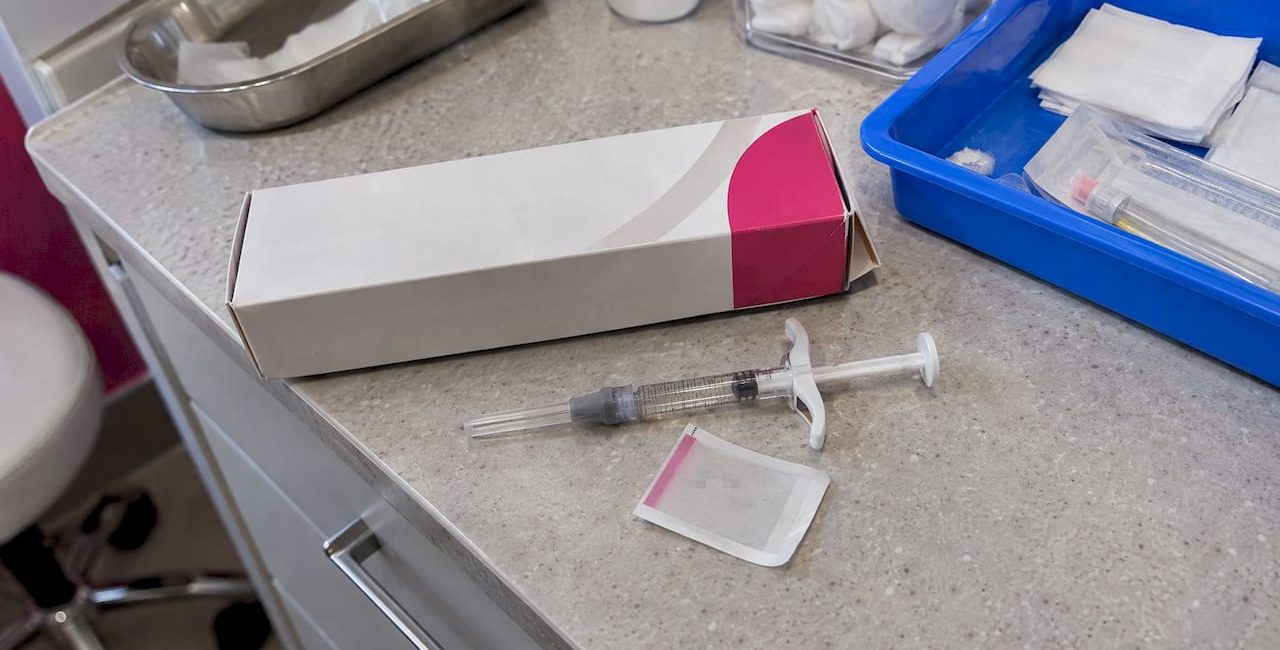
Filler batch tracking means recording the batch (lot) number, expiry date, quantity, patient, practitioner and date for every dermal filler syringe you use, and keeping that record linked and searchable. This guide is for licensed practitioners and qualified aesthetic professionals. It explains what to capture, how to trace a batch from supplier to treatment room, and what to do when a recall or adverse incident means you need the answer fast.
TL;DR
- Record the product name, lot number, expiry date, quantity, treated area, patient, practitioner and date at the point of treatment, not afterwards from memory.
- Link each batch record to the patient record permanently, so a recall can be answered in minutes rather than hours.
- Store temperature-sensitive products within the manufacturer’s range and keep documented temperature logs.
- Dermal fillers are regulated as medical devices in the UK, so problems go through the medical device route of the Yellow Card scheme, with the batch number attached.
- Buy only from suppliers that verify prescribers and supply fully documented, licensed, CE or UKCA-marked products, for licensed practitioners only.
Table of Contents
- What batch tracking means for dermal fillers
- Why tracking a filler batch matters for patient safety
- What to record at every filler treatment
- Tracing a batch from supply to the treatment room
- Storage, authenticity and expiry checks
- UK rules and guidance that apply
- What to do when a batch is recalled or a problem is reported
- Our perspective on batch tracking
- Building a system that holds up to inspection
- Ordering with traceability in mind
- FAQ
- Sources
What batch tracking means for dermal fillers
A batch number is the identifier a manufacturer assigns to one production run. On a dermal filler it is printed on the box and on the syringe, next to the expiry date, and is usually marked LOT. Many manufacturers also include peel-off labels or an implant card carrying the product name and lot, so the details can go into the patient record without retyping.
Tracking is what happens after you read that number. For every vial or syringe used, you record the batch number, expiry date, quantity used, the patient treated, the practitioner who administered it and the date. When these fields are linked, a batch number maps to a product, the product maps to the patients treated and the practitioner, and a clinic can answer a recall within minutes instead of searching through notes.
The search results for this term are dominated by warehouse and manufacturing software. The principle is the same (follow a group of goods from receipt to dispatch), but in an aesthetic clinic the final step is a person, so the quality of the patient link matters more than the stock count.
Why tracking a filler batch matters for patient safety
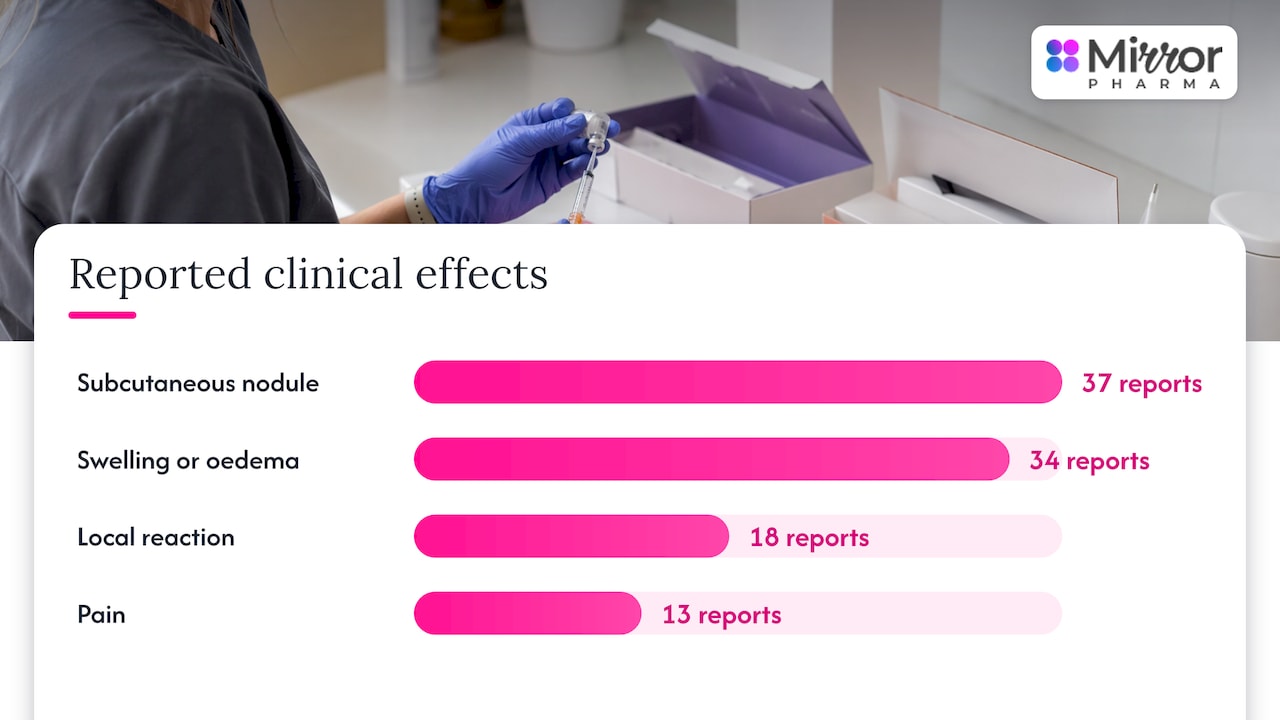
Fillers are used widely and complications do happen. The MHRA received 86 UK spontaneous adverse incident reports for dermal fillers in 2022. The most commonly reported clinical effects were subcutaneous nodule (37 reports), swelling or oedema (34), local reaction (18) and pain (13). Those figures only reflect what was reported, but they show the type of events a practitioner needs to be able to investigate.
The same MHRA response explains that reports from the public are voluntary yet play a substantial part in the vigilance system, and that Yellow Card reports are passed to the relevant manufacturer so they can feed into it. A report is only useful if it carries detail. One clinic-focused guide describes the batch number as the single field most often missing from reports, because it cannot be reliably recalled from memory later.
Recording batch and expiry underpins four practical things, according to a UK clinic compliance guide:
- Recalls. Suppliers and the MHRA issue batch-level recalls and safety alerts.
- Adverse events. The batch is one of the first things needed for a Yellow Card report.
- Inspection and insurance. Governance reviews increasingly expect traceability to be demonstrated, not just claimed.
- Stock integrity. Batch records connect what was bought to what was used.
What to record at every filler treatment
For every dermal filler treatment, the minimum useful record is the patient and date, practitioner, product brand name, lot number and expiry date, quantity used, treated areas, and whether the implant card or label was given to the patient. If one syringe is split across areas, or different batches are used, record which batch went where.
The National Occupational Standards for dermal filler procedures also cover sourcing, recording and administering filler, including audit and accountability, storage, expiry date, batch number and product name. A professional standard operating procedure for UK practitioners adds that product details (type, batch, volume, injection sites) should be documented and adverse incidents reported to the MHRA via Yellow Card.
| Field | Why it is needed | Where to find it |
|---|---|---|
| Product name and model | Identifies the device for recalls and reports | Box, syringe, implant card |
| Lot (batch) number | Links the treatment to a production run | Box and syringe, marked LOT |
| Expiry date | Confirms the product was in date when used | Box and syringe |
| Quantity used | Reconciles stock bought against stock used | Treatment notes |
| Treated areas | Shows which batch went where if syringes are split | Treatment notes |
| Patient and date | Lets you contact the right people after a recall | Patient record |
| Practitioner | Supports accountability and audit | Patient record |
| Implant card or label given | Confirms the patient holds their own record | Treatment notes |
The patient-facing side is growing. The British College of Aesthetic Medicine has urged patients to keep an aesthetic passport, a permanent record of treatments, products used and who carried them out. Its guidance also encourages patients to inspect packaging and check that batch numbers and expiry dates on the box, syringe and paperwork match. Giving every patient the label or card makes that easy, and it makes your own record the matching copy.
Tracing a batch from supply to the treatment room
A clean trail has five links. Each one should leave a record you can retrieve.
- Purchase. Keep the order, supplier and invoice details, and the product and quantity bought. Buying from a supplier that verifies prescribers and documents every order makes the first link straightforward. Our guide on documentation with orders covers what UK practitioners should expect.
- Goods in. On receipt, check the delivery against the order, then record batch numbers and expiry dates before the product goes into storage. Check that details on the box, syringe and accompanying documentation match.
- Storage. Log where the stock is kept and the temperature it has been held at (more on this below).
- Treatment. Capture the batch at the point of treatment, preferably by scanning or by using the peel-off label, and link it to the patient automatically.
- After-care and reporting. Any adverse reaction, however minor, should be logged with the batch number referenced, so patterns can be identified and Yellow Card reports completed where required.
The weakest link in most clinics is the fourth. The same guide is clear that the connection between batch record and patient record must be permanent and auditable, and that spreadsheets with copy-paste entries or paper records that can be lost or altered are not adequate for CQC purposes.
The mistake to avoid: data you cannot read back
Another UK compliance guide describes a common trap: diligent practitioners write batch numbers into every record, but there is no way to read them back out across the clinic. The systems that pass an audit test share the same design choices. Capture at the point of treatment, use structured data rather than free text, link to the patient automatically, and make it reportable in seconds. A useful self-test: pick a batch number from last month and see how long it takes you to list every patient who received it.
Storage, authenticity and expiry checks
Traceability is only worth something if the product itself was handled properly. Products requiring refrigeration must be kept within the manufacturer-specified range with documented monitoring. A UK stock-management guide lists medical-grade or dedicated medicine fridges, daily temperature logging with action plans for excursions, and min/max thermometers with calibration certificates. It also notes that CQC inspectors check temperature logs for the past three to six months, and that some dermal fillers, prescription medicines and local anaesthetics require refrigeration, as does botulinum toxin, which is stored at 2 to 8°C.
For authenticity, the same practical habits apply each time:
- Use only licensed, CE-marked products from a legitimate UK source, as the professional SOP advises.
- Check expiry dates and storage conditions on every delivery and again before use.
- Maintain the cold chain for temperature-sensitive products.
- Never mix different product batches.
- Read the lot number and expiry off the packaging, then confirm they match the syringe and paperwork.
The risk of unverified product is real. In October 2020 the MHRA issued a Medical Devices Safety Bulletin advising healthcare professionals not to use one range of hyaluronic acid fillers and to quarantine them immediately, because they were being sold with a falsely applied CE mark and their safety as medical devices could not be verified. Choosing a supplier carefully is part of traceability. Our checklist of four compliance checks for injectable suppliers and our notes on checking an aesthetic wholesaler before you pay are written for licensed practitioners making that decision.
UK rules and guidance that apply
In the UK, aesthetic injectables such as botulinum toxins and most dermal fillers are either prescription-only medicines or Class III medical devices. That places them under MHRA oversight and, for CQC-registered clinics, within the scope of CQC inspection. One UK guide summarises the MHRA’s expectation that organisations handling POMs keep accurate purchase, supplier, quantity, batch, expiry, use, storage, disposal and batch-related adverse-event records.
Three further points are worth building into your policy:
- Implant cards and device identifiers. Dermal fillers are medical devices under the EU Medical Device Regulation even when used purely for aesthetic purposes, and resorbable hyaluronic acid fillers are class III implantable devices. The regulation asks health institutions to store the unique device identifier, preferably electronically, and manufacturers to supply an implant card with the name, lot or serial number and identifier, as summarised in this traceability guide. Check the current UK position for your products with the MHRA, as devices placed on the Great Britain market follow UK rules.
- Record retention. One CQC-focused guide states that clinical records for adults should be kept for a minimum of 8 years from the last treatment date, and for minors until their 25th birthday or 8 years after the last treatment, whichever is longer. Confirm retention periods against your own regulator and indemnity requirements.
- Standards for procedures. The National Occupational Standards linked above give a reference for sourcing, storage and recording that training academies can build into teaching.
What to do when a batch is recalled or a problem is reported
When a recall is issued, the expected sequence is: identify whether you hold or have used the affected batch, quarantine remaining stock immediately, contact patients treated with it, return or dispose of stock as directed, document your actions and report to the MHRA if required. If you have structured batch records, step one takes seconds. If you do not, a recall means reading every patient file for the relevant period.
For a patient who has had a reaction, the route matters. Because dermal fillers are regulated as medical devices, a problem is reported through the medical device adverse incident route of Yellow Card rather than the drug reaction route. That guide lists vascular occlusion, delayed-onset nodules, granulomas, infection and unexpected product behaviour as events to report, and advises keeping the syringe and packaging. A separate guide notes that the report asks for the brand name and batch number, and that where the batch was not recorded it is entered as unknown and cannot be linked to a batch. Our own explainer on MHRA Yellow Card reporting walks through the flagging process for licensed practitioners.
A practical recall drill for your team:
- Name one person responsible for reading alerts from the MHRA and suppliers.
- Run a search by batch number and list affected patients.
- Quarantine and label any remaining stock physically, and note it in the record.
- Contact patients in line with your clinic’s policy, and document each contact.
- Record the outcome, including return or disposal of stock.
Clinical judgement about any individual patient’s symptoms rests with the treating practitioner and, where needed, the relevant specialist or emergency service. Batch records support that decision; they do not replace it.
Our perspective on batch tracking
We supply prescription aesthetic medicines and consumables to verified healthcare professionals, so we see traceability from the supplier’s side of the transaction. Our view is simple: the trail starts before the syringe reaches your clinic.
That is why we verify practitioner and prescriber access, and why our orders are fulfilled by a dedicated team of healthcare professionals. A clinic cannot trace what it cannot document, and documentation begins with a documented purchase from a supplier that checks who it is selling to.
We would encourage every licensed practitioner to treat batch capture as part of the treatment itself, in the same moment as consent and injection technique. Our extended order cut-off times are designed to help clinics plan stock around their appointment diaries, which makes it easier to reconcile what arrived with what was booked in.
The clinics that cope best with a recall are the ones that made the boring part automatic: scanning or labelling at goods in, structured fields at treatment, and a patient card handed over every time.
Rizwan
Building a system that holds up to inspection
Whether you use a dedicated clinic platform or a carefully designed internal process, test it against these criteria:
- Capture at the point of treatment. The batch is entered or scanned while the patient is in the chair.
- Structured data. Lot number, expiry and quantity sit in their own fields, not in free-text notes.
- Automatic patient link. Nobody has to retype or copy and paste.
- Fast reporting. You can produce a patient list for any batch in seconds.
- Audit trail. Changes are logged, so records cannot be silently altered.
- Stock reconciliation. Purchases, goods in and use can be compared for each batch.
- Cold-chain evidence. Daily temperature logs are stored and can be shown to an inspector.
If you are setting up from scratch, our guide for starting an aesthetics clinic in the UK covers the registration steps that sit alongside these systems.
Ordering with traceability in mind
For licensed practitioners and clinics, we supply dermal fillers, skin boosters, polynucleotides, toxins and the needles and consumables that go with them. Access is for verified prescribers and trained practitioners, and every order is subject to compliance checks. You can browse the dermal filler range once your account is verified, and see our documentation requirements for orders before you buy.
FAQ
What is the difference between a batch number and a lot number on a filler?
They refer to the same thing: the identifier of one production run. Packaging usually marks it LOT, and it sits next to the expiry date on the box and syringe. Record it exactly as printed, for licensed practitioners, alongside the product name.
Do I need to record a batch number if I split one syringe between areas?
Yes. If a syringe is split across areas, or different batches are used in one appointment, record which batch went where. Never mix different product batches in the same syringe.
How long should filler treatment records be kept?
One UK CQC-focused guide states a minimum of 8 years from the last treatment for adults, and for minors until their 25th birthday or 8 years after the last treatment, whichever is longer, as set out in its records section. Check the requirements of your regulator and insurer, as they may be stricter.
Where do I report a problem with a dermal filler?
Report it through the Yellow Card scheme using the medical device adverse incident route, with the brand name and batch number attached, and keep the syringe and packaging. Our Yellow Card reporting guide explains the process for qualified aesthetic professionals.
Is a paper log or spreadsheet enough?
For CQC purposes, spreadsheets with copy-paste entries and paper records that can be lost or altered are not considered adequate. The link between batch and patient should be permanent and auditable, so a structured, patient-linked system is the safer route.
Sources
- Injectly: lot number traceability for fillers and botulinum toxin
- Consentz: how to manage injectable stock in your aesthetic clinic
- Consentz: CQC stock management for aesthetic clinics
- MHRA FOI response on dermal filler adverse incident reports, 2022 data
- Faces: Yellow Card reporting for aesthetic practitioners
- INTENTIQ: injectable batch traceability for CQC compliance
- PBL Magazine: BCAM aesthetic passport
- National Occupational Standards: dermal filler procedures
- Standard Operating Procedure for practitioners
- GOV.UK: Medical Devices Safety Bulletin MDSB/2020/01