
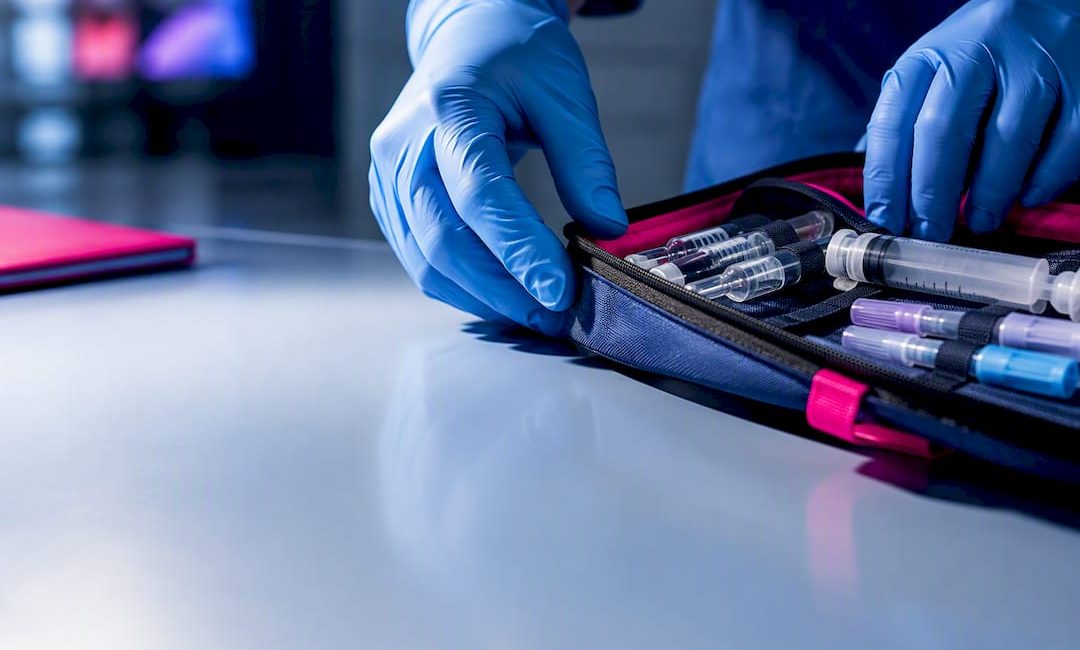
A compliant UK anaphylaxis kit must guarantee immediate access to intramuscular adrenaline, either as 1 mg/mL (1:1000) ampoules with a syringe and needle or in-date auto-injectors, alongside masks, gloves and a documentation sheet. Resuscitation Council UK sets adrenaline as the non-negotiable first-line item, and the Green Book confirms antihistamines aren’t required. Schools should hold spare in-date junior and adult auto-injectors, and Certain suppliers stock the consumables that keep these kits complete.
TL;DR:
- Kits should always contain adrenaline ampoules or auto-injectors, with clear labeling and regular expiry checks, to ensure immediate access during emergencies.
- Schools typically stock two auto-injectors and a salbutamol inhaler with a spacer, with monthly checks and accessible storage in known locations.
- Staff must undergo annual hands-on training with auto-injectors and practice drawing up adrenaline, ensuring they can act confidently under pressure.
- Monitoring after adrenaline administration should include pulse oximetry, blood pressure, and ECG, with all actions documented and incident reports completed.
- Procurement should prioritize sealed kits with traceable batch records and verify supplier reliability, focusing on adrenaline availability and staff competency.
Table of Contents
- Standard contents: what goes in the kit and why
- What should a school or immunisation-clinic kit look like?
- What do RCUK and Green Book guidance actually require?
- How often should the kit be checked and restocked?
- Are staff actually able to use the kit under pressure?
- Procurement priorities that actually matter
- Sourcing kit components for licensed practitioners
- Sources
- FAQ
Standard contents: what goes in the kit and why
Every UK anaphylaxis kit is built around one job: getting adrenaline into muscle within seconds of recognising a reaction. Everything else exists to support that single action or to record that it happened.
Resuscitation Council UK guidance sets out a clear baseline for clinical packs. It specifies a few ampoules of adrenaline 1 mg/mL (1:1000), several 23G needles and graduated syringes (https://www.mirrorpharma.co.uk/product/saline-sodium-chloride-10-x-5ml-vials), with masks sized for both children and adults, and it insists packs are checked regularly against expiry dates. That ampoule-and-syringe combination remains the gold standard in settings where staff are trained to draw up medication accurately, because it allows weight-adjusted dosing that a fixed-dose auto-injector cannot match.
Pro Tip: Never let ampoules of 1:1000 adrenaline sit in the same tray as 1:10,000 cardiac arrest stock. Mixing concentrations by accident during a stressful call is one of the most preventable dosing errors in emergency medicine, and pharmacy safety standards flag it repeatedly.
A typical clinical or educational kit includes:
- Adrenaline 1 mg/mL (1:1000) ampoules, or in-date auto-injectors at 150mcg, 300mcg or 500mcg strengths
- 1 ml graduated syringes and 23G needles for IM administration
- Disposable face masks sized for children and adults
- Disposable gloves and antiseptic wipes
- A clinical waste bag for safe disposal after use
- A documentation sheet or notepad to log the exact time adrenaline was given
- A salbutamol inhaler and compatible spacer, where respiratory symptoms are anticipated
What tends to surprise newer procurement leads is what’s deliberately left out. Chlorphenamine and hydrocortisone are not first-line treatments for anaphylaxis, and the Green Book states plainly that they don’t need to feature in the pack at all. Including them isn’t wrong, but treating them as essential misdirects attention from the one intervention that actually reverses airway and circulatory collapse.
What should a school or immunisation-clinic kit look like?
Schools and immunisation clinics build their kits around the same clinical logic but with different operational pressures. A school nurse working alone during a lunch break needs speed and simplicity; a vaccination clinic running back-to-back appointments needs a pack matched to RCUK’s clinical checklist.
For school settings, the standard configuration includes:
- Two spare, in-date adrenaline auto-injectors, sized appropriately for junior or adult use
- A salbutamol inhaler with a compatible spacer for pupils at risk of respiratory compromise
- Written instructions and a laminated checklist covering monthly verification
- Clear labelling showing device strength, expiry date and location within the building
Auto-injectors dominate school kits for good reason: staff without clinical training can be shown how to use them safely, whereas drawing up adrenaline from an ampoule demands a skill few school staff practise regularly. That said, RCUK’s 2021 guideline notes that ampoule draw-up remains preferable in clinical settings where weight-based dosing genuinely matters, since auto-injectors can’t be adjusted for a patient’s weight.
Immunisation clinics, by contrast, typically stock the fuller RCUK-aligned pack: a set of 1:1000 adrenaline ampoules, 23G needles, 1 ml syringes, masks and basic monitoring equipment such as a pulse oximeter where the setting allows it.
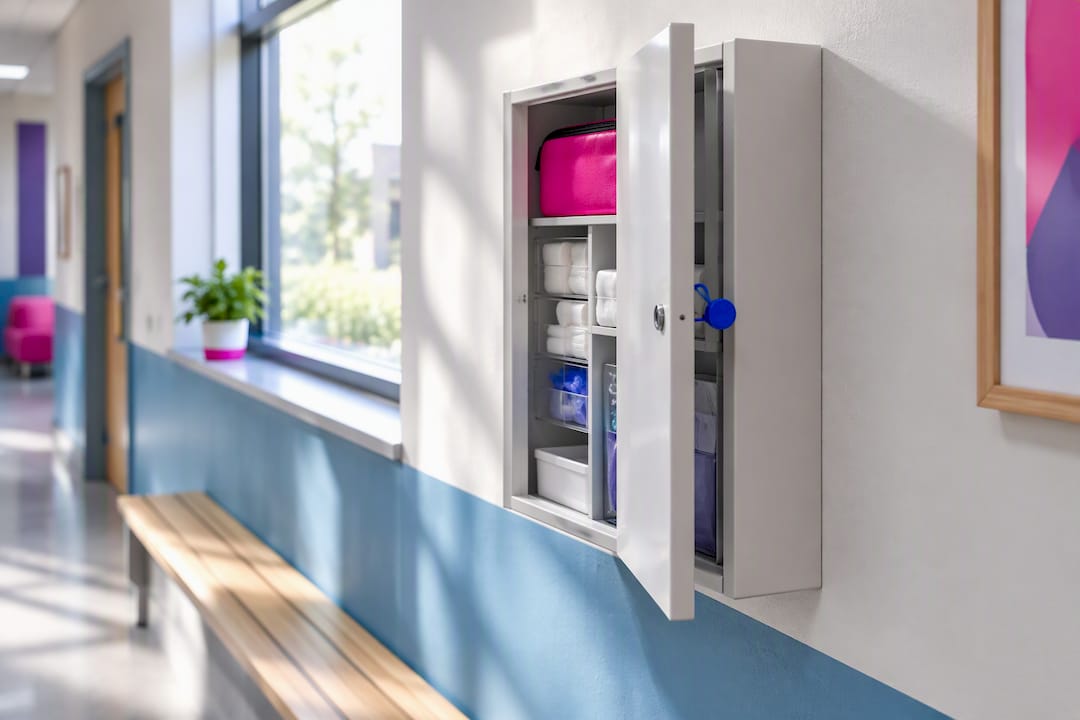
Storage matters as much as contents. A kit is only useful if staff can find it in under thirty seconds. Wall-mounted, clearly labelled boxes in a known, consistent location outperform kits tucked away in a locked office cupboard, particularly during school hours when the person with the key might be off site.
What do RCUK and Green Book guidance actually require?
UK guidance doesn’t carry the force of statute, but it sets the standard against which negligence and competence are judged. Resuscitation Council UK’s 2021 guideline is the clinical reference point most inspectors and insurers expect organisations to follow.
The guidance is specific about monitoring, not just administration. After adrenaline is given, RCUK expects ongoing observation, pulse oximetry, blood pressure checks and, in appropriate settings, ECG monitoring, because a patient can deteriorate again after apparent improvement.
Early intramuscular adrenaline is the only treatment that reverses airway and circulatory compromise. Secondary agents are not substitutes and should never delay adrenaline administration.
That single principle from NHS Greater Glasgow and Clyde’s clinical guidance underpins everything else in this article. If your kit contains every accessory but adrenaline is out of date, none of it matters.
For immunisation settings specifically, the Green Book is the governing document, and gov.uk hosts broader school health advice alongside it. Trainers delivering competency sessions carry a common-law duty to be genuinely capable of demonstrating recognition and treatment, not merely to hold a certificate.
In practice, this guidance translates into four operational duties:
- Keeping adrenaline immediately accessible, not locked away or requiring a search
- Maintaining documented evidence of regular checks, not just verbal assurance
- Monitoring patients after administration rather than assuming the crisis has passed
- Reporting the incident and arranging follow-up referral, since anaphylaxis nearly always warrants hospital assessment
Anyone drafting local policy on emergency medicines should also check Legislation for any statutory obligations specific to their sector, since RCUK and Green Book guidance sits alongside, not instead of, formal regulation.
How often should the kit be checked and restocked?
A kit that’s never checked is a liability wearing the shape of reassurance. The fix is a short, repeatable routine that any staff member can run and sign off in under five minutes.
Run this checklist monthly:
- Confirm every listed item is physically present in the kit
- Check the expiry date on every ampoule, auto-injector and syringe
- Record the batch number of each adrenaline item against your log
- Inspect seals on ampoules and packaging for damage or tampering
- Verify storage conditions, since adrenaline degrades faster in heat or direct light
- Log the checker’s name and the date of inspection on the kit’s record sheet
Pro Tip: Pin the monthly check log to the inside of the kit lid, not in a separate file. When an inspector or auditor opens the box, the evidence of due diligence should be immediately visible, not something you have to go and retrieve.
Replacement follows two triggers: use and expiry. After any real-world administration, the used ampoule or auto-injector must be replaced immediately, and the incident itself should be logged alongside the replacement so there’s a clear audit trail linking the event to the restocked item. Expiry-driven replacement should happen with enough lead time that the kit is never caught with a device days from lapsing.
On storage, keep the kit visible and accessible during all opening hours, clearly labelled, and never locked in a way that could delay access by even a minute. A sealed but unlocked box, checked monthly and clearly signed, remains the most defensible setup for both clinical and school environments.
Are staff actually able to use the kit under pressure?
Owning the right kit and being able to use it under pressure are two different things. Resuscitation Council UK guidance is explicit that adrenaline auto-injectors aren’t intuitive, and staff need hands-on practice with training devices, not just a video or a leaflet.
Where ampoules are used, staff also need supervised practice drawing up adrenaline, since the pressure of a real event is nothing like a classroom scenario. Training frequency should sit at a minimum of annually, with a refresher drill sooner for high-turnover settings like schools with seasonal staff changes.
A workable drill template covers:
- Roles: who recognises symptoms, who administers, who calls 999, who documents
- Timeline: symptom recognition to adrenaline administration should be practised to under two minutes
- Debrief: what went well, what was slow, what needs re-practising
- Documentation: recording the exact time adrenaline was given, since ambulance crews rely on this
Pro Tip: Assign roles by name during drills, not by job title. “Sarah calls 999” sticks in a crisis far better than “the duty manager calls 999,” because in a real event, people default to what they rehearsed, not what the policy says.
Trainers themselves should be competent to demonstrate both recognition and treatment confidently, not simply certified. RCUK’s emphasis on hands-on practice exists precisely because reading about an auto-injector and using one under stress are not the same skill.
Procurement priorities that actually matter
If you’re agreeing a kit specification with a supplier, put adrenaline availability and staff competency ahead of every accessory on the list. Prefer sealed kits with traceable batch records over loose-assembled boxes, and verify your supplier can confirm stock provenance on request. Document every procurement decision in your clinical governance file, not just in an email thread.
— Rizwan
Sourcing kit components for licensed practitioners
Assembling a compliant kit is only half the job. Keeping it stocked, in-date and traceable month after month is where most organisations lose the thread, and that’s where a reliable supplier earns its place. Mirror Pharma supplies core consumables, including auto-injector devices and preassembled emergency packs, to licensed practitioners and verified clinical or educational buyers, backed by strict verification at account setup and extended order cut-off times designed to keep restocking reliable rather than reactive. This service is intended strictly for licensed practitioners and qualified professional buyers, not for individual or personal use. If your kit’s expiry log is due for a refresh, browse Mirror Pharma’s needles and consumables range to compare what’s currently in stock and place a verified order before your next monthly check falls due.
This article is general information, not a substitute for advice from a qualified doctor. Consult a qualified healthcare professional about your own circumstances before acting on anything here.
Sources
- Guidance: Anaphylaxis | Resuscitation Council UK
- Gov
- Anaphylaxis training recommendations from the Resuscitation Council UK | React First
FAQ
What is included in a standard anaphylaxis kit?
A standard kit contains adrenaline 1 mg/mL (1:1000) ampoules with syringes and needles, or in-date auto-injectors, plus masks, gloves, a waste bag and a documentation sheet. Resuscitation Council UK specifies two ampoules, four 23G needles and four graduated 1 ml syringes as the clinical baseline.
What does an immunisation-setting anaphylaxis pack contain?
Immunisation packs follow Green Book guidance and centre on adrenaline ampoules, needles and syringes rather than antihistamines or steroids, which aren’t first-line treatments. The pack should also include masks and basic monitoring equipment where the clinic setting allows it.
Can schools keep adrenaline auto-injectors as part of their first aid kit?
Yes. Schools are advised to keep at least two spare, in-date adrenaline auto-injectors, sized junior (150mcg) or adult (300mcg) as appropriate, alongside a salbutamol inhaler and spacer where relevant. These should sit in a clearly labelled, accessible location, checked monthly for expiry.
What are current UK guidelines for treating anaphylaxis?
Resuscitation Council UK’s 2021 guideline remains the reference document, prioritising immediate intramuscular adrenaline over any secondary treatment and setting out monitoring expectations after administration. It also covers legal aspects, needle choice and dosing for refractory cases.
Where can practitioners source verified kit components?
Mirror Pharma supplies core anaphylaxis kit consumables, including adrenaline auto-injectors and preassembled emergency packs, to verified licensed practitioners and clinical or educational buyers. Current stock and ordering details are available on the Mirror Pharma site.