
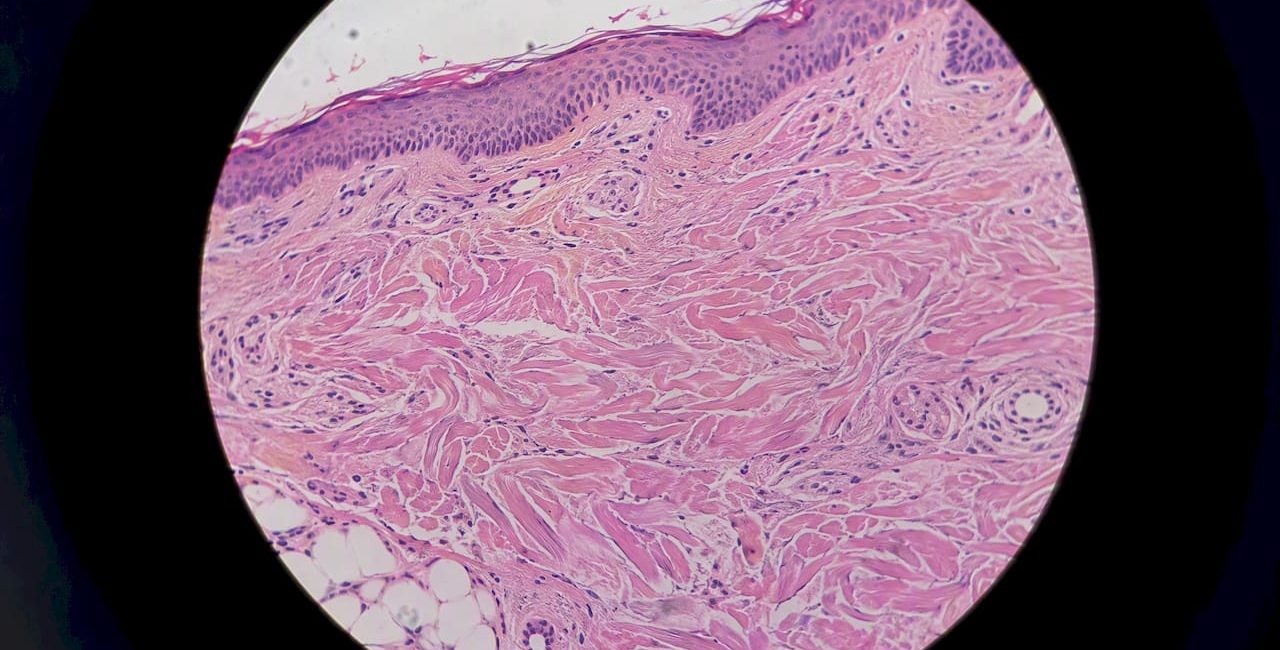
Regenerative aesthetics is biologically driven tissue renewal that aims to restore architecture and function rather than only masking the signs of ageing. For licensed practitioners and qualified aesthetic professionals, representative approaches include platelet-rich plasma, polynucleotides and calcium hydroxylapatite, which act through scaffolds, bio-cues or cells to activate the skin’s own repair pathways.
TL;DR:
- Reserve regenerative claims for treatments that restore both tissue architecture and function; track dermal thickness, collagen balance, vascularity, and elasticity alongside photographs.
- CaHA, PLLA, and PCL trigger different inflammatory responses and are not interchangeable; match each material to treatment area, skin quality, and patient tolerance.
- Clinical evidence remains uneven because preparation and protocols vary, especially for PRP and cell based treatments; document volumes, processing, depth, and technique at every session.
- Choose patients who accept gradual results and multiple sessions, explain that outcomes are not guaranteed, and defer treatment for active infection or healing concerns.
Table of Contents
- What principles define regenerative aesthetics?
- How do regenerative treatments work in the tissue?
- Which regenerative modalities are used in clinics?
- How does regenerative aesthetics differ from conventional aesthetic medicine?
- What does the evidence say, and what do UK practitioners need to know?
- How should you select patients and plan a regenerative course?
- Why I think biological precision matters more than novelty
- FAQ
- Sources
What principles define regenerative aesthetics?
The conceptual shift is from correction to renewal. Regenerative aesthetics moves away from transient volumetric correction towards restoring the normal architecture and function of ageing or damaged tissue by activating endogenous repair pathways. It prioritises biological sustainability, tissue quality and functional integration over an isolated corrective result.
That framing demands precision with vocabulary. True regeneration restores organised tissue architecture and function. Repair, by contrast, often ends in disorganised matrix, and remodelling changes existing tissue without rebuilding it. Many products used in clinics work through biostimulation or remodelling, and the same review advises using the word “regenerative” only where the biology supports it, because realistic patient expectations depend on that distinction.
Practice currently rests on three approaches borrowed from regenerative medicine, which the field’s founding review describes as cells, bio-cues and scaffolds:
- Scaffolds: particulate biomaterials that give cells a structure and mechanical cue for organised matrix deposition.
- Bio-cues: signalling inputs such as platelet-rich plasma, polynucleotides and exosomes that change how resident cells behave.
- Cells: stromal vascular fraction and adipose-derived fractions that bring cellular content and paracrine signalling to the tissue.
A multidisciplinary panel stated the standard plainly:
Authentic regenerative approaches should address both tissue architecture and tissue function. A treatment that only changes how skin looks on the day does not meet that bar.
Outcome measures follow from this. Surface appearance alone is an unreliable guide, so clinicians should track dermal thickness, the collagen type I/III ratio, vascularity and elasticity wherever their setting allows. Photographs remain useful for documentation, but they sit beside objective measures rather than replacing them. A patient who looks pleased early on may still have little organised matrix change later, and only structured measurement tells you which is true.
How do regenerative treatments work in the tissue?
Regenerative treatments work by deliberately engaging the same processes the body uses to heal, then steering them towards organised rebuilding rather than scarring. The main mechanisms practitioners should understand are these:
- Controlled inflammation: a short, contained inflammatory phase recruits the cells that start repair. Excessive or prolonged inflammation tips the response towards disorganised matrix or nodules.
- Extracellular matrix remodelling: fibroblasts lay down new collagen and other matrix components, and the balance of collagen type I and III is a marker of how mature that matrix is.
- Angiogenesis: improved vascularity supplies oxygen and nutrients, which ageing dermis often lacks.
- Fibroblast activation: senescent fibroblasts produce less matrix, so reactivating them is central to restoring tissue quality.
- Mechanotransduction: cells sense the stiffness and stretch of their surroundings and convert it into biochemical signals that change collagen output.
- Paracrine signalling: cells and vesicles release factors that influence neighbouring cells without direct contact.
Scaffold-type materials work largely through mechanics. Particles placed in the dermis create a physical cue that cells respond to, and the surrounding fibroblasts lay down collagen around and between them. In consensus work on calcium hydroxylapatite, the material showed evidence of improving collagen type I/III ratios and producing other matrix components, which is the kind of change that goes beyond volume.
Bio-cues work differently. Platelet-rich plasma delivers concentrated growth factors, polynucleotides supply nucleotide-based signals, and exosomes carry cargo between cells. Narrative reviews describe these as distinct mechanisms, covering growth factors, nucleotide signalling, extracellular vesicle signalling, cellular paracrine effects and particulate scaffolding, and they improve the microenvironment in which regeneration can occur rather than building tissue directly.
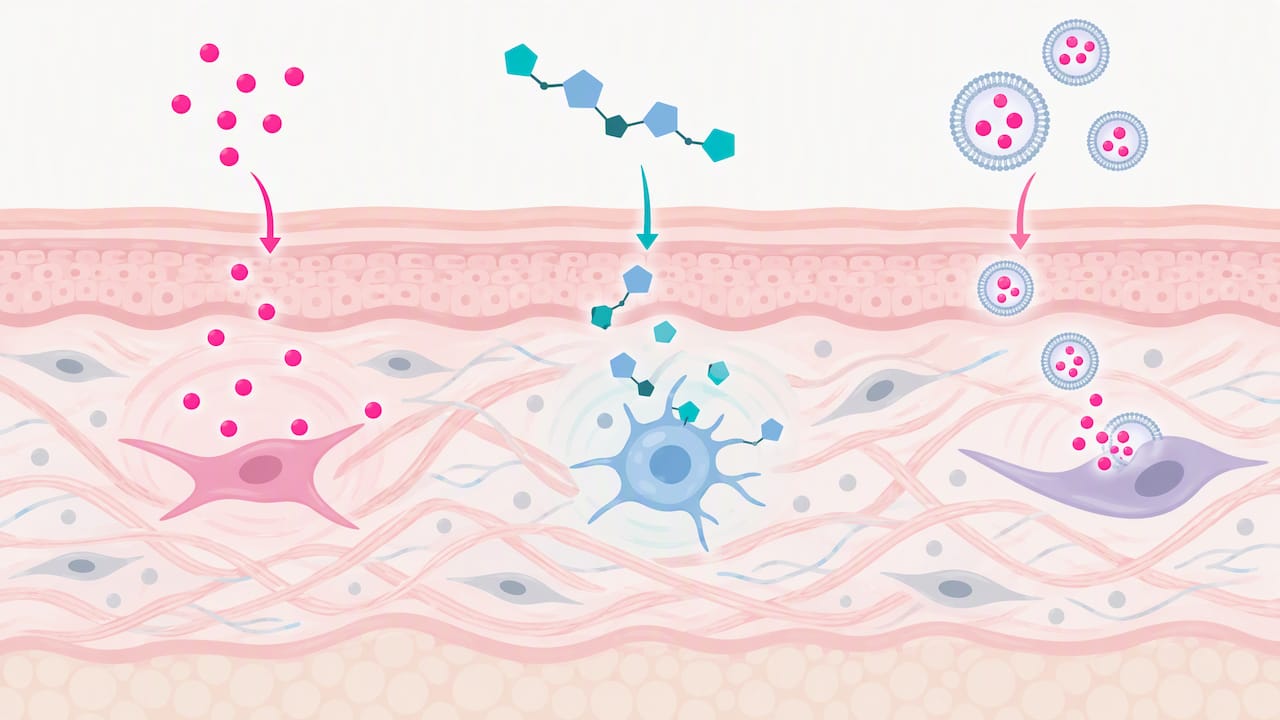
Cellular approaches carry the most variability. The cell content of adipose-derived or stromal fractions depends on the donor, the harvest, the processing method and the preparation, so two clinics using nominally the same approach may deliver different biology. That caveat on reproducibility applies across the whole field, and it is the main reason protocols should be written down and followed consistently.
Pro Tip: Record the preparation details for every biological treatment (volumes, spin settings, dilution, depth and plane). Without them you cannot tell whether a poor result came from the biology or the method.
Which regenerative modalities are used in clinics?
The same narrative literature review covers the modalities clinicians meet most often, and each has a different mode of action and evidence profile.
- Platelet-rich plasma (PRP): an autologous concentrate of platelets and the growth factors they release. It is used for skin quality, texture and periorbital or facial rejuvenation, and acts by signalling to fibroblasts and supporting vascularity. Preparation varies widely between systems and operators, which limits comparison between studies.
- Polynucleotides and PDRN: nucleotide-based preparations used to support dermal hydration and stimulate fibroblasts. They act as signalling and tissue-conditioning agents rather than as a space-filling material, and sit naturally in a bio-cue strategy. We supply polynucleotide products for licensed practitioners.
- Calcium hydroxylapatite (CaHA): a particulate biostimulator that stimulates targeted neocollagenesis. Global consensus guidelines on diluted and hyperdiluted CaHA report improvements in skin laxity and skin quality across several body areas, with bruising, swelling, mild pain and induration as the adverse events described. Technique affects safety, particularly in thinner or darker skin.
- Poly-L-lactic acid (PLLA): a biostimulator that provokes a gradual, collagen-led response over a course of sessions. Our collagen stimulator range is available for qualified aesthetic professionals.
- Polycaprolactone (PCL): a further particulate biostimulator. A review and case series notes that CaHA, PLLA and PCL differ in biological behaviour and can produce different physiological outcomes and inflammatory responses, so they are not interchangeable.
- Exosomes (extracellular vesicles): intercellular signalling agents. The evidence base is early-stage, and sourcing, characterisation and regulatory status deserve particular scrutiny.
- Stromal vascular fraction (SVF) and adipose-derived fractions: cell-rich preparations whose benefit is attributed largely to paracrine signalling. Variability in cell content and processing is the main limitation, and regulatory handling of cellular products is stricter than for devices or injectables.
For practitioners asking whether a product is a scaffold or a biostimulator, the practical difference lies in immune response and remodelling. Particulate materials trigger a foreign-body-type reaction that is then channelled into collagen production, and each material does this with a different pace and inflammatory profile. Understanding that profile is what lets you match a material to skin quality, anatomical area and patient tolerance, and it explains why a plan built around one biostimulator should not simply be swapped for another.
Biological products that fall outside a marketing authorisation need extra care. Our guidance on unlicensed medicines in aesthetics sets out two checks prescribers should make before using them.
How does regenerative aesthetics differ from conventional aesthetic medicine?
The two approaches answer different questions. Conventional aesthetic medicine asks what is missing and how to replace it now. Regenerative aesthetics asks why the tissue has declined and whether its biology can be improved.
- Time frame: conventional correction focuses on volumetric change and immediate visual outcome. Regenerative work involves delayed biological remodelling, with results emerging over weeks and building across a course.
- Target: conventional treatment targets contour, volume and dynamic lines. Regenerative treatment targets tissue quality, architecture and function.
- Measure of success: a conventional result is judged visually at the appointment. A regenerative result is judged by changes in the tissue itself over time, alongside appearance.
- Counselling: conventional treatments suit patients who want a visible change quickly. Regenerative strategies suit patients who accept gradual change and multiple sessions.
The two are not rivals. Multimodality planning is common: a regenerative tool improves the quality of the skin and the matrix, while a dermal filler restores structural volume where it is needed. A thread may be used for support. Planning changes accordingly. You sequence treatments so that one does not interfere with another, allow healing time between sessions, and explain to the patient which component is doing which job. Treating the regenerative element as an add-on to a filler appointment, rather than as the foundation, tends to undersell it.
For skin boosting specifically, our skin booster versus filler guide explains how the two product types differ in purpose.
What does the evidence say, and what do UK practitioners need to know?
The honest summary is that the field is promising and the evidence is uneven. The same narrative review concludes that available clinical evidence is heterogeneous and often limited by variable preparation and protocols, and the field lacks consistent, high-quality trials. Treat marketing claims about regeneration with the same scepticism you would apply to any emerging therapy.
- Common adverse events: bruising, swelling, mild pain and induration are reported with diluted CaHA, and technique influences safety.
- Material-specific concerns: different particulate materials provoke different inflammatory responses, so granuloma risk is not identical across products. Know the profile of what you inject.
- Standardisation: unstandardised preparation and protocols are the main source of inconsistent results, so write protocols down and audit them.
- Informed consent: explain that results build gradually, depend on biology and are not guaranteed, and that evidence for some modalities is still emerging.
- Records and referrals: keep treatment records in line with your professional obligations, and know how to refer promptly when a complication arises. Our note on documentation with orders covers record-keeping for UK practitioners.
On regulation, the direction is clear. The government’s consultation response sets out a tiered licensing scheme in which higher-risk procedures will be restricted to suitably qualified healthcare professionals and subject to CQC oversight.
Higher-risk non-surgical procedures are to be restricted to suitably qualified healthcare professionals. Expect training and safety standards to rise, and plan your protocols accordingly. Our checklist on compliance for injectables covers checks UK clinicians can apply to supply.
How should you select patients and plan a regenerative course?
Good outcomes start with selection. Assess skin quality (thickness, laxity, texture), general health, prior treatments and what the patient actually expects. Regenerative treatments suit patients who accept gradual change. They are a poor fit for someone wanting a dramatic visible change by the end of the week. Contraindications include active infection or inflammation at the site, relevant medical conditions and anything that affects healing, so take a full history and decline or defer where the risk is unclear.
The typical course involves several sessions, with biological remodelling following over the weeks after each one. Combination with other modalities is sensible when one tool cannot address both quality and volume.
- Assess and document: record skin quality, history, baseline photographs and any objective measures available.
- Agree goals and consent: explain the gradual timeline, the absence of guarantees and the evidence status of the chosen modality.
- Treat and record: document product, preparation, volume, depth and technique for every session.
- Give aftercare: advise on expected swelling, bruising and induration, and on what to report.
- Review on a set schedule: reassess against baseline at intervals that match the modality’s remodelling time, then decide on further sessions or combination.
Pro Tip: Photograph under identical lighting, angle and expression at every review. Inconsistent images are the commonest reason a real improvement cannot be shown, or a lack of one gets missed.
For post-treatment guidance, set expectations that mild swelling and bruising are common, that results emerge gradually, and that the patient should contact you if anything unexpected develops. Keep that conversation and the written advice in the record.
Why I think biological precision matters more than novelty
My view is that this field will be judged less by how many new products arrive than by how honestly we use the word “regenerative”. The temptation is to apply it to anything that improves skin quality. The better discipline is to ask what has actually been shown to happen in the tissue, and to say no more than that to patients.
For clinicians, that means three practical commitments. Train properly in the mechanisms and technique of each modality before adding it. Standardise your protocols so that your own results become interpretable. And measure outcomes objectively where you can, rather than relying on appearance alone. Conservative claims protect patients and protect your practice as regulation tightens.
At Mirror Pharma, we support licensed practitioners with product supply and reliable fulfilment, and we leave clinical judgement where it belongs: with you. If you want to look at what we stock for practitioner-led regenerative protocols, start with our polynucleotides and skin booster ranges.
— Rizwan
FAQ
Does regenerative therapy really work?
Some regenerative approaches show measurable biological effects, but the evidence is mixed. Reviews describe the clinical evidence as heterogeneous and limited by variable preparation and protocols, so results depend heavily on modality and technique. For qualified aesthetic professionals, the sensible position is cautious optimism and objective outcome tracking.
Can you give me an example of a regenerative treatment?
Calcium hydroxylapatite is a well-studied example. A consensus panel reported evidence that it improves collagen type I/III ratios and stimulates other matrix components. Platelet-rich plasma and polynucleotides are further examples of bio-cue approaches used by licensed practitioners.
What are regenerative treatments for the face?
Practitioners use platelet-rich plasma, polynucleotides, exosomes, particulate biostimulators such as CaHA, PLLA and PCL, and cell-based fractions. Each works through a different mechanism, described in a review of regenerative modalities, and the choice depends on skin quality, area and patient suitability.
What does regenerating skin look like?
Changes tend to be gradual: improved texture, hydration and firmness building over weeks, rather than an immediate visible shift. Appearance alone is an unreliable guide, so practitioners track dermal thickness, collagen balance, vascularity and elasticity as outcome markers of tissue quality.
Sources
- Regeneration in Aesthetic Medicine: Mechanisms, Evidence, and Clinical Boundaries
- Consensus Agreements on Regenerative Aesthetics: A Focus on Regenerative Biostimulation With Calcium Hydroxylapatite – PubMed
- Global Consensus Guidelines for the Injection of Diluted and Hyperdiluted Calcium Hydroxylapatite for Skin Tightening
- Gov
- What “regenerative” means in aesthetic medicine: a narrative literature review attempting to demystify the core essence of regenerative aesthetics