
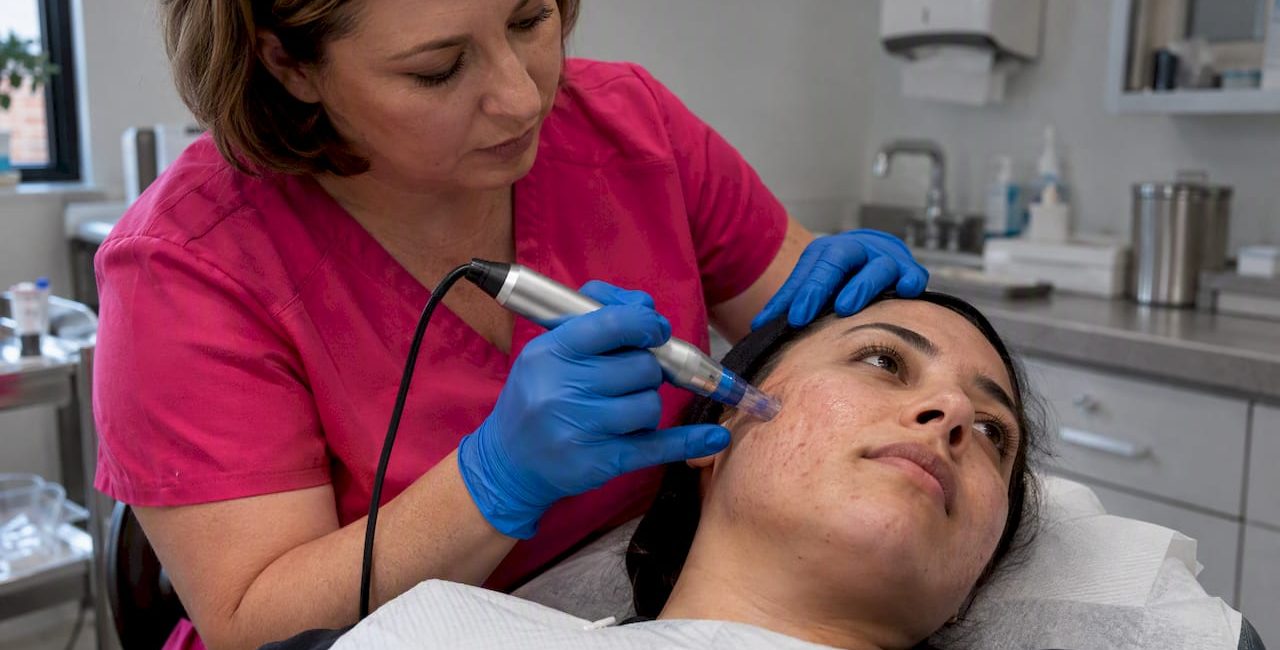
Microneedling can improve the texture and appearance of atrophic acne scars by creating controlled micro-injuries that prompt the dermis to remodel itself. It works best on shallow boxcar and rolling scars, it needs a course of sessions rather than one visit, and it is usually only one part of a plan for mixed scarring. This guide is for licensed practitioners and qualified aesthetic professionals who assess, plan and deliver these treatments in UK clinics. It is educational, not advice for members of the public, and it does not replace your own clinical judgement or training.
TL;DR
- Microneedling triggers dermal remodelling and new collagen, so it suits atrophic scars, especially shallow boxcar and rolling types. Deep ice-pick scars usually need a different tool.
- Plan a course, typically 3 to 6 sessions spaced around 4 to 6 weeks apart, and explain that remodelling continues for months afterwards. No outcome is guaranteed.
- Do not treat through active inflammatory, pustular or cystic acne. Assess disease control before any elective scar work.
- Mixed scar profiles often respond better to staged combination therapy than to microneedling alone.
- Single-use, traceable needle cartridges from verifiable suppliers are a patient-safety issue, not a cost decision.
Table of Contents
- What microneedling does to an acne scar
- Which acne scars respond, and which do not
- Assessing the patient before you treat
- Needle depth, technique and device choice
- Planning the course: sessions, intervals and expectations
- Why combination therapy is increasingly the norm
- Safety, hygiene and sourcing
- The UK regulatory picture
- Our perspective at Mirror Pharma
- Supplies for scar and skin quality protocols
- Documentation and follow-up
- FAQ
- Sources
What microneedling does to an acne scar
An atrophic acne scar is a loss of tissue: the dermis has healed with less structural support than the skin around it, so the surface sits below its neighbours. Microneedling does not fill that depression. It creates thousands of tiny channels in the skin and relies on the repair response that follows.
Systematic reviews describe that response as neocollagenesis, with increased expression of type I collagen, elastin and growth factors such as VEGF, FGF-7, EGF and TGF-β after needling. The practical consequence for your consultation is simple: the benefit comes from biology that takes weeks to months, so the visible change lags behind the treatment.
The British College of Aesthetic Medicine describes the technique as using a hand-held device to create thousands of tiny injuries with surgical needles, which promote skin repair from the inside. That is a useful plain-English line for your own patient information sheets.
Which acne scars respond, and which do not
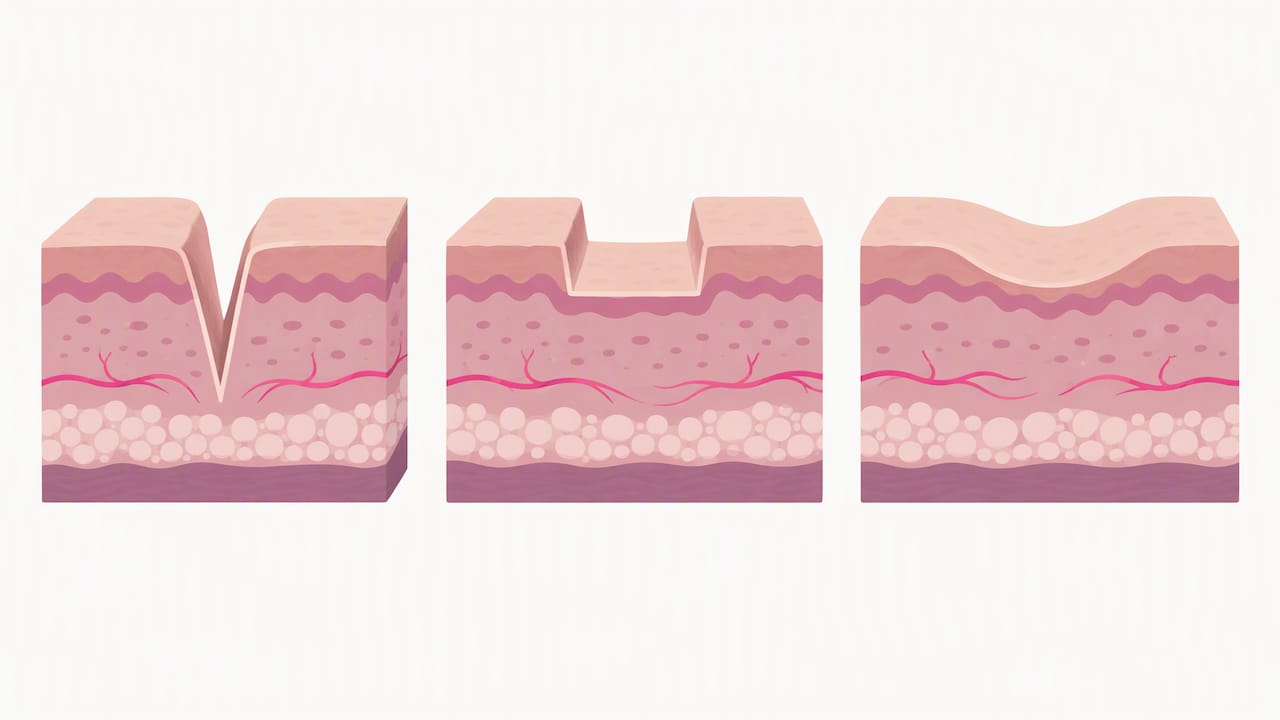
Scar classification decides whether microneedling is the right first tool. Atrophic scars are usually grouped as ice-pick, boxcar and rolling, and each behaves differently under needling.
| Scar type | Typical appearance | How microneedling fits |
|---|---|---|
| Ice-pick | Narrow, deep, V-shaped | Often limited benefit alone; usually needs a focal or targeted approach |
| Boxcar | Wider, U-shaped, sharply edged | Reasonable candidate, especially when shallow |
| Rolling | Broad, undulating, tethered by fibrous bands | May improve texture, but tethering often needs subcision |
A UK clinical overview from All Health and Care says acne scarring is one of the most established reasons for considering microneedling and that it may improve shallow boxcar scars, rolling texture and general surface unevenness. The same page notes it is less likely to correct deep ice-pick scars.
In practice, most patients present with a mix. A cheek with a few ice-pick scars, some boxcar scars and rolling texture is common, and that is where a single-modality plan starts to look thin.
Do not forget pigmentation and redness
Post-inflammatory pigmentation and erythema often sit alongside true atrophy and can be what the patient actually notices first. Separate these in your assessment. Microneedling may help the overall look of the skin, but you should set expectations for each component separately and document them.
Assessing the patient before you treat
A good scar plan starts with the acne, not the scar.
Check disease activity
Microneedling is not normally performed directly through active inflammatory or infected acne lesions, as clinic aftercare guidance notes. The concern is spreading bacteria and aggravating inflammation. Occasional isolated spots can sometimes be worked around, but a patient with widespread pustular or cystic activity needs their acne controlled first, usually in conjunction with a prescriber or dermatologist.
If the patient is on or has recently finished a systemic acne treatment, check the current product information and your insurer and training body guidance for timing before any elective procedure. Do not rely on memory or on what a previous clinic did.
Take a full history
Record skin type, previous scarring or keloid tendency, history of cold sores, medications, pregnancy status and expectations. Photograph under consistent lighting at baseline and at every review. Use photographs as clinical records, not as promises. Avoid before-and-after framing in anything patient-facing that implies a guaranteed result.
Consent that reflects the evidence
Consent should cover the realistic range of improvement, the number of sessions, downtime, common reactions such as redness and swelling, and the possibility that some scars will change little. The manufacturer patient labelling for one professional pen system, for example, lists common treatment responses recorded in its clinical study, which is a useful model for how to word expected short-term effects.
Needle depth, technique and device choice
Depth is the variable practitioners ask about most. Atrophic scars sit in the dermis, so shallow cosmetic depths used for general rejuvenation are unlikely to be enough for scar work, yet depth must be matched to anatomical site and skin thickness. Thin areas such as the temples and forehead tolerate far less than the cheeks.
Trial evidence has compared depths and device types, and the network meta-analysis of randomised controlled trials is a good starting point for how microneedling alone compares with its combinations. Read the original trials too, because protocols, scar grading scales and follow-up periods vary widely.
Pens, rollers and radiofrequency
- Motorised pens give controlled, adjustable depth and are the usual choice in clinics for scar work.
- Rollers are harder to standardise and carry more variability in depth and angle.
- Fractional radiofrequency microneedling adds thermal energy at the needle tip. A 2025 review in Frontiers in Medicine describes insulated needles working at depths of 0.5 to 3.5 mm, delivering RF current directly into the dermis.
RF microneedling is a different device class with its own training, contraindications and maintenance needs. Do not assume competence in one carries across to the other.
Planning the course: sessions, intervals and expectations
The most common misconception to correct with patients is that microneedling is a one-visit fix. Typical protocols described by BCAM involve a series of treatments, commonly 3 to 6 sessions, spaced about 4 to 6 weeks apart, because dermal remodelling continues for months after the final session.
A sensible structure for a licensed practitioner:
- Consultation and baseline photographs. Grade the scar types and agree what success looks like.
- First session at conservative settings. Assess how the skin responds and heals.
- Subsequent sessions at the interval your protocol sets. Adjust depth by area, and record each change.
- Review at several months after the last session. Judge the result once remodelling has had time to occur.
Improvement is gradual and varies between patients. Avoid language such as permanent, guaranteed or risk-free. The evidence supports “may improve the appearance”, not “removes”.
Why combination therapy is increasingly the norm
The published reviews on acne scarring consistently point away from single-modality thinking. An earlier systematic review of microneedling for acne scarring evaluated both monotherapy and combination treatment, and more recent work, including the 2025 review of advances in acne scar treatment, places microneedling within a wider toolkit.
In a mixed scar profile, the logic runs like this:
- Ice-pick scars are often handled with focal chemical approaches such as TCA CROSS, performed by suitably trained clinicians.
- Boxcar scars suit fractional devices and microneedling.
- Rolling scars with fibrous tethering often need subcision to release the bands before needling can help the surface.
The network meta-analysis compared microneedling with and without adjuncts such as peels, which supports the idea that sequencing and pairing deserve as much thought as the needle itself. A staged plan might release tethered scars first, treat focal deep scars separately, and use microneedling to improve overall texture across the course.
The systematic review of non-energy-based techniques is worth reading on the subcision side, as it reports a wide range of improvement with that technique. It is a reminder that scar surgery and needling complement each other rather than compete.
Where injectables and skin quality treatments fit
Some clinicians add skin quality treatments to the plan once the acne is controlled. Our own guidance on skin booster injections for clinicians covers technique, safety and session planning for that part of the pathway. For deeper volume loss, hyaluronic acid filler placement is a separate clinical decision. Our article on dermal filler complications is worth reading before adding it. Neither replaces a proper scar assessment, and both should be used within your competence and prescribing arrangements.
Safety, hygiene and sourcing
Microneedling is widely regarded as a low-risk procedure when performed correctly, but it breaches the skin, so asepsis is non-negotiable.
Single-use, traceable cartridges
The MHRA has previously issued a device safety notice on needle cartridge tips for a popular pen, warning that affected devices were made to unknown standards and their safety could not be verified. The alert, issued in August 2019, is a clear case for buying only from suppliers who can show provenance, batch information and CE or UKCA marking appropriate to the device. Never reuse a single-use cartridge, and keep batch numbers in the patient record.
Infection control in the room
- Use appropriate skin preparation and single-use drapes and gloves.
- Keep sharps disposal within reach.
- Give written aftercare covering sun protection, avoiding active ingredients that irritate healing skin, and what to do if redness, pain or discharge worsens.
- Tell the patient when to contact you urgently, and make sure they can.
Be alert to post-treatment infection, herpes simplex reactivation, prolonged erythema and pigmentary change, and escalate to the appropriate medical professional when you are outside your scope.
The UK regulatory picture
The rules for non-surgical cosmetic procedures in England are changing. The Health and Care Act 2022 gave the Secretary of State power to introduce a licensing scheme, and a summary of the August 2025 government response describes a red, amber and green tiering by clinical risk, with microneedling in the lowest-risk tier. Details, timing and the position in Scotland, Wales and Northern Ireland differ and can change, so check the current government and local authority position, as well as your professional body and insurer requirements, before you rely on this summary.
Our perspective at Mirror Pharma
We supply healthcare professionals and aesthetic clinics, so we see the same pattern in practice again and again. The clinics that get the most from scar work are the ones that treat it as a pathway rather than a single procedure: assess carefully, stage the treatments, document everything and be honest about what is likely to change.
Three things we would stress to any licensed practitioner:
- Do not let the device drive the plan. Scar type should decide the tool, and sometimes the right answer is another modality or a referral.
- Treat consumables as part of clinical governance. Needles, cartridges and syringes should be traceable, single-use and bought from a supplier that verifies who it sells to. That is why we require verification of practitioner and prescriber status before access.
- Plan supply around your diary. A course of treatments over several months depends on having what you need on the day. Our extended order cut-off times and a fulfilment team made up of healthcare professionals exist for that reason.
We do not make claims that any treatment is guaranteed, permanent or risk-free, and we would encourage you to avoid them as well.
— Rizwan
Supplies for scar and skin quality protocols
If you already run a scar or skin quality pathway, our trade-only range covers the injectable and consumable side of it for licensed practitioners, including skin boosters, polynucleotides and needles and consumables. Browse the collagen stimulation tag for related products. Access requires verification as a qualified prescriber or practitioner, and prescription-only products are supplied only in line with that.
Documentation and follow-up
Record the following for every session so that your plan can be audited and your results judged fairly:
- Scar grading and area treated
- Device, needle depth by zone, passes and endpoint
- Batch numbers for consumables and any topical products used
- Reactions during and after treatment
- Photographs under consistent conditions
- Aftercare given and the follow-up date
A clear record protects the patient and you. It also lets you decide objectively at the end of the course whether to continue, change modality or stop.
FAQ
What does microneedling do for acne scars?
It creates controlled micro-injuries in the dermis that prompt a repair response, including new collagen and elastin. This may improve the texture and appearance of atrophic scars over several months. Results vary and cannot be guaranteed.
How many sessions are typically planned?
Common protocols involve 3 to 6 sessions about 4 to 6 weeks apart, according to BCAM. Your own assessment of scar type, skin response and healing should set the final number.
Can you microneedle over active acne?
Not through active inflammatory, pustular or cystic lesions, as it risks spreading bacteria and worsening inflammation. A qualified practitioner should assess acne control first and involve a prescriber or dermatologist where needed.
Is microneedling enough for ice-pick scars?
Usually not on its own. Deep, narrow scars tend to respond better to targeted approaches, often combined with microneedling for the surrounding skin texture. Choose the combination according to your training and the patient’s scar profile.
Sources
- Microneedling in the treatment of atrophic scars: a systematic review of randomised controlled trials (PMC)
- Microneedling | British College of Aesthetic Medicine
- Microneedling in the UK: benefits, costs, results, risks and recovery | All Health and Care UK
- Microneedling: treatment advice and aftercare | Eco Skin Clinic
- SkinPen Elite patient labelling (PDF)
- Network meta-analysis of microneedling and combination treatments for acne scars
- Advances in the treatment of acne scars | Frontiers in Medicine
- Microneedling as a treatment for acne scarring: a systematic review | PubMed
- A systematic review of treatments for acne scarring. Part 1: non-energy-based techniques
- MHRA device safety alert MDA/2019/028 on microneedling pen cartridge tips | GOV.UK
- UK aesthetics regulation 2026 | Aesthetics Unlocked