
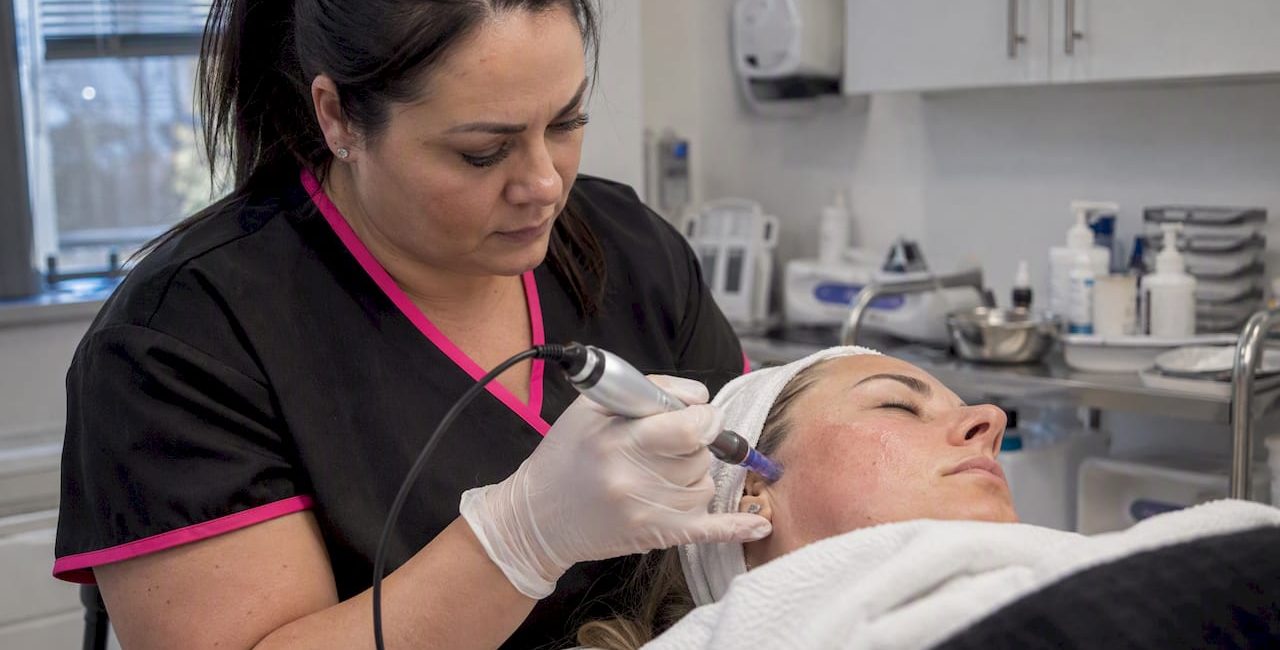
For licensed practitioners, microneedling and skin boosters can be combined, but not as a casual add-on. Order, spacing, skin condition and product status all decide whether the pairing helps or harms. In most protocols the needling comes first and builds the collagen base. The booster follows once the skin has settled. Simultaneous “while we’re here” injection into freshly needled skin is the step to question.
This guide is written for qualified aesthetic professionals, prescribers and clinic teams. It is educational and is not advice for members of the public. Prescription-only products may only be supplied and administered by appropriately qualified, registered prescribers.
TL;DR
- The evidence for combining microneedling with boosters is encouraging but mostly small, retrospective or device-specific. Reviewers note that the molecular mechanisms of combined treatments are poorly understood.
- Sequence deliberately. Microneedling usually precedes the booster, with a settling interval. Heat and fresh wounding both work against product placed too early.
- Select patients honestly. Uncontrolled rosacea, active infection and a deadline-driven expectation are reasons to defer or decline.
- Build individual, phased plans from a documented skin assessment. Avoid menu-style packages.
- Product provenance and infection control are not optional. Use only authorised products from verified suppliers.
Table of Contents
- What each treatment does, and why they are paired
- What the evidence shows, and its limits
- Sequencing: which goes first, and why
- Spacing and course planning
- Treatment stacking: what can be combined safely
- Patient selection and the honest consultation
- Aftercare you should give in writing
- Perspective: how we think about this at Mirror Pharma
- Compliance and the UK regulatory position
- Supplying a combination protocol
- FAQ
- Sources
What each treatment does, and why they are paired
Microneedling is a controlled wound-healing stimulus. The Chelsea and Westminster NHS leaflet describes repeated puncturing of the skin with sterile needles to trigger the body’s natural repair response and remodelling. It acts on texture, tone and fine lines by prompting the skin to rebuild.
A skin booster works differently. Injected into the dermis, typically as a low-crosslinked hyaluronic acid product, it targets hydration and skin quality rather than volume. If you need a refresher on where boosters sit relative to structural products, our skin booster versus filler guide for practitioners covers the distinction, and our skin booster injection guide covers technique, safety and typical session numbers.
The rationale for combining them is two inputs to the same tissue: one stimulates repair, the other changes the dermal environment. One clinic-published explanation of RF microneedling with boosters frames it the same way, with energy remodelling collagen and elastin at a chosen depth while the booster supports hydration and the surrounding matrix.
What the evidence shows, and its limits
Be precise about what has actually been studied. Much of the marketing around this combination outruns the data.
- A 2024 retrospective analysis of 40 cases looked at an exosome-containing skin booster combined with microneedling. 85% of patients were rated improved or better on the Global Aesthetic Improvement Scale, and patient satisfaction was 87.5%. It is retrospective, small and uncontrolled. Exosome products are also not a routine, licensed option in UK clinics, so treat this as a signal for the concept rather than a protocol to copy.
- A monocentric clinical study of hyaluronic acid microneedle patches loaded with bioactive peptides reported a 25.8% decrease in fine lines and wrinkles and a 14.2% increase in dermal density over 12 weeks. That is a patch delivery system, not needling followed by injection, so it cannot be read across to injected boosters.
- A retrospective investigation in sternal keloids with oily skin used microneedle delivery of botulinum toxin type A with hyaluronic acid. At 24 weeks the combination group had no keloid recurrence, against 88.5% relapse in the corticosteroid control group. It is a niche clinical indication and not an aesthetic rejuvenation protocol.
The broader picture comes from a systematic review of biostimulators combined with toxin, fillers and energy-based devices. It notes consistent improvements in texture, elasticity and contouring from combinations. It also notes the lack of molecular-level understanding and advises moving away from one-size-fits-all protocols towards individualised, phased plans built on thorough skin analysis.
In practice, say “may support” and “in some patients”, never “will deliver”. No combination is guaranteed, permanent or risk-free, and your consent conversation should say so plainly.
Sequencing: which goes first, and why
The central practical question is order. The reasoning most clinicians give is mechanical.
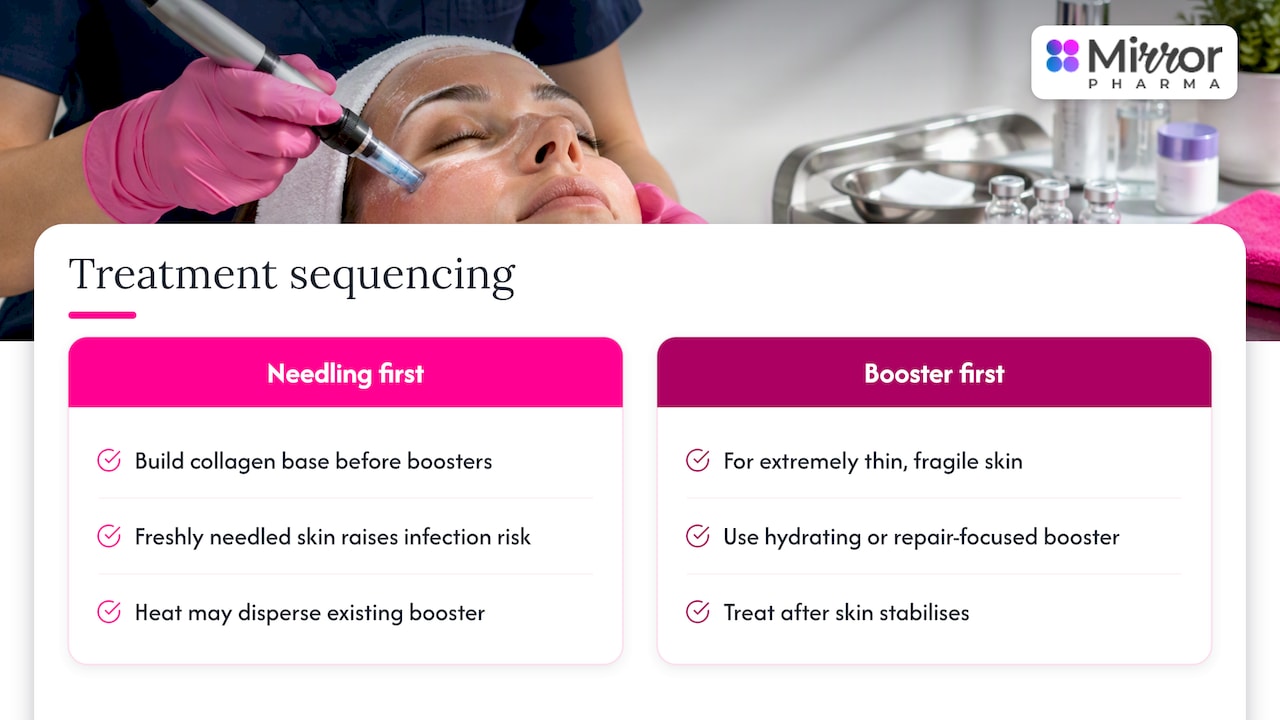
Needling before the booster. According to the RF microneedling and booster explainer, injecting product into skin that has just been needled places it in a freshly wounded, inflamed dermis. That raises the risk of lumpy placement, prolonged redness and infection. Applying energy-based heat to skin that already holds a booster can disperse and degrade the product, reducing its effect.
Booster first, in selected cases. The same source describes a minority approach for extremely thin, fragile or dehydrated skin that cannot tolerate heat. Some experts give a hydrating or repair-focused booster first to improve the dermal environment, then proceed to energy-based treatment once the skin has stabilised. It stresses that this is a judgement made at assessment and not a default.
Build the base, then add. One UK clinic’s comparison of boosters, polynucleotides and microneedling argues that treatments should be sequenced thoughtfully, with microneedling building a collagen base before boosters are introduced, rather than treated as simultaneous add-ons.
A framework, not a protocol
The table below summarises common reasoning. It is a decision aid for qualified practitioners, not a prescription for any individual patient. Your own training, product instructions for use and device manufacturer guidance take precedence.
| Patient presentation | Typical thinking | What to document |
|---|---|---|
| Texture concerns, fine lines, reasonable barrier | Microneedling course first, booster introduced after skin has settled | Baseline photos, skin analysis, depth settings |
| Thin, fragile or markedly dehydrated skin | Consider hydrating booster first, then needling once stable (clinical judgement) | Rationale for deviation from usual order |
| Laxity plus quality concerns | Phased plan, possibly with energy devices and biostimulators at spaced intervals | Interval between sessions, product, dilution, technique |
| Active infection, uncontrolled rosacea, event deadline | Defer or decline combination | Reason for decline, alternative advice |
Spacing and course planning
There is no universal interval, and published guidance varies by device and product. Anchor points you can cite:
- For standard microneedling alone, the NHS leaflet describes courses of 4 to 6 sessions at least 6 weeks apart, with improvement not always visible for up to 3 months.
- For the advanced staged approach known as the sandwich protocol, which integrates microfocused ultrasound, injectable biostimulators and fractional radiofrequency microneedling, the JCAS paper describes intervals of at least 30 days between full sessions and specific dilutions and injection techniques to manage placement. It is an advanced protocol for experienced operators, not an entry point.
The practical implication is that a combined plan often runs longer than a patient expects. Telling them this at consultation reduces dissatisfaction later. Patients who need immediate results for an event are often poor candidates for the combination, which can involve downtime and a delayed response.
Treatment stacking: what can be combined safely
Practitioners often ask which treatments can be stacked. The honest answer is that safety depends on depth, tissue plane, heat, product type and timing, not on a list of compatible names. The Next Steps in Dermatology discussion of energy devices and injectables begins with thinking in three dimensions: consider the depth at which each modality acts, just as fillers and neuromodulators are placed in different planes.
A working checklist before stacking anything:
- Map depth. What does each treatment act on, and do the planes overlap?
- Check heat. Will energy be delivered into tissue that already holds product?
- Check the skin. Is the barrier intact, inflamed or compromised?
- Separate by time, not hope. Allow tissue to settle between steps, and document the interval.
- Change one variable at a time where possible, so adverse events can be attributed.
- Reassess. Review response before adding another layer.
For botulinum toxin alongside needling treatments, remember the prescribing rules still apply. Our guides on the 12 week rule for botulinum toxin and safer prescribing in UK clinics set out the legal steps.
Patient selection and the honest consultation
Combinations fail more often through expectation mismatch than through technique. The Worthing clinic article quotes clinicians who stress that sometimes the most valuable service is identifying that a patient is not a candidate for a particular combination, for example uncontrolled rosacea or an event-driven timeline. We agree.
Useful screening questions for licensed practitioners:
- Is there any active infection, open lesion or inflammatory flare in the treatment area?
- Has the patient had recent energy-based treatment, peels or other injectables, and when?
- What is the patient’s actual goal: hydration, texture, laxity or an event?
- Do they understand that a course may take months to show effect?
- Is there a history of poor healing, scarring or keloid tendency?
Avoid a menu-driven approach in which packages are sold before assessment. The review literature points the other way: individual, phased plans based on skin analysis.
Aftercare you should give in writing
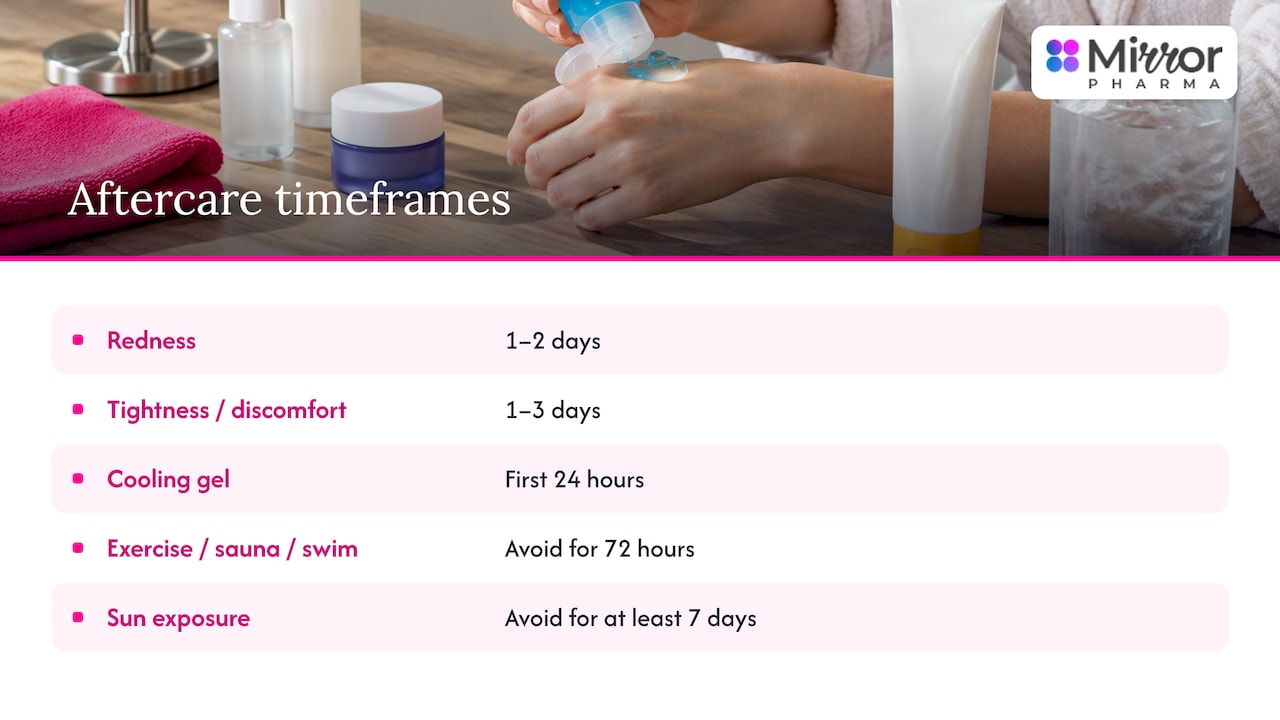
The NHS leaflet gives a useful baseline for microneedling alone. Redness similar to sunburn typically lasts 1 to 2 days, with tightness or discomfort for 1 to 3 days. Cooling gel is used for the first 24 hours, followed by a simple moisturiser. Sun exposure should be avoided for at least 7 days. Sweaty exercise, saunas and swimming are avoided for 72 hours. Your own written aftercare should reflect the specific devices and products you used, and tell patients when to contact you, for example for spreading redness, heat, swelling or pus.
If you also place a booster, adjust advice to the product’s instructions for use. Our guide on injection pain management may help you plan comfort across a longer session.
Perspective: how we think about this at Mirror Pharma
We supply licensed practitioners, not patients, and that shapes how we see combination treatments. The questions we hear from clinics are rarely “can I do both?”. They are “in what order, how far apart, and with what product?”.
Our view is that the most common error is treating a booster as an add-on to be performed in the same sitting because the patient is already on the couch. The reasoning around fresh wounding, heat and product placement suggests patience usually serves the patient better. We would rather a clinic ran a clean, documented, two-step plan than a fast, crowded one.
We also believe provenance matters as much as technique. A well-sequenced protocol with a product of uncertain origin is still a risky protocol. That is why we verify practitioner and prescriber access before supply and why our orders are fulfilled by a team of healthcare professionals. Our four compliance checks for UK clinicians set out what we would ask of any supplier, including us.
— Rizwan
Compliance and the UK regulatory position
The rules are shifting, so check the current position before you add combination treatments to your menu. Local authority guidance, such as Telford and Wrekin Council’s page on aesthetic procedures, indicates that practitioners are currently obliged under existing health and safety law to prevent harm. They should be able to demonstrate competence and robust infection control for microneedling and injectables, and should avoid non-authorised products. Specific licensing under the Health and Care Act 2022 was still being finalised in England at the time of writing.
Two voluntary registers, Save Face and the Joint Council for Cosmetic Practitioners, are described in the GOV.UK consultation on licensing non-surgical cosmetic procedures as holding PSA-accredited registers. For a plain summary of where licensing stands, see our UK injectables licensing explainer.
In practice:
- Keep training and indemnity current for every modality you combine.
- Record product name, batch, expiry, dilution, depth and interval for each step.
- Obtain consent that covers the combination and not only the individual treatments.
- Use needles and consumables suited to the technique. Our note on needles or cannulas is a starting point.
Supplying a combination protocol
If you are building a skin-quality pathway, we supply verified practitioners and prescribers with skin boosters, polynucleotides and the needles and consumables to support them. Access requires professional verification, and we extend order cut-off times so that a clinic can plan a session without waiting a week for stock. Register or sign in through Mirror Pharma to see the range available to your registration.
FAQ
Can microneedling and skin boosters be combined in the same appointment?
Some practitioners do it, but the reasoning favours caution. Injecting into freshly needled, inflamed skin can increase the risk of lumpy placement, prolonged redness and infection. Most sources describe separating the steps by a settling interval, and any same-day approach should rest on your training and the product’s instructions for use.
Which should come first, the booster or the needling?
Usually the needling, so that a collagen base is built and the booster is not exposed to heat or fresh wounding. In very thin, fragile or dehydrated skin, a booster first may be considered once assessed. That is a clinical judgement and not a default.
How long should I leave between combined sessions?
There is no single answer. Standard microneedling courses use sessions at least 6 weeks apart, according to NHS guidance, while the published sandwich protocol uses gaps of at least 30 days between full sessions. Set the interval from the devices, products and the patient’s skin response.
Who should not receive a combined treatment?
Patients with active infection or uncontrolled rosacea are commonly cited as unsuitable, as are those who need rapid results for an event. Any patient whose expectations cannot be met honestly should be advised accordingly. Refer on or defer where your assessment says the combination is not appropriate.
Sources
- Effects of Exosome-Containing Skin Booster and Microneedling Treatment on Facial Aging (PubMed)
- Efficacy of bioactive peptides loaded on hyaluronic acid microneedle patches (PubMed)
- Microneedle delivery of botulinum toxin type A combined with hyaluronic acid for sternal keloids (PubMed)
- Systematic review on combining biostimulators with toxin, fillers and energy-based devices (Springer)
- Skin Boosters with RF Microneedling: Order and Spacing
- Skin Boosters vs Polynucleotides vs Microneedling (Worthing)
- The sandwich protocol (JCAS)
- Energy-Based Devices and Injectables: How to Combine them Safely (Next Steps in Dermatology)
- Microneedling post-treatment information (Chelsea and Westminster NHS Foundation Trust)
- Aesthetic procedures (Telford and Wrekin Council)
- Licensing of non-surgical cosmetic procedures in England: consultation document (GOV.UK)