
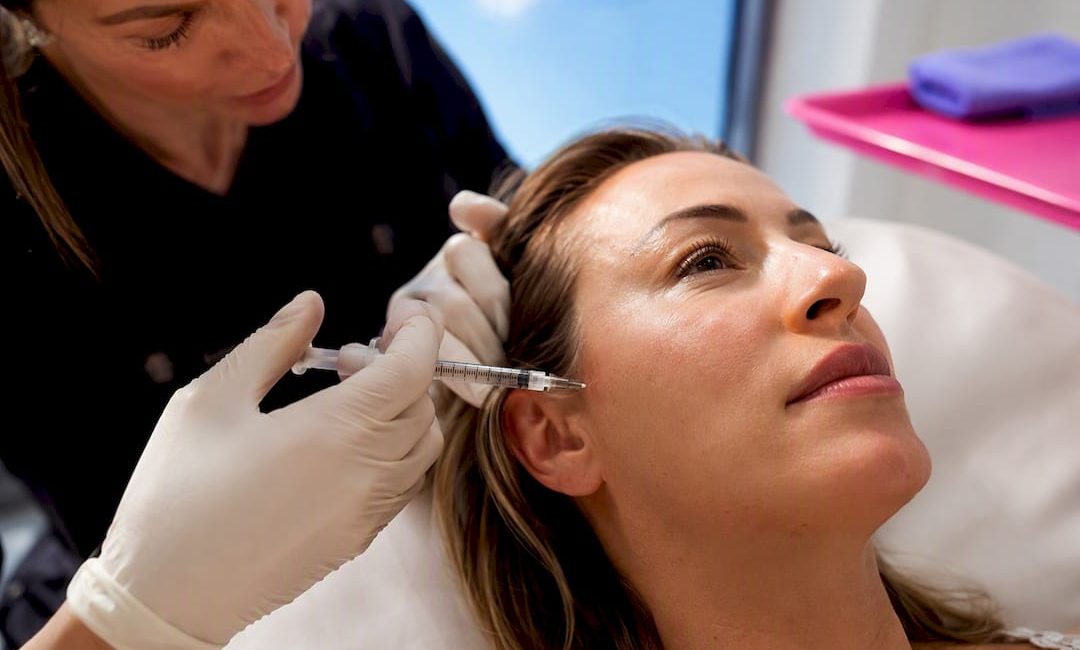
Profhilo is a hybrid hyaluronic acid injectable designed to bioremodel the skin: improving hydration, firmness, and tone rather than adding volume or contour. It suits patients whose main concern is dull, crepey, or dehydrated skin, and is typically delivered as two sessions roughly 30 days apart, followed by periodic maintenance.
TL;DR:
- Profhilo works best for patients in their late thirties to sixties with concerns about skin laxity, dullness, and dehydration, not volume loss.
- The typical treatment involves two sessions spaced 30 days apart, followed by maintenance, with full effects visible around 6 to 8 weeks.
- Results last approximately 6 to 9 months, depending on individual skin condition, lifestyle, and proper treatment sequencing.
- Side effects are mild and include temporary redness, swelling, or bruising, mainly managed by proper injection technique and thorough patient screening.
- Profhilo should be considered a foundational skin treatment, complementing rather than replacing volume-focused procedures like fillers.
Table of Contents
- What is Profhilo and how does it work?
- How is Profhilo actually injected in clinic?
- When do Profhilo results show and how long do they last?
- Is Profhilo safe, and what are the common side effects?
- Profhilo vs dermal fillers vs skin boosters vs botulinum toxin
- Who is a suitable candidate for Profhilo?
- What does a Profhilo appointment actually feel like?
- Mirror Pharma: Profhilo supply for qualified practitioners
- How should Profhilo fit into an aesthetic treatment plan?
- Order Profhilo H+L and Profhilo Body from Mirror Pharma
- Sources
- FAQ
What is Profhilo and how does it work?
Profhilo is built from two forms of hyaluronic acid, a high molecular weight fraction and a low molecular weight fraction, combined without the chemical cross-linkers used in most dermal fillers. Manufacturer IBSA Farmaceutici calls this pairing hybrid cooperative complexes, or H-HA/L-HA. The absence of cross-linking is the whole point: it keeps the product fluid enough to spread through the dermis rather than sitting where it’s injected.
That diffusion is what separates Profhilo from a structural filler. Once placed, the low viscosity gel moves through the surrounding tissue, and the high molecular weight fraction slowly releases the low molecular weight fraction over roughly four weeks. Clinician guides describe this as a sustained-release mechanism that keeps stimulating fibroblasts long after the injection itself, encouraging the skin’s own production of collagen and elastin.
The clinical case for this rests on a handful of small studies and systematic reviews, which report measurable improvements in skin hydration, elasticity, and density across the face, neck, and hands after a course of treatment. These aren’t large randomised trials, so the evidence should be read as a consistent, encouraging signal rather than definitive proof for every patient.
A few things worth knowing about the formulation and its clinical status:
- Profhilo contains no lidocaine or other cross-linking agents, distinguishing it structurally from most hyaluronic acid fillers.
- The product diffuses across a wide area from a small number of injection points, rather than staying localised.
- It is manufactured by IBSA Farmaceutici and supplied to clinics as a CE-marked medical device for use by trained injectors.
- Two main variants exist: the original formulation for face, neck, and hands, and Profhilo Body, adapted for larger areas such as arms, abdomen, and knees.
For qualified practitioners weighing it against other hyaluronic acid options, a comparison like Jalupro vs Profhilo is worth reviewing before choosing a protocol.
How is Profhilo actually injected in clinic?
The standard initial course is two treatment sessions spaced about 30 days apart, followed by maintenance sessions once the initial remodelling effect has settled. Many clinics then space maintenance appointments further out, though the right interval depends on the patient’s skin condition, age, and how their tissue responded to the first course.
Injection follows a defined pattern known as Bio Aesthetic Points, or BAP. Rather than dozens of small injections spread across the treatment area, practitioners use just five points per side of the face (or an equivalent pattern on the neck, hands, or body area). Each point is chosen to sit clear of major vessels and nerves while giving the product room to diffuse outward through the tissue.
A typical appointment runs like this:
- Consultation and skin assessment, confirming the patient is a suitable candidate and screening for contraindications.
- Cleansing and marking of the BAP injection sites.
- Injection of a small volume at each point, usually without topical anaesthetic since discomfort is generally mild and brief.
- Gentle massage in some protocols, though many practitioners avoid this to let the product diffuse naturally.
- Immediate aftercare advice and booking of the second session.
Pro Tip: If a patient reports unusually intense stinging at one BAP point, check the depth of placement before moving on. Product sitting too superficially tends to cause more discomfort and a visible bump that takes longer to settle.
Anatomical variation matters here. Danger zones shift slightly from one patient to the next, so BAP mapping should be adjusted for individual anatomy rather than applied as a rigid template.
When do Profhilo results show and how long do they last?
Two different effects show up on two different timelines, and confusing them is the most common reason patients feel disappointed early on. There’s an immediate hydration effect, sometimes described as a “glow,” that appears within days as the hyaluronic acid draws moisture into the skin. Then there’s the slower, more meaningful change: the collagen and elastin remodelling that builds gradually as fibroblasts respond to the sustained release of hyaluronic acid.
Clinician interviews and patient reports point to that structural change becoming most visible around 6 to 8 weeks after treatment, once both sessions of the initial course have had time to take effect. This is why practitioners should counsel patients not to judge the treatment after the first appointment alone.
Effects commonly reported by patients and clinics include:
- Firmer, less crepey texture, particularly on the lower face and neck.
- Improved light reflection and a more even skin tone.
- Reduced visible dryness and fine surface lines.
Reported duration for a full initial course runs around 6 to 9 months for most patients, though maintenance scheduling varies with skin condition, age, and lifestyle factors such as sun exposure and smoking. Some clinics see certain patients need touch-ups sooner, others hold results longer. No injectable outcome is guaranteed to last a fixed period, and results vary between individuals.
Is Profhilo safe, and what are the common side effects?
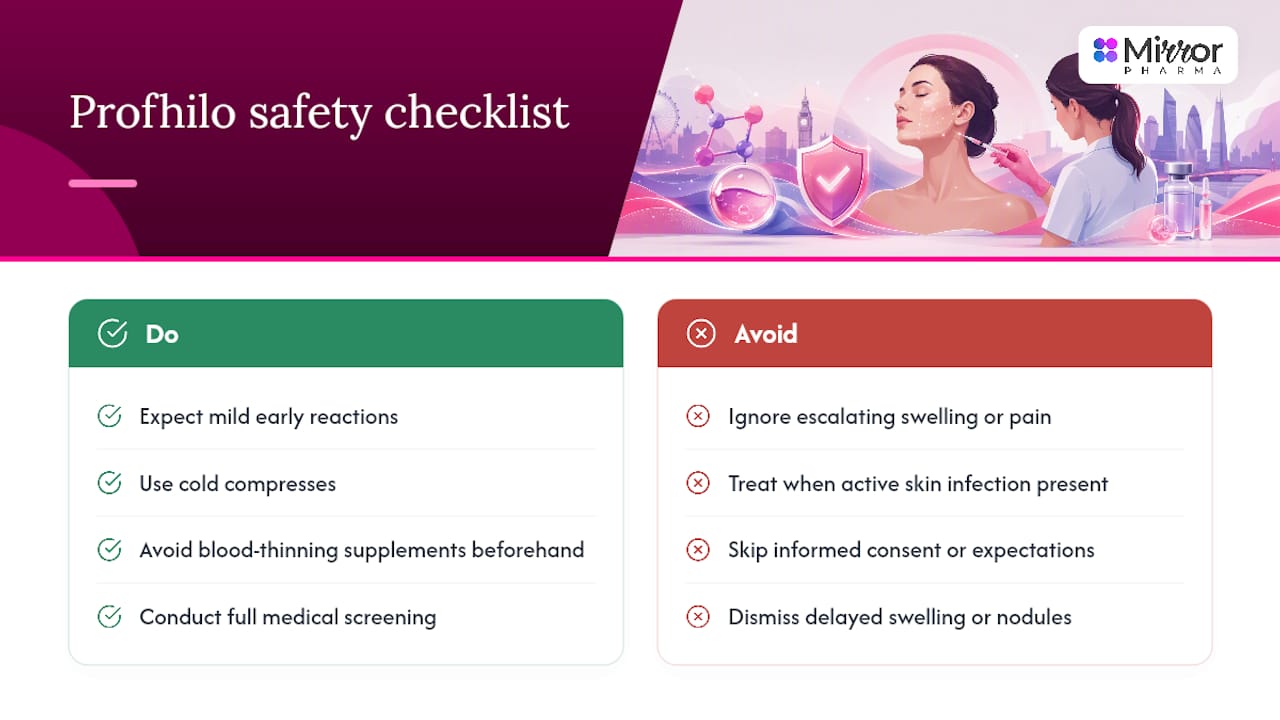
Profhilo’s safety profile, drawn from years of clinical use, looks reassuring, but it isn’t risk-free, and no aesthetic injectable ever is.
A worldwide postmarketing review found just 12 adverse event reports across more than 40,000 treatments recorded between 2015 and 2018, with no serious events identified in that period. The events reported were early, mild, injection-site reactions, chiefly swelling, redness, and bruising, all of which resolved without complication.
Those early reactions are the most common outcome patients should expect and usually settle within a few days with simple measures like cold compresses and avoiding blood-thinning supplements beforehand. Rare late reactions, such as delayed swelling or nodules appearing weeks after injection, have also been documented, and these are more often linked to injection technique or individual patient factors than to the product itself.
Risk management here comes down to two things: a properly trained injector following the BAP technique correctly, and thorough patient screening beforehand. Practitioners should take a full medical history, confirm there’s no active skin infection or autoimmune condition at the injection site, and obtain informed consent that covers realistic expectations and possible reactions. Any escalation of swelling, pain, or signs of infection beyond the expected early window warrants prompt clinical review rather than a wait-and-see approach.
Profhilo vs dermal fillers vs skin boosters vs botulinum toxin
These four categories get lumped together constantly, and the confusion causes real disappointment when patients expect the wrong outcome from the wrong product.
Profhilo bioremodels tissue. It doesn’t add volume, and it won’t lift a jawline or fill a deep static line. Dermal fillers work mechanically, using cross-linked hyaluronic acid gel to restore lost volume or build structure in areas like cheeks, lips, or the jawline. Skin boosters sit somewhere between the two, delivering hydration at a more superficial dermal level than Profhilo’s broader diffusion pattern, generally with a shorter-lasting effect. Botulinum toxin works on an entirely different system altogether, temporarily relaxing the muscles responsible for expression lines rather than touching skin quality or volume at all.
The practical differences matter for planning treatment:
- Onset: Botulinum toxin effects appear within days; dermal filler results are visible immediately; Profhilo’s structural changes build over 6 to 8 weeks.
- Session count: Profhilo’s initial course needs two visits; fillers and toxin are typically single-session treatments per area.
- Durability: Filler longevity depends on the product and area treated; botulinum toxin generally lasts three to four months; Profhilo’s remodelling effect is commonly reported around 6 to 9 months.
- Reversibility: Hyaluronic acid fillers can be dissolved with hyaluronidase; Profhilo’s diffuse placement makes targeted reversal far less practical; botulinum toxin simply wears off over time.
None of this makes one category better than another; they solve different problems. A patient with hollow cheeks and crepey skin texture might reasonably need both a filler for volume and Profhilo for skin quality, spaced appropriately apart. Practitioners guiding that conversation should frame the choice around the patient’s actual concern, comparing options like skin boosters and fillers directly before recommending a combined plan, rather than defaulting to whichever treatment is easiest to book.
Who is a suitable candidate for Profhilo?
Good candidates are typically patients in their late thirties through sixties, though age alone isn’t the deciding factor. What matters more is the primary concern: patients bothered by skin laxity, dullness, dehydration, or fine crepiness on the face, neck, décolletage, or hands tend to see the most satisfying results.
Profhilo is the wrong tool for someone whose main issue is lost volume, such as sunken cheeks or a weak jawline. That’s a job for structural filler, not a bioremodelling injectable.
Common contraindications and situations requiring medical review include:
- Active skin infection or inflammation at the intended injection site.
- Known hypersensitivity to hyaluronic acid or the product’s components.
- Pregnancy or breastfeeding.
- Autoimmune conditions or a history of keloid scarring, which warrant a cautious, individualised assessment.
A proper consultation should include a cooling-off period between the initial discussion and the first treatment, giving patients time to consider the risks and confirm they understand what Profhilo can and can’t achieve.
What does a Profhilo appointment actually feel like?
Most patients describe the injections as mildly uncomfortable rather than painful, with a brief stinging sensation at each BAP point. Because Profhilo uses so few injection sites per session, the overall experience tends to be quicker and less uncomfortable than treatments requiring dozens of needle passes.
Downtime is minimal for most people. Expect some redness and small raised bumps at the injection points immediately afterwards, usually settling within hours, alongside a possibility of mild bruising that can take a few days to fade.
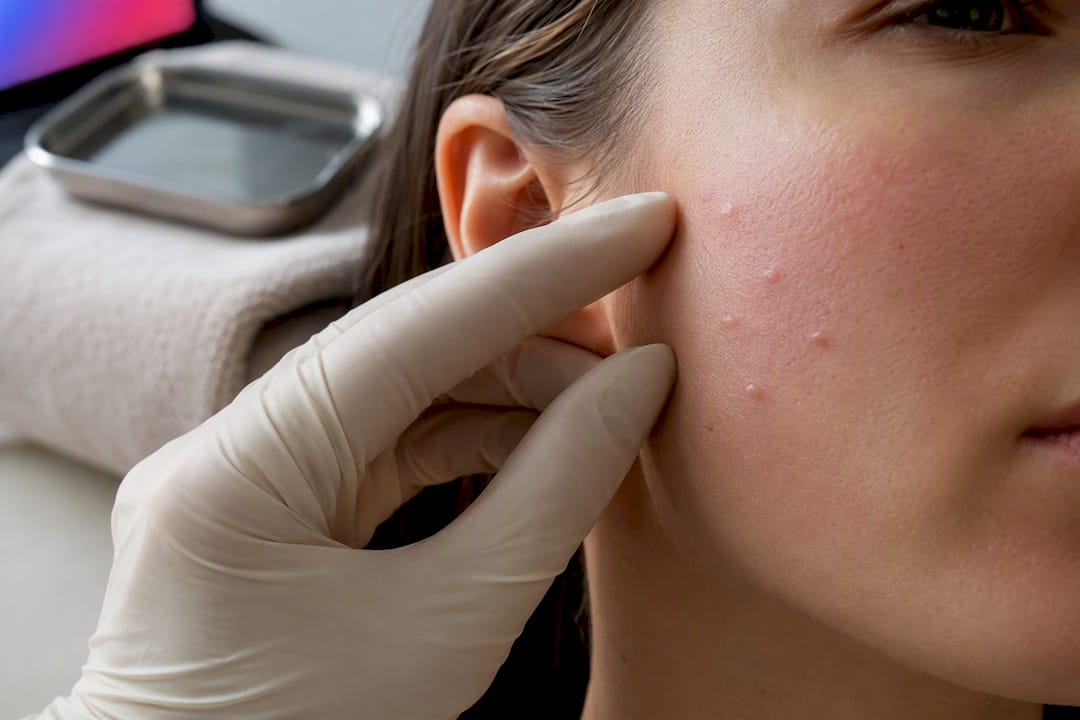
Pro Tip: Book Profhilo sessions at least two weeks ahead of any important event, not because recovery normally takes that long, but because bruising, when it happens, is unpredictable and best given a wide margin.
Patients should avoid alcohol and strenuous exercise on the day of treatment and check with their practitioner about any blood-thinning medication beforehand. Clinics typically photograph the treatment area before each session to track progress objectively, with a follow-up review scheduled around the 6 to 8 week mark to assess the second session’s effect.
Mirror Pharma: Profhilo supply for qualified practitioners
Mirror Pharma supplies both Profhilo H+L and Profhilo Body to verified aesthetic clinics and practitioners. Every order goes through compliance and identity checks to confirm the purchaser holds the appropriate prescribing or supply credentials, in line with the professional-only status of the product.
Alongside stock, Mirror Pharma provides supporting documentation and technique resources, including guidance on hyaluronic acid handling and safe administration, useful for clinics building out training for newer injectors. These products are supplied strictly for use by licensed practitioners and prescribers, not for sale or use by members of the public.
How should Profhilo fit into an aesthetic treatment plan?
The mistake I see repeated most often is treating Profhilo as a stepping stone to filler, when it’s better understood as the foundation underneath it. Skin quality determines how well any structural treatment looks and ages. Layering volume onto poorly hydrated, thin skin rarely gives the result patients expect.
Used well, Profhilo is a skin-first option: treat the tissue, let the 6 to 8 week remodelling window play out, then decide what, if anything, structural work still needs to address. That sequencing demands patience from patients and proper clinical governance from practitioners, including honest consultation about what bioremodelling can’t do.
— Rizwan
Order Profhilo H+L and Profhilo Body from Mirror Pharma
Some suppliers offer verified clinics fast access to genuine Profhilo stock and may have extended order cut-off times to support clinic scheduling. Both Profhilo H+L and Profhilo Body are listed for qualified purchasers, with identity and credential verification required before any prescription-only order ships. This keeps supply restricted to licensed practitioners and training academies, exactly as it should be for a prescription aesthetic product.
If your clinic is already registered, ordering takes minutes and stock is dispatched within the published cut-off windows. If you haven’t verified your account yet, that’s the first step: submit your practitioner credentials, get approved, and you’re ready to order Profhilo alongside the rest of your regular supply list from Mirror Pharma’s practitioner catalogue.
This article is general information, not a substitute for advice from a qualified doctor. Consult a qualified healthcare professional about your own circumstances before acting on anything here.
Sources
- Safety Assessment of High‑ and Low‑Molecular‑Weight Hyaluronans (Profhilo®) as Derived from Worldwide Postmarketing Data
- Profhilo bioremodelling: how it works, what the evidence says, and who it fits · AestheticMedGuide
- Profhilo: Everything you need to know about the injectable treatment — Elle UK
FAQ
Is Profhilo as good as Botox?
They aren’t comparable because they do different jobs: Profhilo improves skin hydration and firmness through bioremodelling, while botulinum toxin relaxes the muscles that cause expression lines. Neither is “better,” and many patients use both for different concerns.
What does Profhilo do to your face?
It stimulates the skin’s own collagen and elastin production through a sustained-release hyaluronic acid mechanism, improving hydration, firmness, and tone rather than adding volume or changing facial contours.
What are the downsides of Profhilo?
The main downsides are mild early bruising, swelling, or redness at injection points, the need for two sessions a month apart before seeing full results, and the fact that it won’t address volume loss or deep static lines.
How much does Profhilo cost in the UK?
Pricing varies by clinic and depends on the practitioner’s fees, location, and treatment area, so it isn’t something Mirror Pharma, as a supplier to clinics rather than patients, is positioned to quote. Patients should ask their chosen clinic directly for a current consultation quote.