
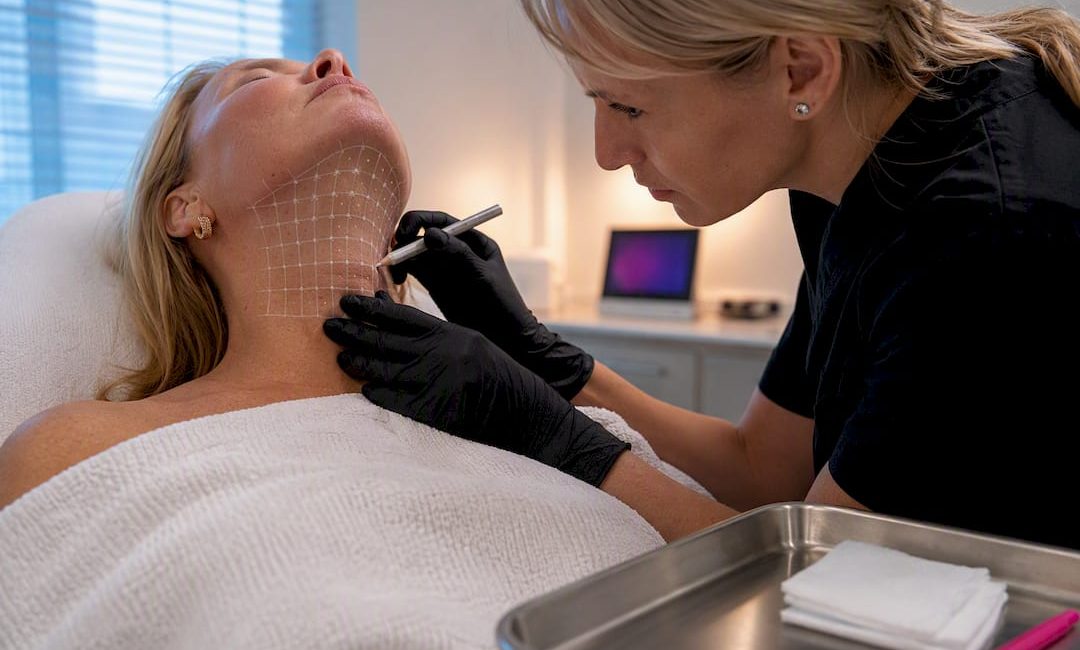
Deoxycholic acid injections are a licensed cytolytic treatment for reducing submental fat, working by destroying the membranes of fat cells at the injection site. They must be administered by a qualified healthcare professional, never as a self-treatment, because the same mechanism that dissolves fat cells can also damage nerves and surrounding tissue if handled poorly. Expect a marked inflammatory response before any visible improvement.
TL;DR:
- The safe and effective use of deoxycholic acid injections depends on precise injection technique and adherence to licensed dosing limits, with a maximum of 50 injections per session.
- Patients should expect visible fat reduction only after six to eight weeks, as the treatment relies on inflammation and debris clearance, not immediate results.
- Serious risks like nerve injury and dysphagia are rare but linked to improper placement near critical structures, requiring careful anatomical knowledge.
- Off-label use of deoxycholic acid, especially for large body areas like the abdomen, poses significant safety concerns because dosing and safety data do not support such applications.
- Proper patient selection, understanding of the inflammatory timeline, and thorough pre-treatment planning are essential to minimize side effects and achieve satisfactory outcomes.
Table of Contents
- How do deoxycholic acid injections work?
- Who is a suitable candidate for treatment?
- What happens during a treatment session?
- What are the side effects of deoxycholic acid?
- How can practitioners reduce injection risk?
- What is the recovery timeline after treatment?
- What does the evidence and regulatory record show?
- Who stands behind this information?
- What actually matters most with this treatment
- Sourcing deoxycholic acid and fat-dissolving products for your clinic
- Sources
- FAQ
How do deoxycholic acid injections work?
Deoxycholic acid is a cytolytic detergent. It disrupts the cell membrane of adipocytes on contact, and because fat cells have a particular vulnerability to this detergent action, the effect is preferentially targeted rather than indiscriminate to all tissue types nearby.
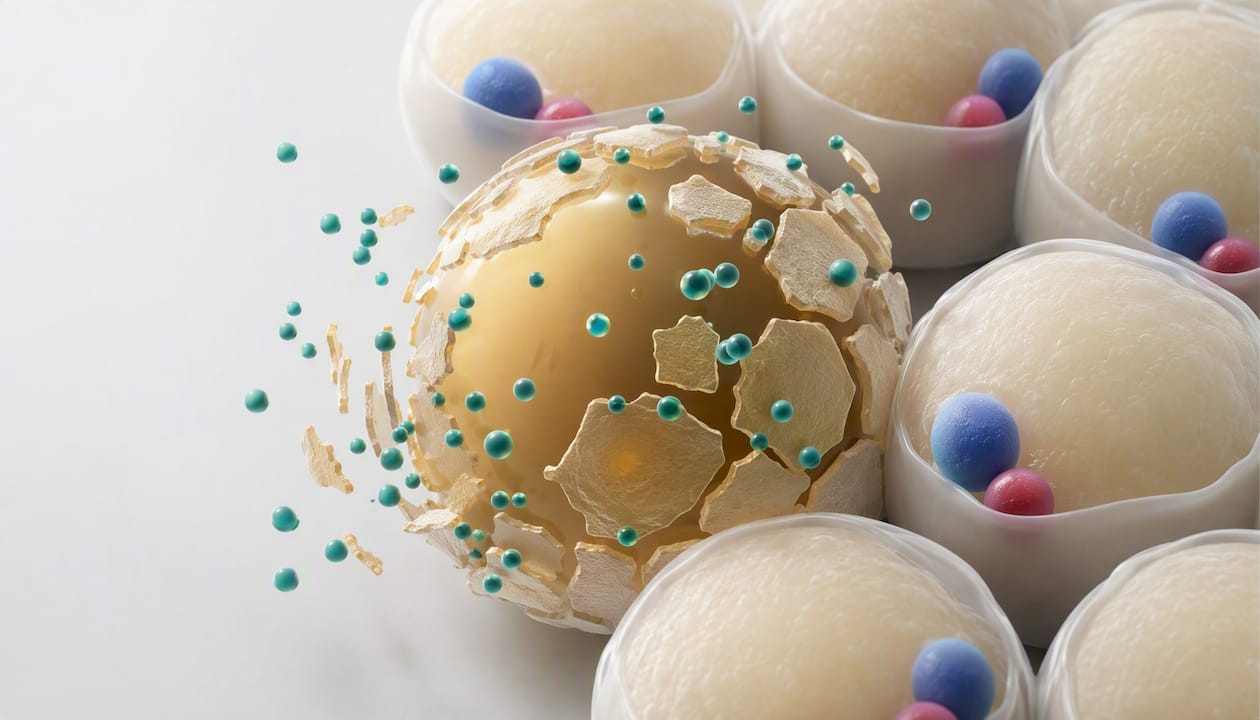
The licensed formulation is supplied at a concentration of 10 mg/mL in single-use vials, a detail that matters clinically: reusing a vial across patients or diluting it inconsistently changes the dose delivered and undermines the safety profile the prescribing information is built around.
The biological sequence runs in a predictable order:
- Injected deoxycholic acid ruptures the adipocyte cell membrane, causing lysis.
- The ruptured cells trigger a localised inflammatory response.
- Macrophages migrate to the area and clear the cellular debris over several weeks.
- Fat volume in the treated area reduces gradually as the tissue remodels.
That final step is why patients see nothing dramatic for weeks. The visible outcome depends entirely on the body clearing the debris, not on the injection itself producing an instant change.
Who is a suitable candidate for treatment?
Good candidates are adults with moderate to severe submental convexity, sometimes described as a “double chin,” who understand the treatment reduces fat gradually rather than reshaping the jawline overnight. Realistic expectations matter more here than with most aesthetic procedures, given how slow the visible change is.
Several factors rule a patient out or demand extra caution:
- Active skin infection at the proposed injection site.
- Pregnancy or breastfeeding.
- Known hypersensitivity to deoxycholic acid or any excipient in the formulation.
- Prior neck surgery, which can distort normal anatomy and injection landmarks.
- Significant skin laxity, where fat reduction may worsen rather than improve the visible profile.
- Existing dysphagia (difficulty swallowing), which needs assessment before treatment given the drug’s known effect on this symptom.
What happens during a treatment session?
Treatment planning starts with marking a grid across the submental area, spaced roughly 1 cm apart, with each grid point receiving one injection.
- Mark the treatment area. The practitioner outlines the submental fat pad and draws a grid with points 1 cm apart.
- Inject at each site. Each point receives 0.2 mL of deoxycholic acid, giving an area dose of roughly 2 mg per square centimetre.
- Respect the session limit. A single session allows up to 50 injections, or 10 mL total, following the dosing structure used in the pivotal FDA prescribing information.
- Space out further sessions. Trials permitted up to six treatments, spaced at least one month apart, with the exact number tailored to how much fat is present and how the patient responses.
Analgesia is usually a topical anaesthetic or ice applied before injection, since the treatment itself causes a stinging or burning sensation as the detergent takes effect. Every vial is single-use and single-patient, a rule worth repeating precisely because grey-market suppliers sometimes suggest otherwise.
Pro Tip: Photograph the treatment grid before injecting. It gives you a precise record for the next session and helps you judge whether the fat pad has genuinely reduced, rather than relying on memory or a patient’s own impression.
What are the side effects of deoxycholic acid?
More than 20% of patients in clinical trials experienced swelling, bruising, pain, numbness, redness, or induration at the injection site, according to the prescribing information on DailyMed. These reactions are expected and usually settle within one to two weeks.
More than one in five patients treated in clinical trials reported swelling, bruising, pain, numbness, redness, or induration at the injection site.
Two rarer but serious complications need specific attention:
- Marginal mandibular nerve injury, which presents as an asymmetric smile or facial weakness on one side; most cases documented in trials resolved without permanent damage, but the risk is directly tied to injection depth and placement near the jawline.
- Dysphagia, difficulty swallowing, thought to relate to swelling or inflammation tracking close to structures involved in the swallowing reflex.
Patients should seek urgent review for worsening difficulty swallowing, severe or escalating pain, or signs of infection such as spreading redness, warmth, or fever. These symptoms warrant prompt clinical assessment rather than a wait-and-see approach.
How can practitioners reduce injection risk?
Anatomy is the first line of defence. Avoid injecting within 1 to 1.5 cm of the inferior border of the mandible, and stay clear of the platysma muscle and the submandibular salivary glands, both of which sit close to the treatment zone and carry their own complication risks if disrupted.
Before treating, run through a short pre-treatment checklist:
- Ask about anticoagulant or antiplatelet medication, since these increase bruising and haematoma risk.
- Confirm no prior neck procedures have altered the anatomy.
- Check for active infection or skin breaks at the site.
- Counsel the patient clearly on expected bruising before they leave the room.
Pro Tip: If you feel resistance while inserting the needle, withdraw and reposition rather than pushing through. Resistance usually means you have hit non-fat tissue, and injecting there raises the risk of ulceration or tissue necrosis.
Applying gentle pressure on withdrawal after each injection also helps limit bleeding into the surrounding tissue, a small habit that noticeably reduces bruising across a full treatment course.
What is the recovery timeline after treatment?
Swelling starts almost immediately and often makes the treated area look larger, not smaller, for the first week or two. This is the expected inflammatory response, not a sign the treatment has failed, and patients need to hear this before they leave the clinic, not after they panic at home.
- Days one to three. Expect peak swelling, bruising, and tenderness. Ice and simple analgesia help manage discomfort.
- Week one to two. Swelling begins to subside; normal activity can usually resume, though strenuous exercise is often paused briefly.
- Weeks three to six. Inflammation continues resolving as macrophages clear the lysed fat cells.
- Around six to eight weeks. Visible reduction in submental fat typically becomes noticeable, once the inflammatory phase has fully settled.
Further sessions, if needed, are usually planned only after this window closes, so the practitioner can properly judge the response rather than layering treatments on top of unresolved swelling.
What does the evidence and regulatory record show?
Deoxycholic acid injection is licensed specifically for improving the appearance of moderate to severe submental fat, with dosing capped at 50 injections or 10 mL per session and a maximum of six sessions overall, according to the FDA prescribing information. That licence does not extend to other body areas.
Phase III trial data, including the pivotal Refine studies, demonstrated measurable clinician- and patient-rated improvement in submental fat appearance when dosing limits and patient selection criteria were followed, as summarised in subsequent trial analyses.
Only one injectable deoxycholic acid formulation carries FDA approval, and it is approved solely for submental fat.
Peer-reviewed case series have explored use beyond the submental area, but these remain off-label, and the FDA has explicitly warned that unapproved fat-dissolving injections sold outside proper regulatory channels have caused serious adverse events, particularly when used across larger body areas where dosing guidance simply does not exist.
Who stands behind this information?
This overview draws on FDA prescribing data, phase III trial evidence, and peer-reviewed safety reviews to give licensed practitioners a grounded reference for injectable fat reduction, rather than marketing claims dressed up as clinical fact.
Sourcing matters as much as technique. Mirror Pharma supplies licensed aesthetic practitioners with regulated aesthetic products that carry proper traceability, the kind of procurement discipline that unapproved grey-market suppliers simply cannot offer.
What actually matters most with this treatment
The conventional pitch around deoxycholic acid injections leans heavily on the “non-surgical” label, as though that word alone settles the safety question. It does not. This is a prescription cytolytic agent that destroys cell membranes wherever it lands, and the difference between a good outcome and a nerve injury often comes down to a centimetre of needle placement near the jawline.
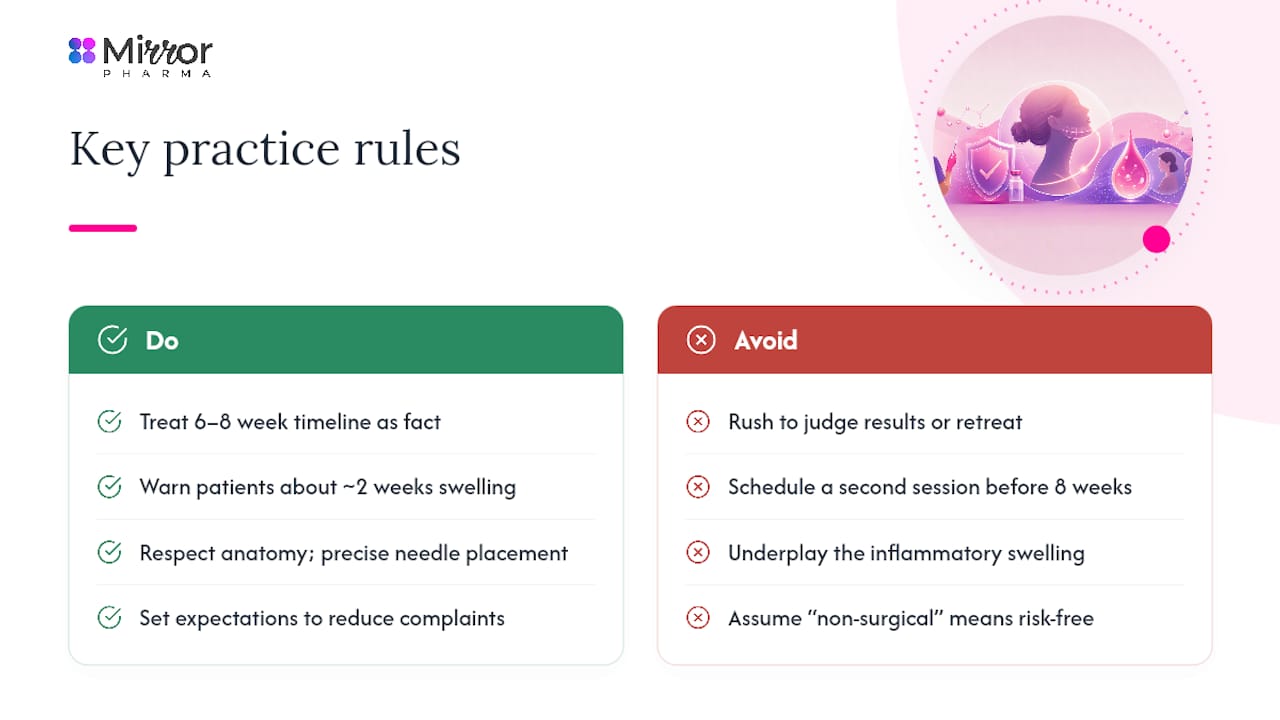
What gets underplayed is the psychological cost of the inflammatory phase. Patients who are not warned properly about two weeks of visible swelling before any improvement often assume the treatment has failed, and that mismatch between expectation and biology drives more complaints than the injections themselves.
If there is one priority for anyone considering this treatment, patient or practitioner, it is this: treat the six to eight week timeline as fact, not as a worst-case estimate. Rushing to judge results, or to schedule a second session, before that window closes is where good protocols quietly go wrong. Respect the anatomy, respect the timeline, and the treatment does what the label says it does. Skip either, and the margin for error narrows fast.
— Rizwan
Sourcing deoxycholic acid and fat-dissolving products for your clinic
Clinicians running submental fat reduction programmes need suppliers who take traceability as seriously as the treatment itself. The supplier offers a catalogue covering fat-dissolving formulations alongside toxin, filler, and skin health products for clinics. Where alternatives exist in this space, Mirror Pharma’s own Aqualyx fat dissolve range and Prostrolane Inner B fat-dissolving formulation give practitioners a properly sourced option alongside their existing supply chain, without the guesswork that comes with grey-market imports.
Order cut-off times are extended to enable timely ordering and help avoid last-minute stock shortages. If your clinic is ready to review its fat-dissolving and injectable aesthetic supply chain, visit the Mirror Pharma catalogue to check current product availability for licensed practitioners.
This article is general information, not a substitute for advice from a qualified doctor. Consult a qualified healthcare professional about your own circumstances before acting on anything here.
Sources
- DailyMed – KYBELLA- deoxycholic acid injection, solution
- FDA: Using fat-dissolving injections that are not FDA approved can be harmful
FAQ
Are deoxycholic acid injections safe?
When administered by a trained healthcare professional within the licensed submental indication, the treatment has a well-documented safety profile from phase III trials, though it is not risk-free and carries rare risks including nerve injury and dysphagia.
Can deoxycholic acid be used on belly fat?
No. The only FDA-approved deoxycholic acid formulation is licensed exclusively for submental fat, and using it off-label on the abdomen or other body areas falls outside established dosing guidance and carries increased safety risk.
How long do the effects of a deoxycholic acid injection last?
The fat-cell destruction caused by treatment is considered a lasting change to the treated area, though it does not prevent future weight gain from creating new fat deposits elsewhere or even in the same region over time.