
The main UK aesthetic trends of 2026 are a move from volume to skin quality, fast growth in regenerative treatments such as polynucleotides, patient demand shaped by weight-loss medication, AI-assisted consultations, and tighter regulation. This guide is for licensed practitioners, prescribers and clinic owners who need to decide what to stock, train for and say to patients over the next year. It rests on published UK data, and every figure links to its source.
TL;DR
- Clinics are broadening their menus: 90% of UK non-surgical clinic locations offer treatments beyond injectables, and 41% offer a regenerative treatment.
- “Skin quality” and layered, subtle plans are replacing single-product volume thinking, a theme that runs through the trade press for 2026.
- GLP-1 weight-loss medication is changing what patients ask about, including facial volume, and supporting services matter for qualified aesthetic professionals.
- Regulation is tightening across the UK, so documented prescribing and compliant sourcing are now part of the clinical offer.
Table of Contents
- A market that is growing and also getting choosier
- Trend 1: from volume to regeneration
- Trend 2: skin quality, layering and quiet luxury
- Trend 3: weight-loss medication is reshaping consultations
- Trend 4: clinical wellness and longevity
- Trend 5: AI and personalised planning
- Trend 6: regulation catches up
- What this means for a clinic’s 2026 plan
- Perspective: why sourcing is part of the trend
- Stocking for the year ahead
- FAQ
- Sources
A market that is growing and also getting choosier
The market is large. MarketsandMarkets values UK medical aesthetics at over £3 billion in its 2026 report, and the same report points to a 70% rise in treatments among male patients since 2021 and a growing group of younger patients interested in preventative care.
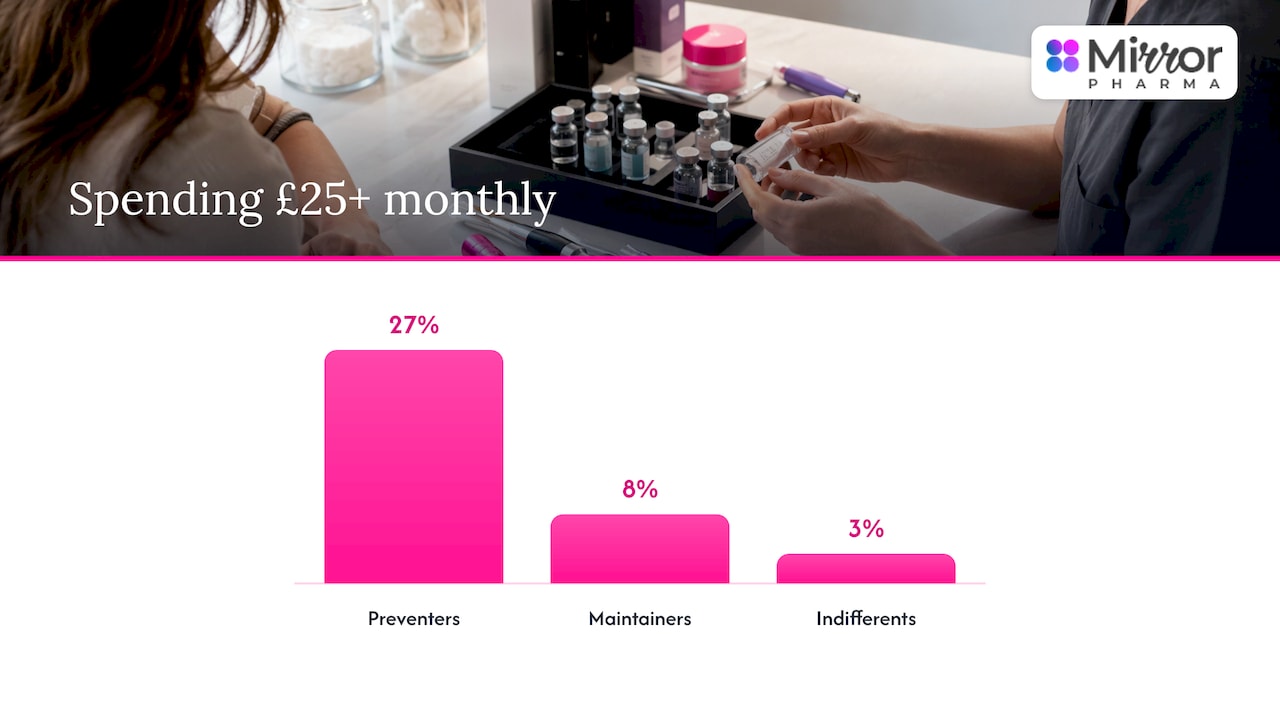
The prevention theme shows up in consumer research too. A YouGov study of Great Britain, fieldwork December 2025 to January 2026, found that 55% of Brits spend on skincare, supplements or anti-ageing products every month. The audience split into preventers (34%), maintainers (29%) and indifferents (34%), and 27% of preventers spend £25 or more a month, against 8% of maintainers and 3% of indifferents. For a clinic, that means a distinct group of patients who want a plan, not a one-off.
Demand is not immune to household budgets. Rare cites YouGov data that 36% of UK adults expect to be worse off financially in 2026, and a third of those say they will cut health and beauty spending. Patients who stay are likely to ask harder questions about value, safety and who is treating them. Clear, evidence-led consultations answer that better than discounting.
Surgical and non-surgical numbers also moved. The BAAPS 2025 audit recorded 26,840 cosmetic surgical procedures, a 2% fall, with facelifts up 11% and brow lifts up 27%. PBL Magazine’s reading of the same audit says injectable toxin procedures among BAAPS members fell 17% and filler procedures fell 26%. That is a surgeon-member audit, not the whole injectables market, so read it as a signal about changing patient priorities rather than a measure of total demand.
Trend 1: from volume to regeneration
The clearest shift is towards treatments that aim to support the skin’s own tissue rather than simply add volume. Rare.Monitor data from July 2026 shows 41% of UK clinic locations offering at least one regenerative treatment, up from around 38% a year earlier. A separate read of 419 clinic websites in October 2026 found 68% offering at least one regenerative treatment and polynucleotides on 54% of menus. The two counts use different methods, so compare the direction, not the totals.
Polynucleotides are the headline. Rare reports they have grown from roughly 5% of UK clinics a few years ago to 15%, yet in a year-on-year comparison of around 13,000 clinic websites, 13% of clinics removed them while 8% added them. Clinics are trialling, dropping and switching at pace. For a licensed practitioner the lesson is to choose a regenerative product because you understand the indication, the protocol and the sourcing, not because competitors list it.
The wider industry outlook points the same way. A Precedence Research figure cited in Aesthetic Medicine Magazine puts the global regenerative aesthetics market at $3.76 billion in 2025, rising to about $7.15 billion by 2034. That is a global forecast, not a UK one.
If you want the clinical background first, our explainer on regenerative aesthetics and biostimulation for UK clinicians covers the terminology, and our comparison of polynucleotides and PRP for skin rejuvenation sets out how the evidence guides choices between them.
Trend 2: skin quality, layering and quiet luxury
Aesthetic Medicine Magazine’s 2026 trends report calls “skin quality” a defining buzzword of 2025 that continues into 2026. Its modern approach is layering biostimulators or deeper hyaluronic acid fillers with superficial skin boosters for a balanced, luminous finish.
The patient-facing version of this is often called quiet luxury: subtle, natural-looking work, with treatments spread over a plan. The BAAPS audit commentary describes changing priorities towards natural proportions and procedures that restore comfort and confidence. For practitioners it has three practical effects:
- Consultations get longer. A layered plan needs assessment of skin quality, facial structure and the patient’s goals before any product is chosen.
- Product ranges widen. One plan may involve a hyaluronic acid filler, a skin booster and a polynucleotide product, each with its own technique and consumables.
- Expectations need managing. No treatment is guaranteed, permanent or risk-free, and individual response varies. Say so at consent, in writing.
Our product categories for this work include skin boosters and polynucleotides, available to verified practitioners and prescribers.
Trend 3: weight-loss medication is reshaping consultations
Weight management has become part of the aesthetic clinic. In July 2026, 7,323 UK non-surgical aesthetic clinic locations offered weight-loss medication. Rare also found 53% of them advertised none of three supporting services: nutritional counselling, a structured weight-management programme, and fitness or exercise prescription. Only 18% advertised all three. For prescribers, that gap is a clinical and reputational opportunity: the medication is the start of a care pathway, not the whole of it.

There is a facial aesthetics knock-on. A survey of 2,500 UK participants published in Aesthetics Journal in August 2026 found that 65% of women worry about future facial fat loss and 60% of those who lost weight rapidly felt they had noticed it. The survey was commissioned by a filler manufacturer, so treat it as an indication of patient sentiment. The same article quotes an aesthetic practitioner describing patients asking why their face looks tired or deflated, rather than only about lines. Former BAAPS President Rajiv Grover has likewise said awareness of weight-loss-drug side effects has driven medical reasons for facial aesthetic procedures.
For qualified aesthetic professionals, that points to a joined-up approach: assess the face in the context of the patient’s whole health, document medication history, and plan treatment accordingly. Our guide to weight management medications is written for clinicians, and our weight loss category is open to verified prescribers only.
Trend 4: clinical wellness and longevity
Rare found that 37% of UK clinic locations offered at least one clinical wellness or longevity treatment. Practitioners are widening from face-only work to wellness services, including IM and IV vitamin therapy, within their scope and competence.
This is also where caution matters most. In June 2026 the British College of Aesthetic Medicine warned about the promotion of injectable peptides, stating that unlicensed and prescription-only medicines must not be advertised under MHRA rules, and listing risks such as infection, contamination, incorrect dosing and immune or inflammatory reactions. A BCAM member put the test plainly: ask what the compound is, what the evidence is, whether it is licensed, who prescribes it and where it came from. Our note on MHRA checks for unlicensed medicines in aesthetics walks prescribers through that thinking.
For licensed practitioners building a wellness menu, our IM/IV vitamins category covers the products we supply to verified buyers.
Trend 5: AI and personalised planning
Aesthetic Medicine Magazine’s report says AI diagnostics and adjustable technology are redefining treatment precision, with patients expecting virtual previews and recommendations based on skin type and history. MarketsandMarkets similarly describes AI-guided skin analysis and predictive ageing assessments as disrupting the UK market.
In practice, AI supports the consultation and does not replace the clinician’s judgement. Used well, simulations and skin analysis help patients see why a staged plan makes sense. They are a visual aid, never a promise of outcome, and should not be presented that way in consent or marketing.
Trend 6: regulation catches up
Regulation is the trend that touches every practitioner, and it differs by nation.
- England: the government’s October 2026 consultation proposes that fillers injected into parts of the body other than the face would count as cosmetic surgery restricted to doctors. High-risk procedures such as deep chemical peels, vampire facials, dermal micro-coring and some laser work would be limited to doctors, dentists and certain prescribing nurses, midwives and pharmacists, with restrictions for under-18s. These are proposals, so follow the final rules when published.
- Scotland: the Non-Surgical Procedures and Functions of Medical Reviewers (Scotland) Act received Royal Assent in May 2026. The Professional Standards Authority explains that higher-risk procedures must be performed by a registered healthcare professional in clinics, with a licensing regime for lower-risk treatments not fully enforced until September 2027.
- UK-wide prescribing: botulinum toxin prescribing carries its own safeguards, and our guide to the 12 week rule for botulinum toxin sets out the safety and legal steps for UK clinics.
One practitioner quoted in the trade press expects 2026 to be the year the rest of the UK starts to follow Scotland’s licensing lead. Our summary of where injectables licensing stands and what evidence practitioners need is updated for prescribers.
What this means for a clinic’s 2026 plan
| Trend | What to review | Who it is for |
|---|---|---|
| Regenerative treatments | Indication, protocol, training, sourcing | Licensed injectors and prescribers |
| Skin quality and layering | Consultation length, treatment sequencing, consent wording | Qualified aesthetic professionals |
| Weight-loss medication | Supporting services, prescribing records, facial assessment | Prescribers and clinics with a clinical pathway |
| Wellness and vitamins | Scope of practice, licensed status of every product | Clinics with prescriber oversight |
| AI tools | Consent, data protection, honest expectation setting | All practitioners |
| Regulation | Registration, prescribing consultations, supplier checks | Clinic owners and training academies |
A sensible order of work: first, confirm your registration and prescribing arrangements match the rules in your nation. Second, audit your suppliers. Third, decide which one or two trends fit your patients and train for them properly, instead of adding everything.
Perspective: why sourcing is part of the trend
We talk to practitioners every day, and the pattern is consistent: clinics are widening their menus faster than their processes. A polynucleotide protocol, a skin booster plan and a weight-management pathway each need clean documentation, verified prescribers and a supply chain you can explain to a regulator.
That is why we built Mirror Pharma around verification. Access is for healthcare professionals, prescribers and aesthetic clinics, and our fulfilment is carried out by a team of healthcare professionals. Extended order cut-off times help practitioners keep a treatment day on schedule when a patient is booked.
Our view is that the clinics who benefit most from 2026’s shifts will pair a considered range, from fillers and skin boosters to polynucleotides and vitamins, with supplier checks they can document. Our four compliance checks for injectables suppliers are a starting point.
Rizwan
Stocking for the year ahead
If you are a verified practitioner, prescriber or clinic, our range covers the categories above: dermal fillers, toxins, polynucleotides, skin boosters, fat dissolving, vitamins, weight-management products and consumables. Ordering is online, with practitioner and prescriber verification at account stage. You can start from the Mirror Pharma homepage.
FAQ
What is the biggest UK aesthetic trend in 2026?
The shift towards regenerative and skin-quality treatments is the most consistent theme across the data. Rare.Monitor reports 41% of UK clinic locations offering at least one regenerative treatment. For licensed practitioners, the practical change is layered plans built around skin health rather than single-product volume.
Are polynucleotides a lasting trend or a fad?
The data shows both growth and churn. Polynucleotides rose from about 5% of clinics to 15%, yet more clinics removed them than added them in the latest year-on-year comparison. Qualified aesthetic professionals should judge them on indication, training and sourcing rather than popularity.
How is weight-loss medication affecting aesthetic clinics?
It is bringing new patients and new questions, including about facial volume. Over 7,000 UK clinic locations offer weight-loss medication, but most advertise few supporting services. Prescribers can differentiate through structured pathways, documented consultations and joined-up care.
What regulatory changes should UK practitioners watch?
In England, watch the outcome of the October 2026 consultation on restricting high-risk procedures. In Scotland, the 2026 Act is already law, with lower-risk licensing due to be fully enforced by September 2027. Follow official government and professional body guidance for the current position in your nation.
Sources
- UK aesthetics trends 2026: What the data shows, Rare
- UK Aesthetic Treatment Index 2026, Patient Pulse
- BAAPS 2025 audit press release
- What the latest BAAPS audit tells us, PBL Magazine
- United Kingdom Medical Aesthetics Market Report 2026, MarketsandMarkets
- Forever young? YouGov anti-ageing report
- Aesthetic Medicine Trends 2026, Aesthetic Medicine Magazine
- New findings on patient perceptions of weight loss, Aesthetics Journal
- BCAM warning on illegal and unregulated peptide injections
- Cosmetic cowboys crackdown continues, GOV.UK
- Non-surgical cosmetic procedures and how to improve safety, Professional Standards Authority