

Semaglutide produces substantially greater weight loss and stronger glycaemic control than liraglutide in head-to-head evidence, though liraglutide remains a valid option for specific patients. The STEP 8 trial found once-weekly semaglutide 2.4 mg reduced body weight by a mean of 15.8% at 68 weeks, against 6.4% for once-daily liraglutide 3.0 mg, a gap of 9.4 percentage points (95% CI −12.0 to −6.8, P < .001). More patients on semaglutide reached the ≥10%, ≥15% and ≥20% weight-loss thresholds, and fewer stopped treatment altogether (13.5% versus 27.6%).
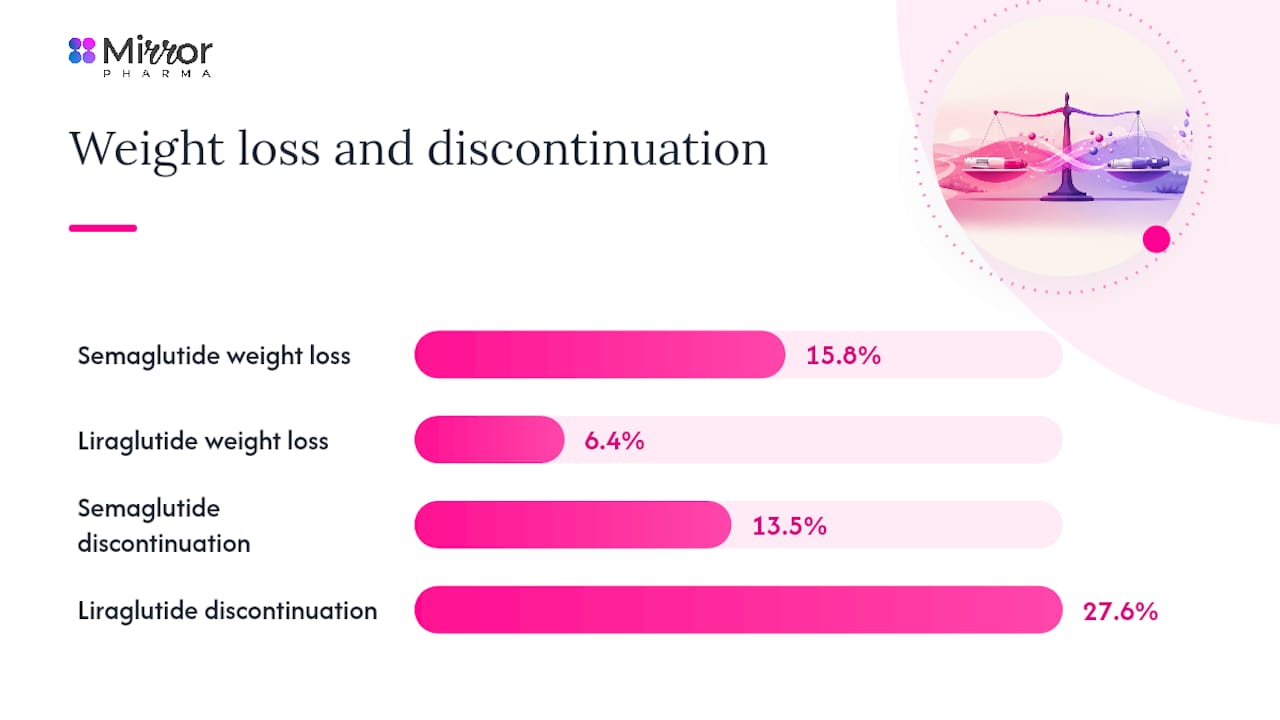
For practitioners advising patients on either drug, the decision rarely hinges on efficacy alone. Dosing frequency, injection tolerance, prior response, and contraindications all shape which agent suits a given patient. This comparison sets out the trial data, the mechanisms behind each drug, and the practical prescribing considerations relevant for licensed clinicians managing obesity or type 2 diabetes.
| Factor | Semaglutide | Liraglutide |
|---|---|---|
| Mean weight change (68 weeks) | substantially greater weight loss | notable weight loss |
| Discontinuation rate | lower discontinuation rate | higher discontinuation rate |
| Dosing frequency | Weekly (injectable) or daily (oral) | Daily (injectable) |
| HbA1c reduction | Generally greater in pooled analyses | Moderate, well-established |
- Semaglutide’s weight-loss advantage over liraglutide is one of the largest treatment-difference margins reported in a direct GLP-1 comparison trial.
- Liraglutide’s higher discontinuation rate in STEP 8 partly explains why its real-world effectiveness often trails its trial results.
- Both drugs demand individualised assessment. Renal function, gastrointestinal tolerance, prior bariatric history and patient preference for injection frequency all factor into the choice, and any decision should sit alongside a full clinical discussion with the patient.
Key Takeaways
Semaglutide outperforms liraglutide on weight loss and glycaemic control in direct trial evidence, but individual patient factors should still guide the final prescribing decision.
| Point | Details |
|---|---|
| Weight-loss gap is substantial | STEP 8 found a 9.4 percentage point difference favouring semaglutide at 68 weeks. |
| Adherence favours semaglutide | Discontinuation was 13.5% with semaglutide versus 27.6% with liraglutide in the same trial. |
| Titration shapes tolerability | Liraglutide’s faster daily escalation front-loads gastrointestinal symptoms compared with semaglutide’s slower weekly build-up. |
| Thyroid and pancreatitis caution applies to both | Screen for medullary thyroid carcinoma history and pancreatitis risk before initiating either drug. |
| Mirror Pharma supports informed prescribing | Its clinician resources and verified supply channels help practitioners match the right agent to the right patient safely. |
This article is general information, not a substitute for advice from a qualified doctor. Consult a qualified healthcare professional about your own circumstances before acting on anything here.
Table of Contents
- Semaglutide vs liraglutide: the core comparison points
- How do semaglutide and liraglutide actually work?
- What does the head-to-head trial evidence show?
- How are the two drugs dosed and administered?
- What are the side effects and safety considerations?
- Which patients suit semaglutide, and which suit liraglutide?
- What happens when patients switch drugs or stop treatment?
- What should clinicians tell patients about cost and access?
- What do the trials and meta-analyses add up to?
- How Mirror Pharma views this comparison for prescribers
- Sourcing weight-management and aesthetic supplies through Mirror Pharma
- Sources
- FAQ
Semaglutide vs liraglutide: the core comparison points
The clearest way to frame semaglutide vs liraglutide is as a trade-off between magnitude of effect and dosing burden. Semaglutide wins decisively on weight loss and glycaemic control; liraglutide offers a longer track record and, for some patients, a more familiar daily routine.
| Dimension | Semaglutide | Liraglutide |
|---|---|---|
| Weight-loss effectiveness | Mean −15.8% at 68 weeks; higher proportions achieving ≥10/15/20% loss | Mean −6.4% at 68 weeks |
| Glycaemic control | Generally greater HbA1c reduction in pooled meta-analyses | Established, moderate HbA1c reduction |
| Dosing frequency/formulation | Weekly subcutaneous injection; oral daily formulation also licensed | Daily subcutaneous injection only |
| Adherence/discontinuation | Lower discontinuation (13.5% in STEP 8) | Higher discontinuation (27.6% in STEP 8) |
| Common adverse effects | Gastrointestinal (nausea, vomiting, diarrhoea), mostly during titration | Similar gastrointestinal profile, mostly during titration |
| Monitoring/contraindications | Personal/family history of medullary thyroid carcinoma or MEN2, pancreatitis history | Same thyroid and pancreatitis cautions apply |
| Evidence strength | Head-to-head RCT (STEP 8), multiple meta-analyses | Longer-standing evidence base, fewer head-to-head trials |
- Clinicians should note the substantial difference in mean weight loss between the two drugs at 68 weeks.
- Discontinuation rates are important as trial efficacy: a drug that patients stop taking cannot deliver its measured benefit in practice.
- Oral semaglutide, marketed for type 2 diabetes, gives patients averse to injections an alternative route, though its glycaemic outcomes in the PIONEER programme sit closer to, rather than above, injectable semaglutide’s results.
How do semaglutide and liraglutide actually work?
Both drugs belong to the GLP-1 receptor agonist class, mimicking the naturally occurring glucagon-like peptide-1 hormone released after eating. Activating GLP-1 receptors in the pancreas, brain and gut triggers glucose-dependent insulin release, suppresses glucagon secretion, slows gastric emptying and increases satiety signalling in the hypothalamus. The result is a patient who eats less, feels fuller for longer, and experiences better post-meal glucose control.
Semaglutide’s structural similarity to human GLP-1 is higher than liraglutide’s, and this closer homology, combined with modifications that extend its half-life, is thought to underpin its stronger and more sustained receptor engagement. That mechanistic edge likely explains a meaningful share of the weight-loss gap observed in STEP 8, though appetite suppression, gut transit and central satiety pathways all interact in ways that are not fully separable in the current evidence.
Formulations available to prescribers:
- Semaglutide, weekly subcutaneous injection, licensed for both type 2 diabetes and weight management at differing dose ceilings.
- Semaglutide, oral daily tablet, taken fasting with a small amount of water and no food or other medicines for 30 minutes afterwards.
- Liraglutide, daily subcutaneous injection, licensed for type 2 diabetes and, at a higher dose, for weight management.
Patient preference genuinely matters here. Someone who forgets daily medication but manages a weekly calendar reminder well is often a better candidate for semaglutide’s injectable schedule; someone needle-averse but disciplined about a daily tablet routine may do better with the oral option.
What does the head-to-head trial evidence show?
STEP 8 remains the pivotal direct comparison, and its numbers are worth sitting with. Over 68 weeks, semaglutide 2.4 mg produced a mean weight change of −15.8%, against −6.4% for liraglutide 3.0 mg, a between-group difference of 9.4 percentage points (95% CI −12.0 to −6.8; P < .001). Participants on semaglutide were also markedly more likely to reach the ≥10%, ≥15% and ≥20% weight-loss thresholds that matter clinically for reducing obesity-related comorbidities.
Beyond the single trial, a systematic review and meta-analysis of direct comparative studies pooling multiple datasets found a consistent overall advantage for semaglutide on mean weight loss, and a separate meta-analysis focused on glycaemic outcomes reported generally greater HbA1c reductions with semaglutide, though fasting glucose measures showed more heterogeneity across the included studies.
The consistent finding across STEP 8 and subsequent pooled analyses is not a marginal statistical edge. It is a difference large enough to shift which patients reach clinically meaningful thresholds of weight loss, and it holds even when studies use different baseline populations and follow-up windows.
Where the evidence has gaps:
- Dosing regimens studied varied across the included meta-analyses, meaning direct pooling sometimes compares slightly different maintenance doses.
- Follow-up in most trials tops out around 68 to 72 weeks; longer-term comparative data beyond that window is thinner.
- Real-world populations, including older adults, people with significant renal impairment, and those on complex polypharmacy, were underrepresented relative to trial cohorts.
How are the two drugs dosed and administered?
Titration schedules differ meaningfully between the two agents, and getting this right is often what determines whether a patient tolerates treatment long enough to see benefit.
Typical liraglutide escalation for weight management:
- Week 1: 0.6 mg once daily.
- Week 2: 1.2 mg once daily.
- Week 3: 1.8 mg once daily.
- Week 4: 2.4 mg once daily.
- Week 5 onward: 3.0 mg once daily (maintenance).
Typical weekly semaglutide escalation for weight management:
- Weeks 1 to 4: 0.25 mg once weekly.
- Weeks 5 to 8: 0.5 mg once weekly.
- Weeks 9 to 12: 1.0 mg once weekly.
- Weeks 13 to 16: 1.7 mg once weekly.
- Week 17 onward: 2.4 mg once weekly (maintenance).
Oral semaglutide needs a specific administration routine to work properly: taken first thing in the morning on an empty stomach, with no more than 120ml of plain water, followed by a 30-minute wait before any food, drink or other oral medicines. Missing this window reduces absorption significantly, so counselling patients on the exact sequence matters more here than with either injectable option.
- Liraglutide’s shorter, daily step-up front-loads gastrointestinal adjustment into the first month.
- Semaglutide’s slower titration spreads the adjustment period over four months, which many patients tolerate better but which also delays reaching a therapeutic dose.
- Setting expectations early, that nausea typically peaks during dose increases and settles within days, reduces early discontinuation for both drugs.
What are the side effects and safety considerations?
Gastrointestinal symptoms dominate the adverse-effect profile for both drugs. In STEP 8, a high proportion of participants on both arms reported gastrointestinal events, predominantly nausea, vomiting, diarrhoea and constipation, clustering around dose escalation steps and generally resolving as the body adjusts. Most cases are mild to moderate and self-limiting, but a minority of patients discontinue because of them, which is part of what drives liraglutide’s higher dropout rate given its faster titration.
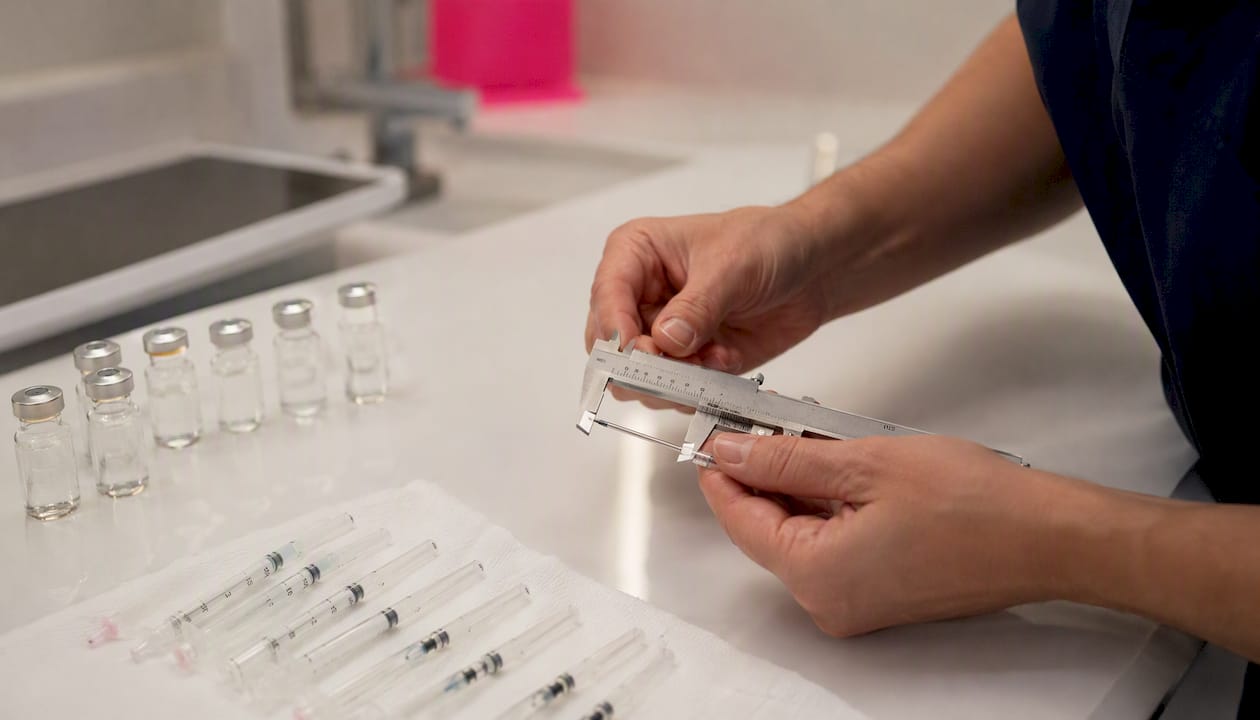
Pro Tip: Counsel patients to eat smaller, lower-fat meals during the first week after each dose increase. This single behavioural change resolves a meaningful share of early gastrointestinal complaints for both drugs.
Rarer but more serious signals deserve explicit mention. Animal studies identified thyroid C-cell tumours during early GLP-1 receptor agonist development, though current human data remain inconclusive and causality has not been established. Both drugs carry a contraindication in patients with a personal or family history of medullary thyroid carcinoma or Multiple Endocrine Neoplasia syndrome type 2. Pancreatitis has been reported with both agents, and any patient developing severe, persistent abdominal pain should stop treatment pending assessment.
Contraindications and monitoring checklist:
- Personal or family history of medullary thyroid carcinoma, or MEN2 syndrome.
- Prior history of pancreatitis, warranting caution and closer monitoring if prescribed at all.
- Severe gastrointestinal disease, including gastroparesis, which either drug can worsen.
- Pregnancy and breastfeeding, where both drugs are contraindicated regardless of which agent is under consideration.
- Renal function checks in patients with pre-existing kidney impairment, given dehydration risk from gastrointestinal side effects.
Which patients suit semaglutide, and which suit liraglutide?
Licensed indications for both drugs cover type 2 diabetes management and, at higher doses, chronic weight management in adults with obesity or overweight plus a weight-related comorbidity. Eligibility in routine practice tends to mirror the trial criteria: adults with a BMI threshold consistent with obesity or overweight-plus-comorbidity, without contraindicating thyroid or pancreatic history, and willing to commit to the follow-up needed for dose titration.
Scenarios favouring semaglutide:
- Patients where maximal weight loss is the clinical priority, given the near two-and-a-half-fold advantage seen in STEP 8.
- Patients with type 2 diabetes needing stronger HbA1c reduction alongside weight benefit.
- Patients who prefer fewer injections per month, or who want the option to switch to an oral formulation.
Scenarios where liraglutide may still be chosen:
- Patients with an established, well-tolerated history on liraglutide who are stable and see no clinical reason to switch.
- Patients or prescribers with more experience managing liraglutide’s shorter, faster titration schedule.
- Situations where semaglutide access or commissioning pathways are not yet in place locally.
Eligibility checklist before initiating either drug:
- Confirm BMI and comorbidity status against licensed indication criteria.
- Screen for personal or family history of medullary thyroid carcinoma or MEN2.
- Review pancreatitis history and current gastrointestinal disease.
- Confirm the patient is not pregnant, breastfeeding, or planning pregnancy imminently.
- Assess renal function, particularly in older patients or those with existing kidney disease.
- Discuss injection frequency preference and realistic adherence expectations.
What happens when patients switch drugs or stop treatment?
Clinicians increasingly see patients who started on liraglutide years ago asking to move to semaglutide once they learn of the comparative efficacy data. Evidence on switching remains limited to observational patterns rather than dedicated switch-trials, but where cohorts have tracked this transition, patients moving from liraglutide to semaglutide generally see further weight loss on top of whatever they achieved on liraglutide, broadly consistent with semaglutide’s independent efficacy rather than any additive effect.
Discontinuation numbers from STEP 8 are directly relevant to counselling: 27.6% of the liraglutide arm stopped treatment during the trial period, against 13.5% on semaglutide. That gap reflects tolerability and dosing burden as much as raw efficacy, and it is one reason real-world retention on liraglutide has historically lagged behind trial expectations.
- When switching, overlapping the old drug’s taper with the new drug’s initial low dose reduces the risk of a gastrointestinal flare from restarting titration from scratch.
- Patients should understand that stopping either drug is strongly associated with weight regain, since the underlying appetite and satiety signalling reverts without ongoing receptor stimulation.
- Shared decision-making before stopping, ideally with a plan for lifestyle support to blunt regain, gives better outcomes than an abrupt, unplanned cessation.
What should clinicians tell patients about cost and access?
Access to both drugs runs through prescribing clinics, specialist weight-management services, or primary care pathways depending on local commissioning arrangements, and availability varies by region and by which indication (diabetes versus weight management) is being treated. Supply has also fluctuated for both drugs at various points as demand has outpaced manufacturing capacity, so checking current local availability before committing a patient to a specific agent is worth building into the consultation.
- Patients should understand that funding routes differ for diabetes indications versus weight-management indications, and eligibility criteria can be stricter for the latter.
- Ongoing cost is a genuine adherence factor: a drug a patient cannot sustain financially is a drug they will eventually stop, regardless of its trial efficacy.
- Practitioners should source both drugs only through verified prescribing and dispensing channels. Unverified online suppliers carry counterfeit and dosing-accuracy risks that have no place in legitimate clinical care.
For clinicians managing broader weight-management prescribing decisions, Mirror Pharma’s guide to weight management medications covers contraindications and monitoring in more depth.
What do the trials and meta-analyses add up to?
Pulling the evidence together, three data points anchor the semaglutide vs liraglutide comparison. STEP 8 established the direct 9.4 percentage point weight-loss gap at 68 weeks. Pooled meta-analytic work on HbA1c confirms semaglutide’s glycaemic advantage extends beyond weight outcomes alone. And network meta-analyses situating both drugs against newer agents consistently rank liraglutide toward the lower end of weight-loss efficacy among GLP-1 and dual-agonist options, with semaglutide ranking higher, though newer multi-receptor agents such as tirzepatide may exceed both.
Heterogeneity across these pooled analyses is not a reason to discount the findings. It reflects genuine variation in dosing regimens, follow-up length and patient populations, and it is precisely why STEP 8’s controlled, direct comparison carries more weight than any single observational pooling exercise.
Programme-level context matters too. The STEP, SUSTAIN and PIONEER trial programmes, summarised in the development history of both drugs, collectively involved tens of thousands of participants across diabetes and weight-management indications, and all combined pharmacotherapy with standardised diet and physical activity counselling rather than testing drug effects in isolation. Longer-term outcome data beyond roughly 18 months, and dedicated subgroup evidence for older patients and those with significant renal impairment, remain priority gaps for future research.
How Mirror Pharma views this comparison for prescribers
Working alongside aesthetic and weight-management practitioners day to day, I’ve noticed the semaglutide vs liraglutide question usually gets asked backwards. Clinicians ask which drug is “better” when the more useful question is which drug fits this specific patient’s tolerance, budget and monitoring capacity. The STEP 8 data is unambiguous on average effect size, and average effect size should absolutely inform first-line thinking. But liraglutide’s longer track record still has value for patients already stable on it, and dismissing that history in favour of a newer average number ignores what actually keeps a patient adherent.
For licensed practitioners weighing up which agent to stock or recommend, the practical answer is to build prescribing decisions around the individual, not the league table. Mirror Pharma’s own resources for qualified prescribers go into the contraindication and monitoring detail that a single comparison article cannot fully cover, and that depth is where safer prescribing decisions actually get made.
Sourcing weight-management and aesthetic supplies through Mirror Pharma
Getting the clinical comparison right is only half the job. Licensed practitioners also need a dependable route to source weight-management medicines, anti-wrinkle treatments and dermal fillers without the delays and verification headaches that come with fragmented suppliers. Mirror Pharma exists precisely for this: a single online pharmacy built for qualified aesthetic and medical professionals, with extended order cut-off times designed so that stock arrives in time for the clinic list you’ve already booked, not the one after it.
Every product on the platform, from anti-wrinkle treatments to fat-dissolving injectables and infusion therapies, ships to verified, licensed practitioners only, with the compliance checks that protect both prescriber and patient. If you’re reviewing your weight-management prescribing pathway or restocking aesthetic consumables, browse the Mirror Pharma shop to see current availability and place an order ahead of your next clinic day.
Sources
- Effect of Weekly Subcutaneous Semaglutide vs Daily Liraglutide on Body Weight in Adults With Overweight or Obesity Without Diabetes: The STEP 8 Randomized Clinical Trial | Obesity | JAMA | JAMA Network
- The Discovery and Development of Liraglutide and Semaglutide. Front Endocrinol (Lausanne).
- Analysis of the efficacy and safety of liraglutide, semaglutide, and tirzepatide for the treatment of overweight and obesity: a systematic review and network meta-analysis | Journal of Endocrinological Investigation | Springer Nature Link
FAQ
Is semaglutide better than liraglutide?
For weight loss and HbA1c reduction, semaglutide shows a consistently stronger effect in head-to-head trial data, including a 9.4 percentage point weight-loss advantage in STEP 8. Individual tolerability and patient preference still matter when choosing between them.
Why is liraglutide use declining?
Liraglutide’s daily injection schedule and higher discontinuation rate (27.6% versus 13.5% for semaglutide in STEP 8) make it less convenient and less well-tolerated for many patients compared with semaglutide’s weekly or oral alternatives.
What is the strongest GLP-1 medicine for weight loss?
Among semaglutide and liraglutide specifically, semaglutide produces the greater average weight loss. Newer multi-receptor agents beyond this comparison may rank higher still in broader network meta-analyses, though that sits outside a direct semaglutide vs liraglutide assessment.
Are they discontinuing liraglutide?
Liraglutide remains a licensed, prescribable medicine, though supply and commissioning availability can vary by region and by indication. Practitioners should confirm current local availability with legitimate suppliers such as Mirror Pharma rather than assuming discontinuation.
Can semaglutide and liraglutide be compared with metformin?
Metformin works through a different mechanism, reducing hepatic glucose production rather than acting as a GLP-1 receptor agonist, and it produces minimal weight loss compared with either semaglutide or liraglutide. It remains a first-line option in type 2 diabetes but is not a direct efficacy comparator for weight management.