
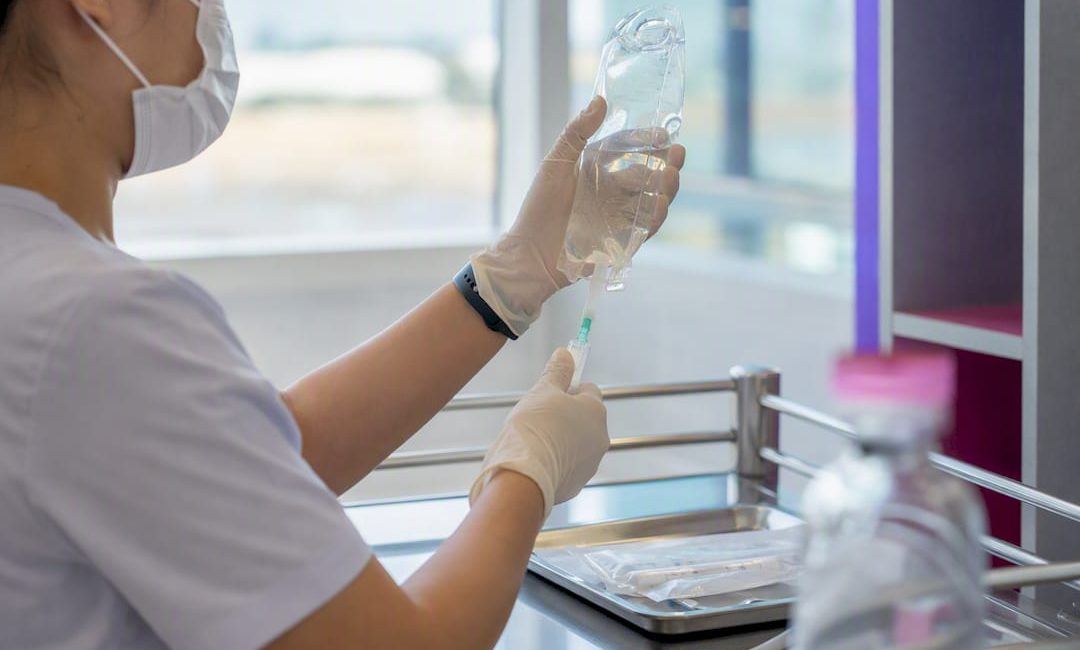
IV glutathione raises blood levels of the antioxidant quickly, but the clinical evidence for lasting wellness or skin lightening effects remains thin, and the safety data deserve real attention. One narrative review found 37.5% of participants in a lightening trial saw temporary results, while 32% experienced adverse events including liver dysfunction and anaphylaxis. A separate review of high dose intravenous vitamin C, often given alongside glutathione, stresses that renal and G6PD screening are essential before any infusion begins.
That combination, modest and often temporary benefit set against a real risk profile, is the honest starting point for anyone weighing this up.
Before booking anything, three steps matter more than the marketing copy on a clinic’s website:
- See a licensed clinician who takes a full medical history and orders baseline bloods.
- Ask directly how the product is compounded, sourced, and stored.
- Consider oral or topical alternatives first if your goal is general wellness rather than a diagnosed condition.
TL;DR:
- Glutathione IV therapy can temporarily brighten skin and improve liver enzymes in specific clinical conditions but offers limited, short-lived cosmetic benefits.
- Significant adverse events, including liver dysfunction and allergic reactions, occur in a notable percentage of participants, especially with rapid infusion or poor sourcing.
- Proper screening for kidney function, liver health, and G6PD deficiency is essential before infusion, and treatment should only be administered by licensed clinicians in regulated settings.
- Most evidence supports its use for liver disease management, with cosmetic effects fading within six months after stopping, making permanent skin whitening unlikely.
- Licensed practitioners must verify product sourcing through batch testing and sterile standards, as unregulated supplies pose safety and contamination risks.
Table of Contents
- What is glutathione IV therapy and how is it delivered?
- Does the evidence support the claimed benefits?
- What risks and adverse events have been documented?
- What are typical dosing protocols and what happens during a session?
- Who should avoid glutathione IV and what screening is essential?
- How can practitioners verify product sourcing and clinic safety?
- Are there safer alternatives worth considering first?
- What results can you realistically expect, and how long do they last?
- Why the evidence, not the marketing, should guide this decision
- Ordering glutathione for clinical use: what practitioners need to know
- Key Takeaways
- Sources
- FAQ
What is glutathione IV therapy and how is it delivered?
Glutathione is a tripeptide made from cysteine, glutamine, and glycine, produced mainly in the liver, where it neutralises free radicals and supports detoxification pathways. It is often called the body’s master antioxidant because nearly every cell relies on it to manage oxidative stress.
Taken orally, glutathione breaks down substantially in the gut before it reaches the bloodstream, which is the entire rationale behind injecting it instead. An intravenous route bypasses digestion and raises plasma glutathione far faster than any tablet or capsule can manage, though how much of that circulating glutathione actually gets taken up inside cells, where the antioxidant work happens, is still not settled science.
In practice, clinics offer two delivery formats:
- IV push add-on: a small dose, often 200 to 600 mg, injected slowly at the end of a multi-nutrient drip.
- Standalone infusion: a dedicated glutathione drip, sometimes reaching higher doses, run over 15 to 30 minutes.
Patients commonly report a metallic taste or a warm flush during the injection, both transient and generally harmless, though they can be uncomfortable if the infusion runs too fast.
Does the evidence support the claimed benefits?
Skin brightening is the headline claim, and the data behind it are genuinely mixed. A narrative review of glutathione for skin lightening reported that a portion of participants in one trial achieved temporarily lighter skin, but the effect faded within roughly six months of stopping treatment, and adverse events occurred in a significant portion of the same study group.
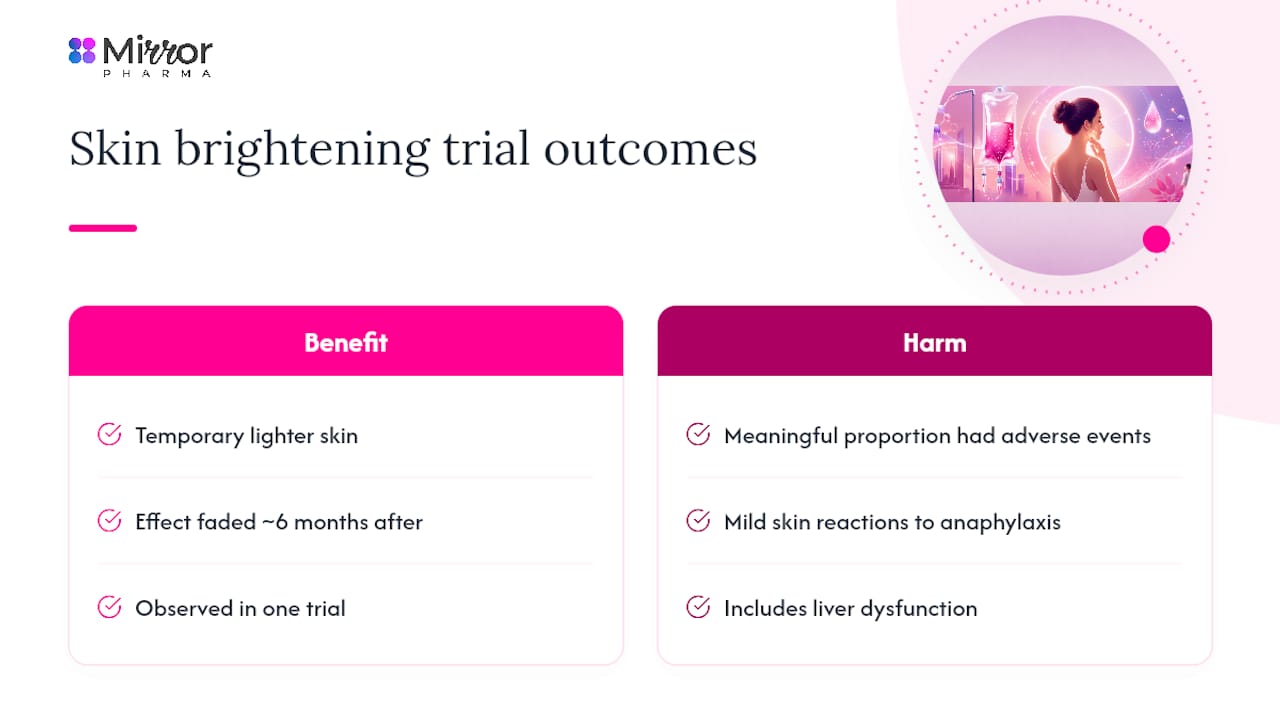
A significant portion of participants in that trial experienced an adverse event, ranging from mild skin reactions to liver dysfunction and anaphylaxis. That is not a rare-event footnote. It is a meaningful proportion of the study population.
Liver disease tells a different story. A trial in patients with non-alcoholic fatty liver disease found that IV glutathione daily for several months improved ALT and AST liver enzyme markers, suggesting a genuine therapeutic signal in a specific clinical population, not a general wellness claim.

Neurological and chemotherapy support uses have some backing too, though the trials tend to be small and narrowly scoped, often looking at symptom relief during cancer treatment rather than broad cognitive or energy benefits. Reviewers examining the totality of this evidence have called for restricting IV glutathione to controlled clinical settings until dosing and safety are better standardised.
Wellness and anti-ageing claims, the ones most commonly advertised outside clinical settings, rest largely on anecdote. There is a real mismatch between glutathione’s strong biochemical rationale on paper and the weak clinical data actually supporting general wellness use, which is why practitioners increasingly point patients towards evidence backed alternatives for skin tone correction instead.
What risks and adverse events have been documented?
The adverse event data are not theoretical. Case reports and the trial cited above describe anaphylaxis, liver dysfunction, and severe skin reactions following IV glutathione administration, particularly at higher doses or with rapid infusion rates.
Regulatory and professional advisories have warned that compounded sterile injectables vary significantly in quality, and that contamination or endotoxin exposure can cause severe patient harm. Case reports have previously linked contaminated glutathione injectable batches to hospitalisation.
In the UK, the MHRA Yellow Card scheme is the mechanism for reporting suspected adverse reactions to any medicine, including infusion therapies administered in aesthetic or wellness settings. Practitioners and patients alike should know it exists and use it.
The riskiest scenarios tend to share a common thread:
- Products sourced from unregulated suppliers without batch testing or verified sterile compounding.
- Administration in non-medical settings with no emergency protocol in place.
- Doses pushed too quickly, increasing the likelihood of an infusion reaction.
- No pre-treatment screening for kidney function, liver disease, or known allergies.
Public warnings in several jurisdictions have followed reports of unregulated clinics offering IV glutathione with little oversight, sometimes resulting in hospital admissions for allergic reactions. That pattern is a sourcing and governance problem as much as a pharmacological one, and it is entirely avoidable when the product and the setting are both properly controlled.
What are typical dosing protocols and what happens during a session?
Practitioner literature settles into a fairly consistent range: 200 to 600 mg as a push add-on to a broader nutrient drip, or 600 to 2,400 mg for a standalone infusion, depending on the clinical goal and the patient’s baseline status.
A typical session tends to follow this sequence:
- Baseline vitals check and a brief review of medical history, including any recent bloods.
- Slow IV push or drip administration, with higher doses given at a reduced rate to limit reaction risk.
- Observation for 10 to 15 minutes post-infusion to monitor for flushing, nausea, or allergic symptoms.
- A follow-up plan, since a single session rarely produces durable change and most protocols involve repeat visits over several weeks.
The distinction between a slow push and a drip matters more than it might sound. Pushing glutathione too quickly increases the odds of a vasovagal response or an infusion reaction, which is why systematic reviews of high dose IV vitamin C protocols consistently recommend a slower rate for higher doses, a principle that carries over directly to glutathione infusions.
Pro Tip: For doses above 1,000 mg, ask the clinic what their infusion rate protocol is before you start. A slower push, not a faster one, is the sign of a well run session.
Who should avoid glutathione IV and what screening is essential?
Certain groups should not receive IV glutathione outside specialist medical supervision, and a responsible clinic will ask about every one of these before booking a session.
- Pregnancy and breastfeeding, where safety data are insufficient to support routine use.
- Severe renal or hepatic disease, given the liver’s central role in glutathione metabolism.
- G6PD deficiency, a genetic condition that raises the risk of haemolysis with high dose antioxidant therapy.
- Certain chemotherapy schedules, where interactions with treatment efficacy have not been fully characterised.
Baseline testing should include liver function tests, renal function markers, and G6PD screening where clinically indicated, alongside a full medication review to catch interactions early. If a provider skips the history taking, does not ask for a prescription, or has no visible emergency plan for an allergic reaction, that is a signal to walk away, not a minor oversight.
How can practitioners verify product sourcing and clinic safety?
For licensed practitioners sourcing glutathione for clinical use, product quality is not a paperwork exercise, it is the difference between a controlled infusion and a contamination incident. A short verification checklist covers the essentials:
- Does the supplier provide batch testing certificates and evidence of sterile compounding standards?
- Are storage conditions and expiry dates clearly documented and traceable back to the manufacturer?
- Is the product supplied only against verified prescriber credentials, rather than sold openly to unqualified buyers?
Beyond the product itself, clinic governance needs the same scrutiny:
- A documented emergency protocol for anaphylaxis or infusion reactions.
- A clear pathway for reporting adverse events through the Yellow Card scheme.
- Evidence the prescribing clinician holds appropriate qualifications for infusion therapy.
Mirror Pharma supplies glutathione 600mg/4ml powder and solvent formulations for licensed practitioners, with purchaser verification built into the ordering process and pack options that support both single-session and multi-patient clinic use. This is professional supply infrastructure, not a consumer offering, and it stays that way by design.
Are there safer alternatives worth considering first?
Oral N-acetylcysteine (NAC) and its newer combination, GlyNAC, act as glutathione precursors and carry a considerably longer safety record than IV infusion, typically dosed in the 600 to 1,800 mg per day range across supporting studies. Neither delivers the rapid plasma spike an infusion does, but the trade-off is a far gentler risk profile.
For pigmentation concerns specifically, dermatology offers evidence backed topical options that address skin tone without the systemic exposure of an infusion. Lifestyle measures, adequate sleep, a diet rich in sulphur containing foods like garlic and cruciferous vegetables, and reduced oxidative load from smoking or excess alcohol, all support the body’s own glutathione production over time, without needle or needle-adjacent risk.
What results can you realistically expect, and how long do they last?
Energy or mental clarity, where reported at all, tends to appear within hours of an infusion, though this is subjective and not well quantified in trials. Skin brightening follows a slower course, typically building over several weeks of repeated sessions.
The same review reporting a portion of lightening response also found those effects faded within several months once treatment stopped. That is the central expectation problem with cosmetic use: durable change would require ongoing therapy indefinitely, not a short course, since nothing about the treatment alters the underlying pigment production long term. Anyone framing this as a one-off fix is working from a misunderstanding of how the effect actually behaves.
Why the evidence, not the marketing, should guide this decision
The gap between how IV glutathione is marketed and what the trial data actually show is the single most important thing a reader should walk away understanding. Skin brightening claims lean on one narrative review with a meaningful adverse event rate attached, not a body of consistent, high quality trials. Liver disease evidence is more specific and more convincing, but it applies to a diagnosed condition under medical supervision, not general wellness use.
Conventional advice in this space tends to bundle all these uses together, treating glutathione as a universal tonic. That framing does readers a disservice. The honest position is that this is a legitimate clinical tool in narrow contexts, and a poorly evidenced cosmetic product in most others.
What should come first is not the infusion itself but the screening around it: baseline bloods, a real medical history, and a provider who can name their compounding source without hesitation. Get that right, and the rest of the decision becomes far easier to make with clear eyes.
— Rizwan
Ordering glutathione for clinical use: what practitioners need to know
For licensed practitioners looking to offer glutathione infusion treatment responsibly, product provenance is the variable you actually control, unlike the underlying evidence base. Mirror Pharma supplies glutathione 600mg/4ml powder and solvent for injection and infusion in single vial and multipack formats, giving clinics flexibility whether you’re stocking for occasional add-on push doses or running a regular infusion service.
Every order goes through purchaser verification before dispatch, consistent with the compliance standards expected of prescription and near-prescription aesthetic products. That means Mirror Pharma is not a route for anyone outside registered clinical practice, and it should not be treated as one.
If you’re a qualified aesthetic professional or clinician looking to review pack sizes, pricing tiers, or place a professional enquiry, visit the Mirror Pharma shop to get started, and confirm your clinical governance and local regulatory requirements are in place before your first order arrives.
Key Takeaways
IV glutathione delivers measurable but often temporary effects, and its risk profile means it belongs firmly within clinically supervised, screened treatment rather than casual wellness use.
| Point | Details |
|---|---|
| Benefits are condition-specific | Liver disease evidence, such as improved ALT/AST with daily doses over several months, is stronger than general wellness claims. |
| Skin lightening is temporary | One trial found 37.5% saw lighter skin, but effects faded within six months of stopping treatment. |
| Adverse events are not rare | The same trial reported adverse events, including liver dysfunction and anaphylaxis, in 32% of participants. |
| Screening is non-negotiable | Renal function, liver function, and G6PD status should be checked before any infusion above add-on doses. |
| Sourcing determines safety | Mirror Pharma supplies verified glutathione 600mg/4ml formulations exclusively to licensed practitioners with purchaser checks in place. |
Sources
- Exploring the safety and efficacy of glutathione supplementation for skin lightening: a narrative review
- MHRA Yellow Card adverse‑event reporting
This article is general information, not a substitute for advice from a qualified doctor. Consult a qualified healthcare professional about your own circumstances before acting on anything here.
FAQ
What will a glutathione IV do?
It raises blood glutathione levels rapidly and may produce temporary skin brightening or support liver enzyme improvement in specific conditions, but general wellness benefits lack strong clinical support.
How much does a glutathione IV drip cost in the UK?
Pricing varies by clinic, dose, and whether it’s an add-on push or standalone infusion, so this article does not quote specific consumer pricing; ask your provider for a written breakdown before booking.
Who should avoid glutathione IV?
Pregnant or breastfeeding people, those with severe kidney or liver disease, individuals with G6PD deficiency, and some patients on chemotherapy schedules should avoid it outside specialist medical supervision.
Is glutathione permanent skin whitening?
No. Trial data show lightening effects tend to fade within around six months of stopping treatment, and no current evidence supports a permanent change from IV glutathione alone.
How can practitioners source glutathione safely for clinical use?
Licensed practitioners should verify batch testing, sterile compounding standards, and prescriber requirements; Mirror Pharma supplies glutathione 600mg/4ml formulations to verified professional purchasers only.
Recommended
- Glutathione 600mg/4ml (TAD) Powder and Solvent for Injection and Infusion (1 x ampoule + powder for injection) – Mirror Pharma
- Glutathione 600mg/4ml 1 vial – ONLY POWDER VIAL* – Mirror Pharma
- Glutathione 600mg/4ml (TAD) Powder and Solvent for Injection and Infusion (10 Pack) – Mirror Pharma
- Glutathione Tationil 600mg/4ml Powder and Solvent for Solution for Injection – (1 pair of Vials) – Mirror Pharma
