

A wholesale dealer’s licence, formally a Wholesale Distribution Authorisation for human medicines or WDA(H), is the MHRA licence that lets a business buy, hold and supply medicines to other businesses. For licensed practitioners and clinics, the practical point is this: if you only buy medicines to treat your own patients, you do not need one. You do need to know that every supplier you order from holds one, and that the paperwork behind each order stands up at an inspection. This guide explains what the licence covers, when you would need your own, what applying involves, and how to check a supplier. It is written for qualified aesthetic professionals and prescribers.
TL;DR
- A WDA(H) is issued by the MHRA under regulation 18 of the Human Medicines Regulations 2012. It is required to procure, hold, supply or export human medicines for sale or supply to other businesses.
- Clinics that buy only for their own patients do not need one. A clinic that sells or supplies stock on to other practitioners is carrying out wholesale dealing and does.
- A new application is assessed after a site inspection, needs a named Responsible Person, and typically takes 90 working days.
- The licence must be held at the specified premises, so a supplier’s licence details are worth checking before any first order.
- Mirror Pharma supplies prescription aesthetic medicines and consumables to verified practitioners and prescribers only.
Table of Contents
- What a wholesale dealer’s licence is
- Do you need one as a clinic or practitioner?
- What the MHRA expects from an applicant
- How the application works
- Obligations that continue after the licence is granted
- What this means when you are the buyer
- Where Mirror Pharma fits
- FAQ
- Sources
What a wholesale dealer’s licence is
Under regulation 18 of the Human Medicines Regulations 2012, nobody may distribute a medicinal product by way of wholesale dealing, or hold one for that purpose, except under a wholesale dealer’s licence, and only at the premises named in that licence. The regulations define wholesale dealing broadly: selling or supplying a product, or procuring, holding or exporting it for sale or supply, to someone who receives it to sell, supply or administer to humans in the course of business.
In plain terms, the licence exists to protect the supply chain. The IBA Healthcare and Life Sciences Law Committee’s 2026 UK survey describes its purpose as monitoring the quality and integrity of medicines as they move through the chain, and keeping counterfeit, falsified, substandard or unauthorised products out of the market. It covers licensed and unlicensed human medicines, runs for five years before renewal, and comes with regular MHRA inspections.
You may still see the older name “wholesale dealer’s licence” or WDL. The UK term in current guidance is WDA(H), where the H stands for human medicines. Searches for either phrase lead to the same MHRA licence.
Do you need one as a clinic or practitioner?
Most readers of this page are buyers, so start here.
You are a buyer if you order medicines to administer to your own patients, whether you are a prescriber, a clinic or a practice. You are the end of the supply chain, and the licence obligation sits with your supplier.
You are likely a wholesaler if you procure medicines and then sell or supply them to other practitioners or clinics, import medicines from an approved country for supply in Great Britain, or export them for sale. MHRA Guidance Note 6 states that a person operating from the UK needs a WDA(H) for these activities, and that this includes virtual operations where the stock never passes through your hands. A business that arranges sales between a manufacturer and a clinic without ever touching the product can still fall within the licence.
There are exemptions. The regulations carve out manufacturers’ licence holders in respect of their own products, and the regulation 19 exemptions cover, for example, a marketing authorisation holder selling from its own authorised premises, and transport-only import facilities. If your plans sit near one of these boundaries, take advice from the MHRA before trading, because supplying without the right licence is a regulatory breach and not a paperwork gap.
Importing is a separate trigger
If you are thinking about sourcing product from outside the UK, GOV.UK’s guidance on importing a human medicine states that importing a licensed medicine needs a WDA(H), together with a manufacturer’s licence and a marketing authorisation as applicable. A Great Britain-based company may also need a Responsible Person for Import, written RP(i). For a clinic, this is the strongest argument for buying from a supplier that already holds the right authorisations instead of building the capability yourself.
What the MHRA expects from an applicant
The licence is granted to a business that is ready to be inspected. Guidance Note 6 expects new applicants to arrive with a working system, not a plan. The documents it lists include:
- a written business model
- premises and equipment details
- quality agreements with other parties
- a quality management system and risk assessments
- training records and job descriptions
- temperature mapping of storage areas
- supplier and customer lists
- a self-inspection schedule and management review records
- transport validation
That list shows why the licence is a business in itself. Temperature mapping, for example, means demonstrating that stored product stays within range across the whole storage space, not just at the spot where the thermometer sits. If you want the practical side of the same discipline in a clinic setting, our guide to cold chain storage for licensed practitioners covers it.
The Responsible Person
Every WDA(H) holder must ensure a Responsible Person is available and notify the licensing authority, under regulation 45 of the Human Medicines Regulations. The MHRA Inspectorate explains that, unlike a Qualified Person, the Responsible Person needs no recognised qualification and there is no central register. The licence holder decides whom to appoint, but the GDP inspector then judges suitability at the next inspection. The factors include knowledge of Good Distribution Practice (GDP) and the regulations, relevant industry experience, familiarity with the holder’s operations, seniority and influence in the business, and training records.
GDP is the set of quality standards for storing, transporting and supplying medicines. Holders must comply with regulations 43 to 45AB of the Human Medicines Regulations, which include GDP.
How the application works
Applications for a new WDA(H) or a variation go through the MHRA Process Licensing Portal. The portal guidance points applicants to Guidance Note 6 and to the “Green Guide” on rules for pharmaceutical distributors. The form runs across four tabs: administrative data, site and personnel, third-party sites, and overview and declaration.
The MHRA licenses only after an inspection of the site confirms that the application is accurate and compliant. If it proposes to refuse the application or grant it on different terms, you get at least 28 days to respond, per Guidance Note 6.
Timelines
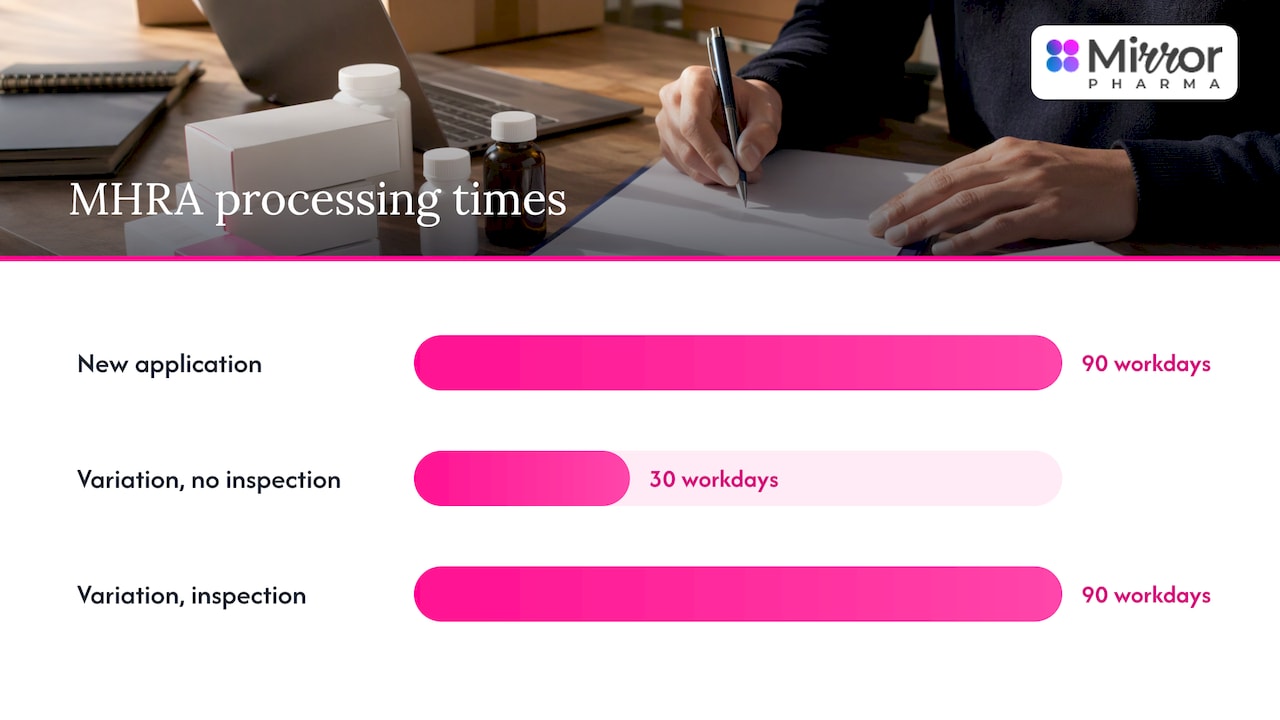
According to the MHRA’s process licensing guidance, new applications typically take 90 working days. A variation without an inspection takes 30 working days, and a variation that needs an inspection takes 90. That is a guide, not a promise, and the blog dates from 2019, so check the MHRA’s current service standards before you plan around it.
Fees
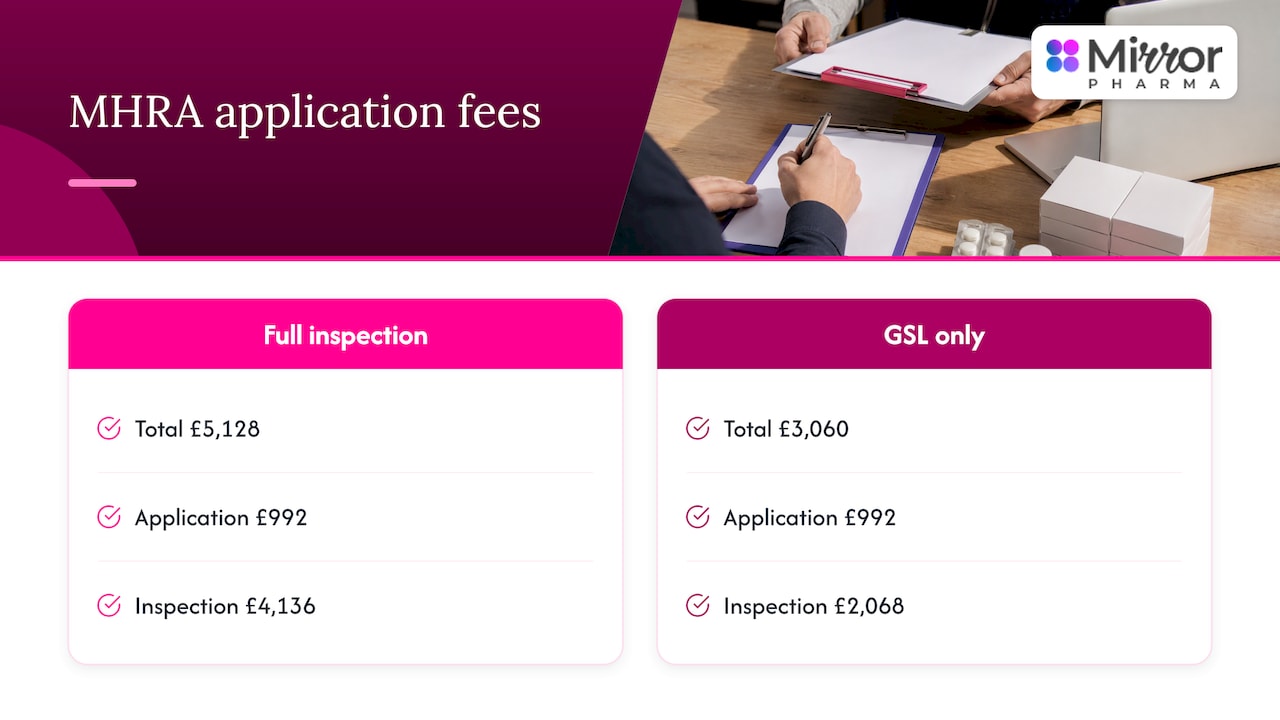
Fees depend on the type of application, the number of sites and your total turnover in licensed human medicines. The MHRA fees page for 2025 to 2027 records a correction made on 8 January 2026 to the wholesale distribution figures. The reduced new application plus full inspection fee became £5,128, made up of a £992 application fee and a £4,136 inspection fee. The reduced application plus reduced inspection fee for products on the general sale list only became £3,060, made up of £992 and £2,068. The MHRA has also consulted on updating statutory fees from 1 April 2027, so read the current MHRA fees page for the schedule that applies when you apply.
Small companies can pay 50% of the application fee at application and the remaining 50% twelve months later. You must apply for small-company status before you submit the licence application.
Inspections after the licence is granted
GDP inspectors carry out regular and repeated inspections. Under Guidance Note 6 they can inspect premises and procedures, interview key personnel named on the licence, take samples and examine records. Licence holders must make premises available at any reasonable time, with or without prior notice, and a fee is charged.
Obligations that continue after the licence is granted
Holding the licence is the start of the work. Under Schedule 4, Part 4 of the Human Medicines Regulations 2012, the holder must:
- use only premises specified in the licence, or notified to and approved by the licensing authority
- provide information the authority requests on the type and quantity of products handled, stored or distributed
- take reasonable precautions and exercise due diligence so that relevant information is not false or misleading
On top of that come the GDP duties: traceability of every batch, recall readiness, temperature control and recordkeeping. This is the reason many clinics decide that building a wholesale operation is not worth it. The licence is a standing commitment to inspection, not a one-off approval.
What this means when you are the buyer
Your supplier’s licence is your first line of assurance that the product in your fridge is genuine and has been stored correctly. A practitioner who buys from an unlicensed source carries risk for patients and for their own registration. Three habits protect you:
- Ask for the supplier’s licence details and check them. The licence names the holder and the premises it applies to. Our guide to the MHRA-checked documents a clinic should get from a medicine supplier lists what to request.
- Put the questions to a supplier before you pay. Our checklist of what to ask an aesthetic wholesaler before paying covers the MHRA points that matter.
- Keep the records that come with each order. Our guide to five-year documentation with orders explains what prescribers should hold.
If you handle unlicensed medicines, which in aesthetics is a distinct area with its own conditions, the two MHRA checks for prescribers are worth reading before your next order.
A quick comparison for decision-makers
| Question | Buyer (clinic or practitioner) | Wholesaler (supplies other businesses) |
|---|---|---|
| Needs own WDA(H)? | No, when buying only for own patients | Yes, unless an exemption applies |
| Responsible Person required? | No | Yes, named and available |
| MHRA inspection of premises? | Not under the wholesale licence | Yes, regular, with or without notice |
| Main duty | Buy from licensed sources, keep records, store correctly | Comply with GDP, trace, recall, report |
| Typical setup effort | Supplier checks and storage | Premises, quality system, staff, inspection |
Where Mirror Pharma fits
Mirror Pharma is an online pharmacy supplying prescription aesthetic medicines, vitamins, infusion therapies and consumables to healthcare professionals, clinics and aesthetic practitioners. Access is limited to verified practitioners and prescribers, and orders are fulfilled by a dedicated team of healthcare professionals. Our order cut-off times are extended so that treatments in your diary are not held up.
For licensed practitioners, the ranges most relevant to day-to-day treatment sit in toxins and dermal fillers, with the full catalogue, including needles and consumables, on the Mirror Pharma homepage. Products are for use by trained practitioners and prescribers, and verification is required before you can order.
What we think
Most clinics we speak to in spirit ask the wrong question about licensing. They ask how to get a wholesale dealer’s licence when the better question is how to avoid needing one. A clinic’s skill is in assessment, consent and treatment. Running a GDP quality system, with a Responsible Person, temperature mapping, supplier audits and inspection readiness, is a separate profession.
That is why we built our service around practitioners buying. Access is by strict verification of practitioners and prescribers, orders are fulfilled by a team of healthcare professionals, and our extended cut-off times mean a clinic can plan a treatment day without keeping excess stock. Less stock on your shelves means fewer storage and expiry problems of your own.
Our advice to any qualified aesthetic professional: spend your effort on the records and the cold chain in your own clinic, and let your supplier carry the wholesale burden. Check what they hold, keep what they send, and store it as the label says.
Rizwan
FAQ
Does a clinic need a wholesale dealer’s licence to buy prescription medicines?
No. A clinic buying medicines to treat its own patients is not carrying out wholesale dealing. The licence obligation falls on the business that supplies the clinic. Medicines must be prescribed and supplied in line with the rules for prescription-only products, for licensed practitioners.
What is the difference between a WDL and a WDA(H)?
The older term, wholesale dealer’s licence, is still widely used in searches. The current MHRA term is Wholesale Distribution Authorisation for human medicines, or WDA(H). Both refer to the licence under regulation 18 of the Human Medicines Regulations 2012.
How long does a WDA(H) application take?
The MHRA’s process licensing guidance gives 90 working days for a typical new application, with the licence issued only after a site inspection. Variations without inspection take 30 working days. Check the MHRA’s current service standards before you plan around those figures.
Do I need a Responsible Person?
If you hold a WDA(H), yes. The holder must ensure one is available and notify the licensing authority. No recognised qualification is required, but the GDP inspector assesses the person’s knowledge, experience and training at the next inspection.
How often must a WDA(H) be renewed?
The IBA’s 2026 UK survey states that the licence must be renewed every five years and is subject to regular MHRA inspections. Confirm the current arrangements with the MHRA when you hold or apply for a licence.
Sources
- Human Medicines Regulations 2012, SI 2012/1916
- Human Medicines Regulations 2012, Schedule 4, Part 4
- MHRA Guidance Note 6: notes for applicants and holders of a Wholesale Dealer’s Licence
- Import a human medicine, GOV.UK
- IBA Healthcare and Life Sciences Law Committee, 2026 UK survey
- The Responsible Person named on the WDA, MHRA Inspectorate
- MHRA Process Licensing: useful information
- MHRA Process Licensing Portal help
- MHRA fees, GOV.UK
- Current MHRA fees, GOV.UK
- Payment easements and waivers for small and medium companies